























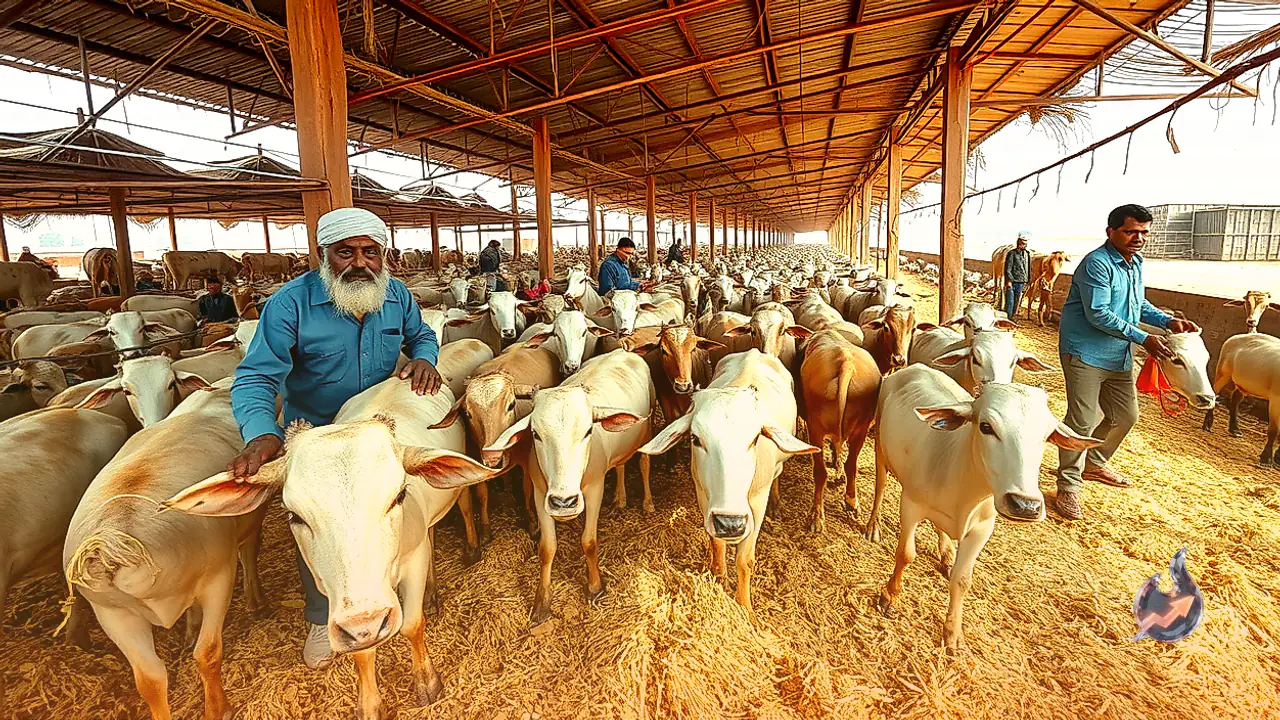

In rural economies, animal husbandry serves as an essential pillar of sustenance and daily income for countless farming families. Keeping livestock robust, healthy, and physically resilient remains a persistent priority for every cattle keeper. The task becomes particularly demanding during prolonged periods of green fodder scarcity, when maintaining optimal nutritional intake for farm animals turns into an uphill battle. To prevent their cattle from weakening, many farmers resort to buying expensive commercial feeds from retail markets. However, basic farm roughage can be converted into wholesome feed right at the village level, saving significant money while maintaining animal stamina.
The nutritional deficit in plain dry fodder
Conventional dry roughage harvested from crop residues naturally lacks adequate crude protein levels. When cattle consume untreated dry straw continuously, their digestive systems fail to receive the basic nutrients required for muscle maintenance, health, and general vigor. Scientifically treated dry fodder bridges this nutritional gap effectively. Administering an exact urea treatment can upgrade the feeding value of plain crop straw, transforming an otherwise nutrient-poor roughage into a supportive feed that provides animals with necessary nourishment during challenging periods.
The exact formulation and application ratios
Veterinary Officer Dr. A K Singh explained that when natural protein concentrations are low in dry straw, the urea process enhances the nitrogen availability necessary for protein synthesis. This measured technique relies on using urea equal to approximately 4 percent of the dry fodder's total weight. In practical terms, 4 kilograms of urea is dissolved completely into 40 liters of clean water. The prepared aqueous solution is then sprinkled uniformly across the spread-out dry roughage. Through this careful application, the non-protein nitrogen content of the dry straw is raised to optimal levels.
How rumen microbes convert nitrogen to protein
Inside the digestive system of ruminant animals, specialized microorganisms actively process the ingested feed. These microbes capture the non-protein nitrogen supplied by the treated fodder and synthesize it into quality microbial protein. Consequently, the biological feed value rises substantially, allowing the animal's metabolism to utilize available protein far more efficiently. The chemical action also breaks down rough plant fibers, making tough, brittle straw noticeably softer. As a result, farm animals chew and ingest the softened roughage with greater ease, leading to smoother digestion and higher nutrient absorption.
Strict precautions against toxic overexposure
While this enrichment method offers undeniable nutritional advantages, strict adherence to precise quantities, established protocols, and specialized guidance is entirely mandatory. Applying urea incorrectly or using excessive doses without proper knowledge can trigger acute toxicity and prove fatal to cattle. Under no circumstances should farmers carry out unmeasured experiments on their herds. Prior to implementing this treatment on farm residues, livestock keepers must consult a qualified veterinary surgeon or animal husbandry specialist to ensure safe execution.