























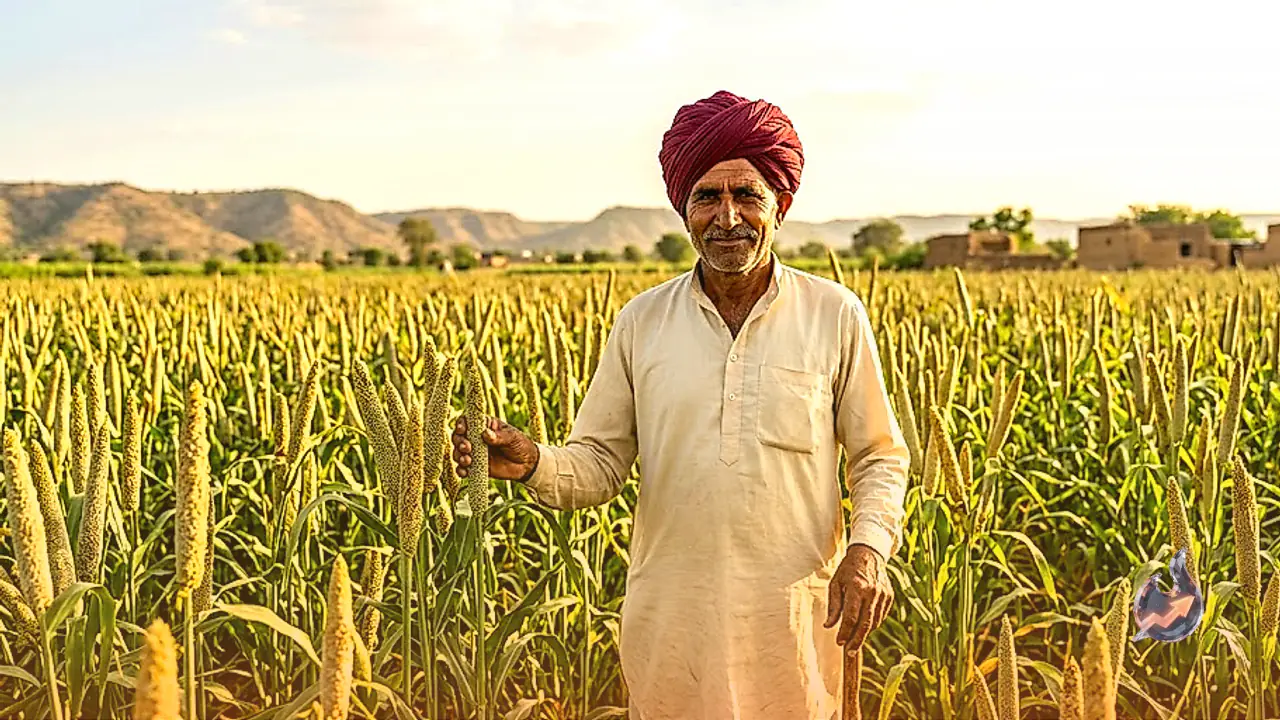

Despite initial sluggishness in monsoon rainfall across the region, agricultural activity in Sikar district has registered remarkable progress this Kharif season. Local farmers have achieved record coverage for pearl millet, commonly known as Bajra, effectively outperforming the official sowing targets prepared by the state agriculture authorities. The substantial increase in cultivated area is expected to significantly boost overall crop production as well as livestock fodder availability over the coming months.
Bajra Coverage Surpasses Target by 30,000 Hectares
Official statistical estimates show that the agriculture department had established a sowing target of 2.10 lakh hectares for Bajra in Sikar district for the current season. Driven by early preparations and active field work, farmers expanded cultivation across more than 2.40 lakh hectares. This represents an excess of approximately 30,000 hectares over the initial administrative target. Furthermore, when compared with the data from the previous year, the total land area dedicated to Bajra cultivation has increased by roughly 60,000 hectares.
Pre-Monsoon Showers Accelerate Agricultural Operations
The primary catalyst behind this agricultural achievement was the arrival of timely pre-monsoon precipitation during the third week of June. According to Shivaji Ram Kataria, Joint Director of the Agriculture Department, early rains enabled cultivators to complete their sowing operations nearly 15 days ahead of the schedule logged in the previous year. Early sowing provided crops with a critical growth advantage, allowing root systems to establish firmly before any potential dry spells. Subsequent sunny intervals, timely weeding operations, and intermittent rainfall further accelerated crop development across fields in the district.
Adaptation Mitigates 201 mm Rain Deficit
Rainfall metrics indicate that Sikar has received less moisture than usual this year. Standard historical averages mandate about 272 millimeters of rainfall by August 1, yet the district recorded only 204 millimeters during this timeframe. By contrast, the region registered 405 millimeters of rain by the same date last year, revealing a precipitation shortage of approximately 201 millimeters compared to the previous period. Despite this deficit, precise field management and balanced weather conditions helped prevent crop distress, maintaining low pest and disease pressure on standing crops.
Progress Across Other Major Kharif Crops
The overall Kharif cultivation drive across Sikar has neared its broader targets. Against an total seasonal target of 4.33 lakh hectares for all Kharif crops combined, actual sowing has reached 4.28 lakh hectares. The detailed breakdown for key crops includes
- Guar: Sown across 1.07 lakh hectares.
- Moong: Sown across 30,850 hectares.
- Groundnut: Cultivated over 28,556 hectares.
- Cowpea (Chawla): Planted across 12,322 hectares.
- Moth Bean: Planted over 926 hectares.
Economic and Fodder Prospects for the Region
Agriculture officials project that consistent weather conditions during August and September will result in substantial output growth across Sikar district. Increased Bajra yields are anticipated to enhance farm incomes and secure ample dry fodder reserves for domestic livestock. High harvest volumes will also translate into larger grain arrivals at local agricultural mandis, strengthening commercial activity throughout the region.