


















Beyond its desert landscapes, distinctive attire, and rich folk heritage, the border district of Barmer in Rajasthan holds a treasured spot on India's culinary map. Among the confectioneries lining its vibrant bazaars, one traditional gram flour sweet stands out for reasons that extend far beyond taste. Prepared at the well-known Jodhpur Mishtan Bhandar, this particular besan barfi attracts immediate attention due to an eccentric local name that often leaves newcomers taken aback. While first-time visitors frequently hesitate before saying the moniker aloud, the hesitation completely disappears once they experience the dessert's melt-in-the-mouth richness.
Initial Hesitation and Widespread Popularity
For tourists and travelers exploring western Rajasthan, hearing the sweet's colloquial name can be a bewildering moment. Because the phonetic phrasing resembles an offensive slang term in contemporary Hindi, customers visiting the shop for the first time often feel self-conscious asking for it across the counter. Among local residents, however, the delicacy carries no stigma whatsoever and enjoys enormous culinary respect. Crafted with wholesome ingredients, this traditional gram flour confection comfortably rivals the most celebrated and premium sweet varieties across the region. Those who sample a single piece quickly move past their linguistic shock, returning frequently to place repeat orders.
The Linguistic Evolution from Ghee to Moniker
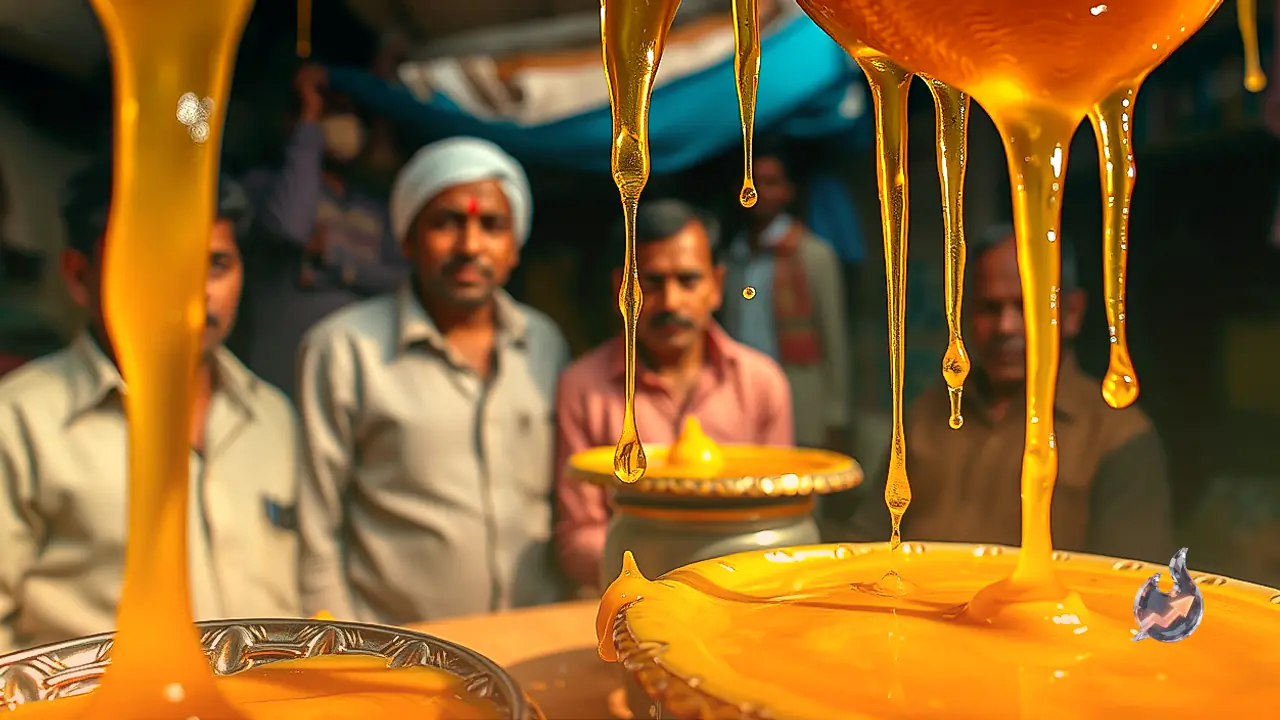
The explanation behind this startling title is rooted entirely in regional food characteristics rather than any derogatory intent. Authentic recipes demand generous volumes of pure desi ghee, to the extent that liquid fat visibly seeps from every cut block. When eaten by hand, this heavy richness leaves fingers thoroughly coated in a glossy, sticky residue. In authentic Marwari dialect, this specific state of extreme greasiness is termed 'chingat'. Over decades of colloquial usage, the sweet initially earned the descriptive label 'Chingti Chakki'. As dialects shifted across local markets, the pronunciation softened progressively into 'Chuntia' and eventually settled into 'Chutia Chakki'. The name is therefore a literal tribute to the overflowing quantity of clarified butter used during preparation.
Meticulous Two-Hour Roasting Process
Creating this confection requires disciplined patience and expert technique at the stove. According to Kamal Singhal of Jodhpur Mishtan Bhandar, executing the entire recipe takes roughly two hours from start to finish. The ingredient list remains strictly classical, focusing on gram flour, pure ghee, unsweetened mawa (reduced milk solids), and refined sugar. Halwais begin by heating desi ghee in large vessels and incorporating the gram flour over a consistently low flame. The flour must be stirred continuously without interruption so that it roasts evenly without burning. Once the besan turns golden and releases its signature nutty aroma, the unsweetened mawa and measured sugar are blended thoroughly into the hot mass.
Silver Leaf Garnish and Final Presentation
After the mixture reaches the perfect consistency, it is transferred onto flat trays, leveled, and allowed to cool slowly to set. The artisans then slice the dense confection into classic diamond or rectangular barfi portions. The finished pieces look practically submerged in liquid ghee, glistening from every angle. To enhance its visual appeal for festive platters, confectioners carefully dress the top surface with delicate edible silver leaf (chandi ka varq). Though technically a variation of standard besan ki chakki, its generous soaking of clarified butter and remarkable origin story guarantee that it remains an unforgettable culinary highlight of Barmer.