
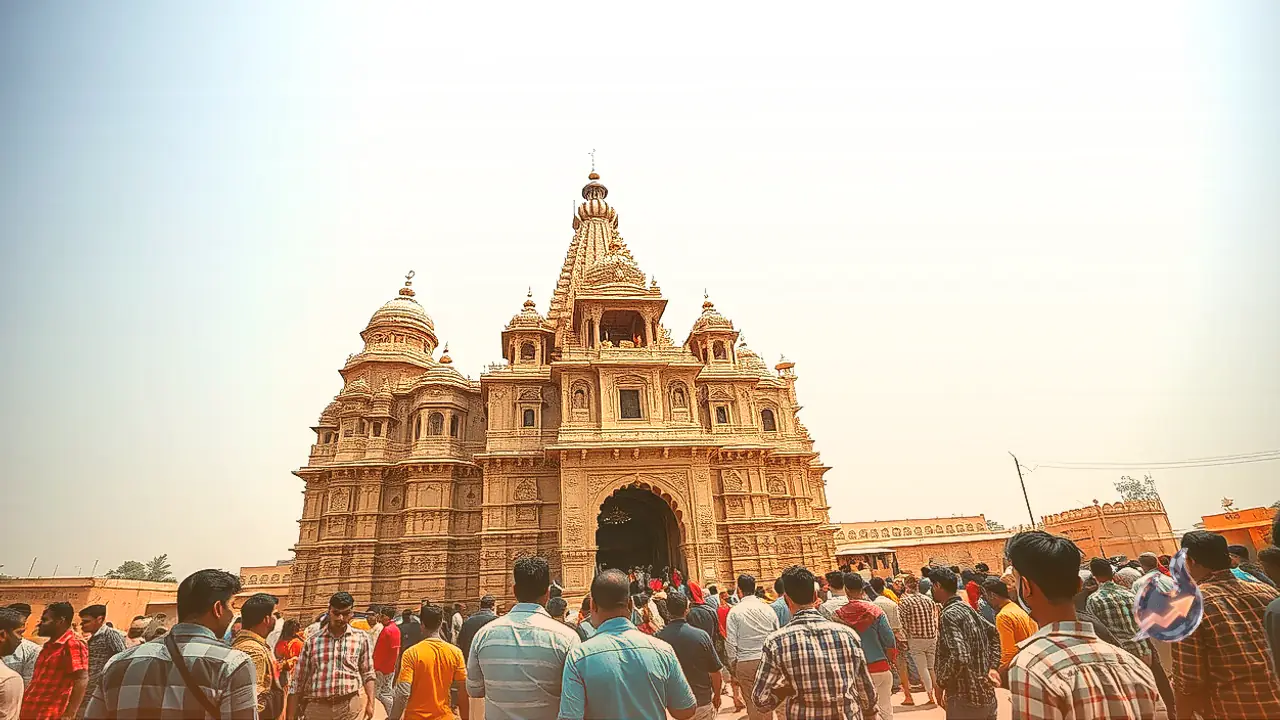


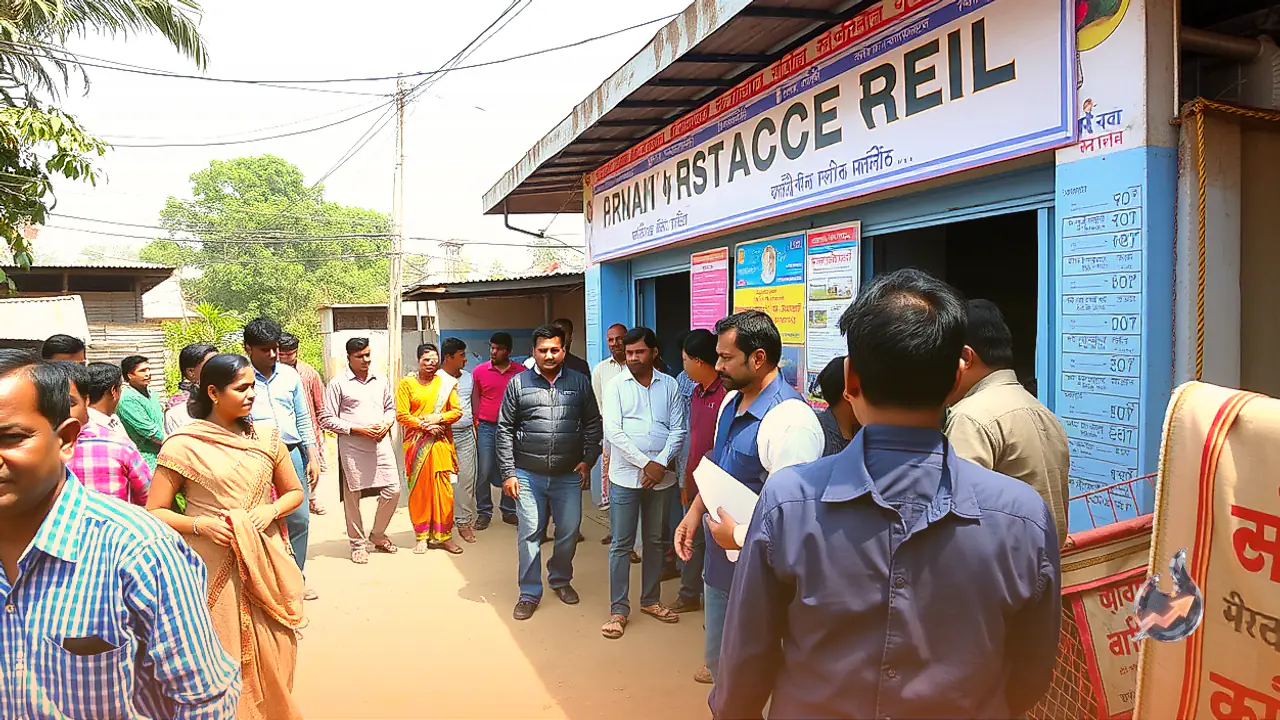


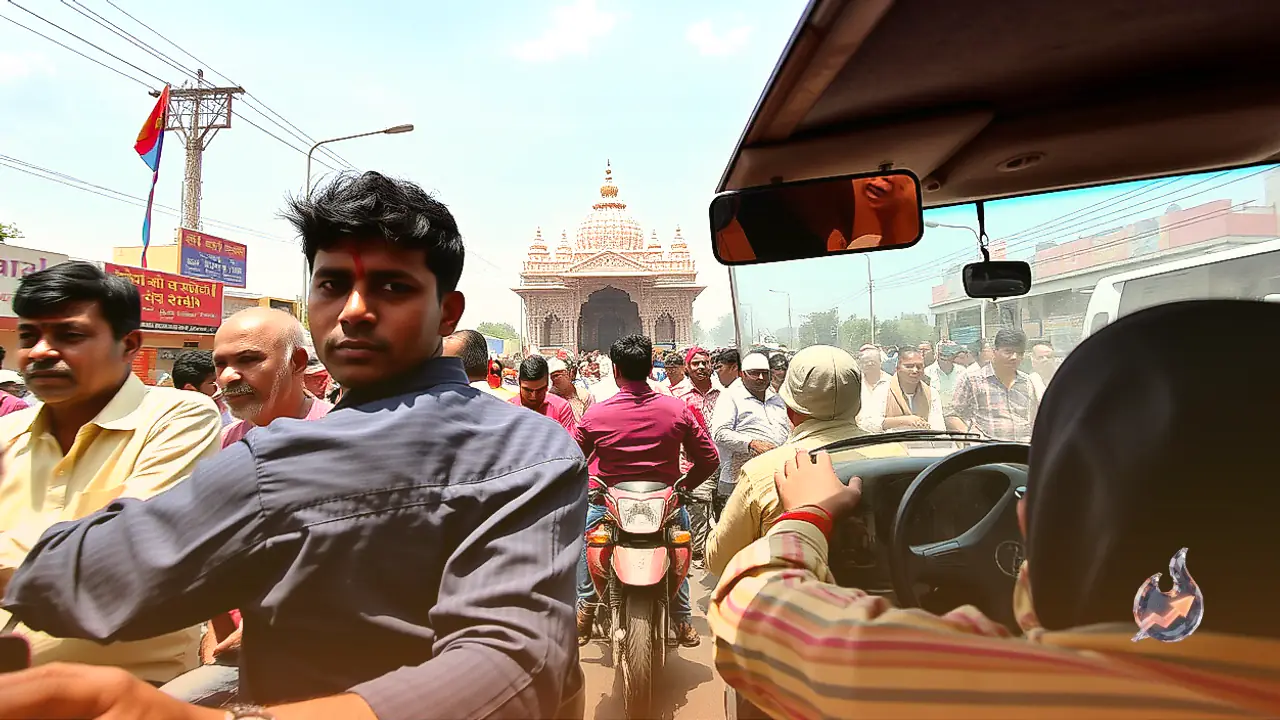














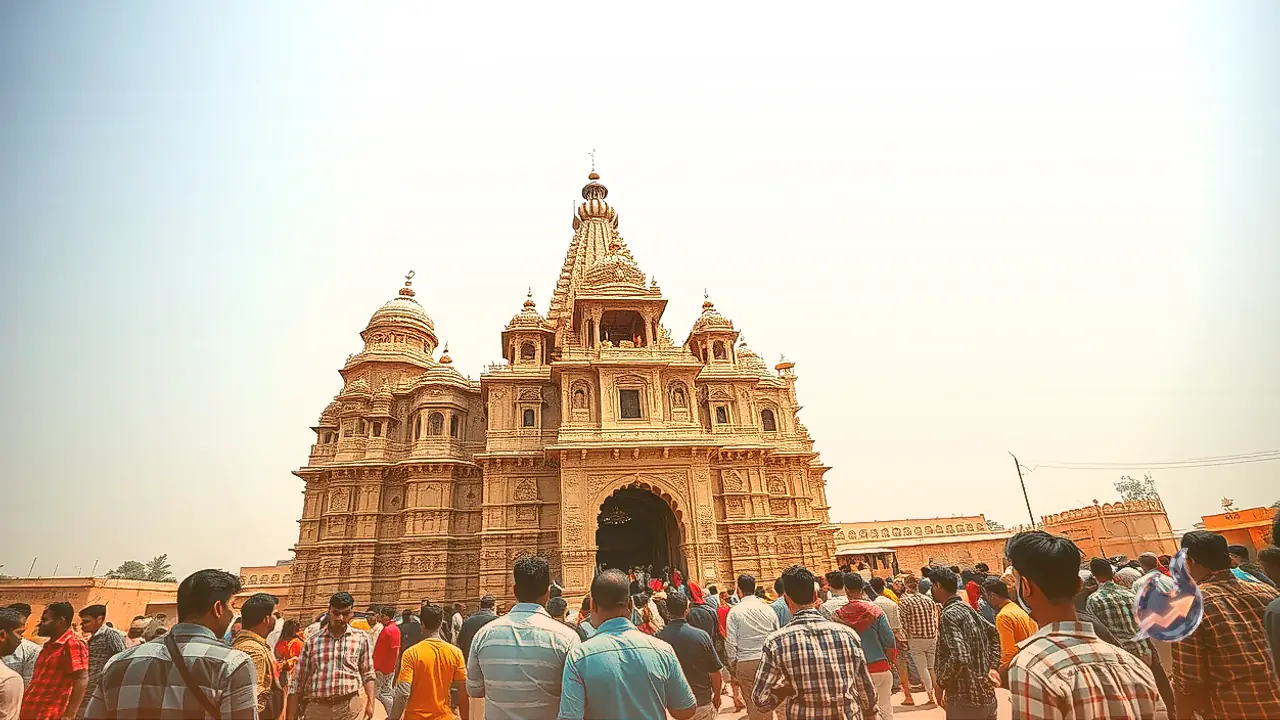

A magnificent new temple constructed at an expenditure of approximately 20 crore rupees has been completed at the 621-year-old Baba Ramdev Dham in Undu Kashmir, situated in the border district of Barmer, Rajasthan. The inauguration and completion of this expansive religious edifice have sparked widespread enthusiasm among pilgrims and local residents alike. Standing at an impressive height of 110 feet, the newly developed shrine combines traditional architectural grandeur with contemporary engineering principles, drawing steady streams of visitors eager to witness its craftsmanship.
Engineered to Withstand Magnitude 7.5 Earthquakes
The standout attribute of this newly built structure lies in its resilient technical design. Incorporating robust structural engineering methods, the temple has been designed to endure severe seismic tremors measuring up to magnitude 7.5. To establish stability against heavy vibrations and ground movement, workers excavated a foundation running 35 feet deep beneath the surface, filling it with premium quality concrete and cement.
Material consumption across the project underscores its substantial scale. Records show that 600 tonnes of Jaisalmer's renowned golden-yellow stone were transported and hand-carved for the facade and inner sanctum. To reinforce the structural skeleton, builders utilized 60,000 bags of cement along with roughly 1,200 truckloads of concrete mix. The resulting complex presents an impervious fortress-like strength masked behind delicate ornamental stonework.
A Focal Point of Devotion and the Runicha Pilgrimage Order
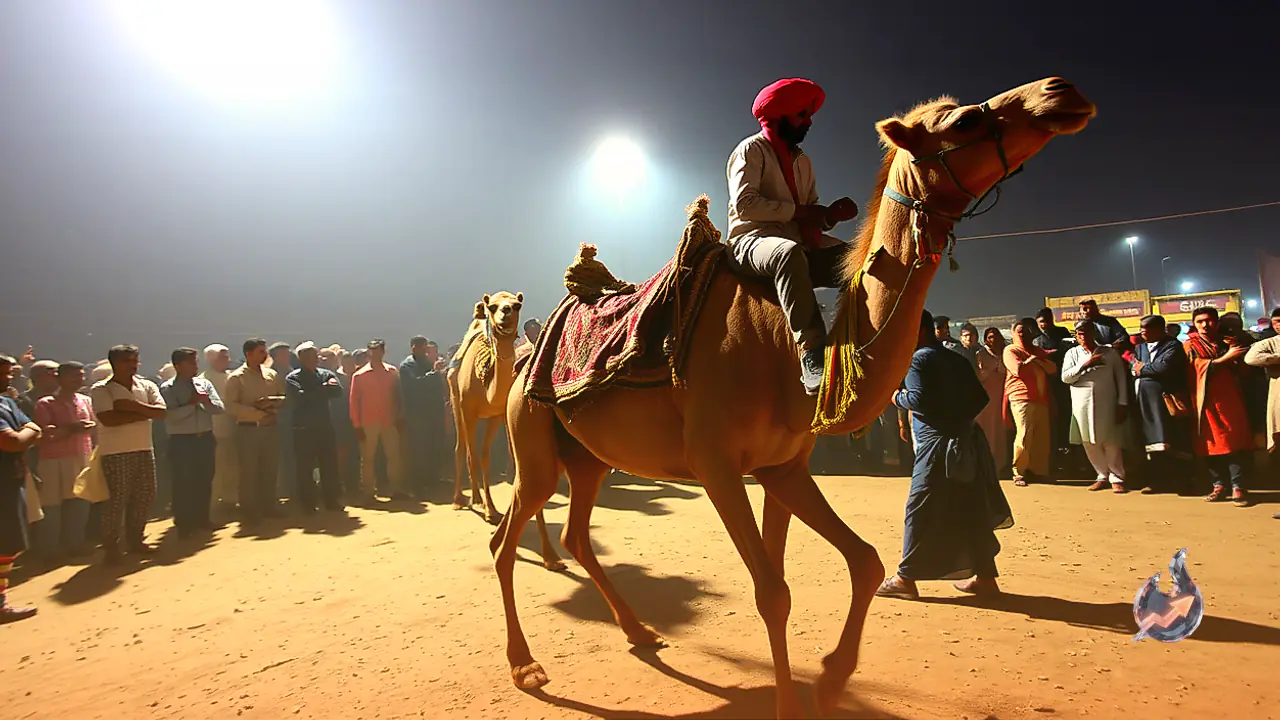
Devotees revere Ramderiya Dham as the sacred birthplace of Baba Ramdev. According to longstanding religious custom, pilgrims journeying to the final resting site at Ramdevra in Runicha must first offer their prayers and obeisance at this birthplace in Undu Kashmir before their onward journey is considered complete. This foundational tradition draws dense gatherings, particularly during the historic annual fair held every year in the Hindu calendar month of Bhadrapad.
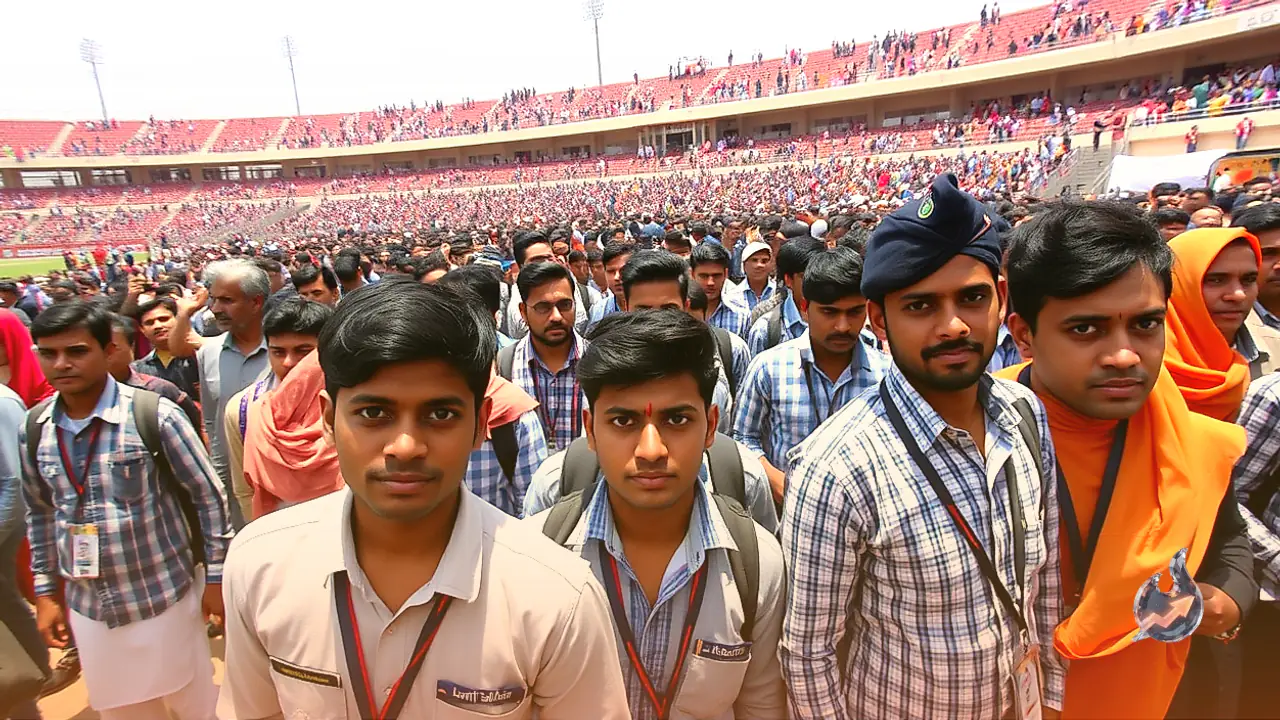
Visitors arrive in massive numbers not only from neighboring towns across Barmer and Jaisalmer, but also from the wider state of Rajasthan as well as Gujarat, Maharashtra, Haryana, and Punjab. The gathering of varied linguistic and cultural groups at this site underlines its enduring standing as a prominent symbol of communal harmony and universal social equality.
Evolution from a Khejri Tree to an Architectural Landmark
The physical evolution of Ramderiya Dham reflects centuries of continuous religious devotion. According to local belief, visiting the location allows pilgrims to honor the spiritual cycle spanning from Baba Ramdev's incarnation to his samadhi. Decades ago, the sacred ground featured no expansive stone architecture; worshippers performed rituals beneath an aged khejri tree that housed a humble, modest shrine.
As visitor traffic swelled and the footprint of devotees expanded across north and western India, the modest setup proved insufficient to handle the growing crowds. Community support and organized management paved the way for a complete renewal of the 621-year-old pilgrimage center. That humble place of worship has now transformed into a multi-crore, 110-foot carved stone marvel that stands ready to serve generations of pilgrims.