




















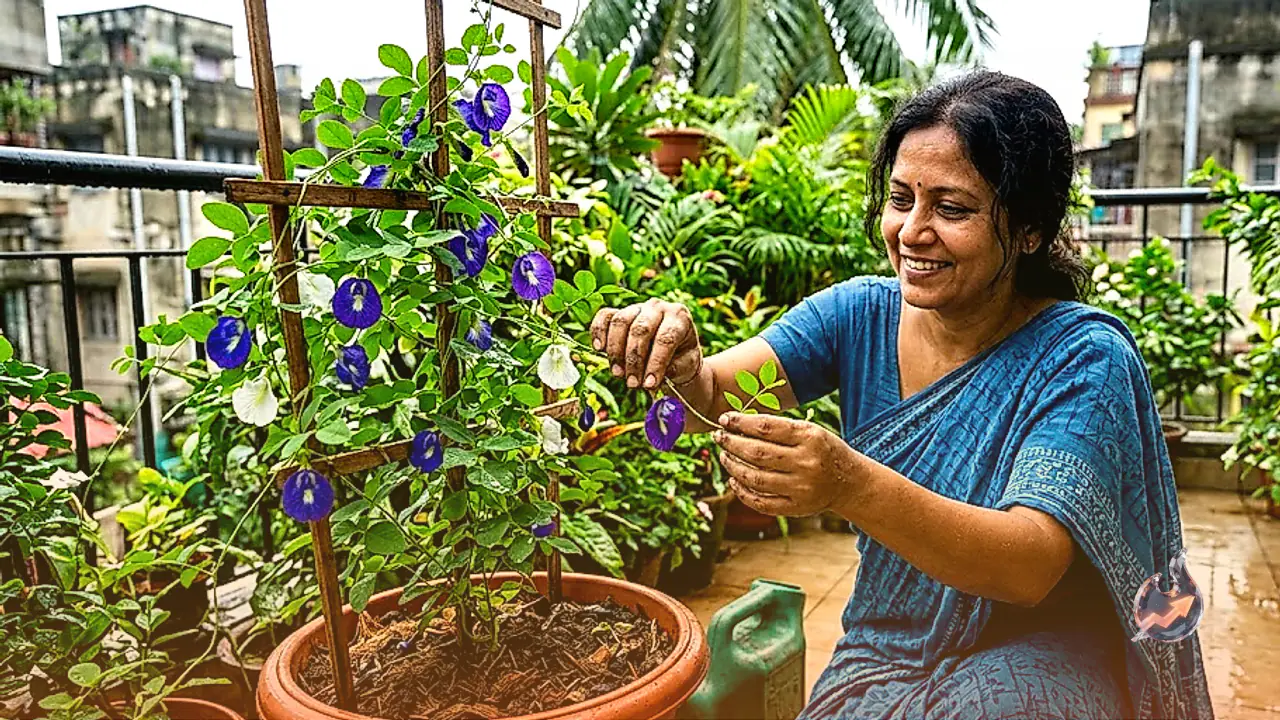

Monsoon rainfall offers an ideal natural environment for garden enthusiasts looking to revitalize their outdoor spaces. Among the various flowering climbers suitable for home and kitchen gardens, the Aparajita plant, commonly known as Butterfly Pea, stands out for its striking appearance and low maintenance requirements. Featuring attractive blossoms in vivid shades of blue, white, and purple, this fast-growing vine can transform a simple garden setting into a vibrant green retreat. The combination of warm humidity and seasonal showers during the rainy months accelerates its growth, making monsoon the perfect season to cultivate this ornamental plant.
Choosing the Right Pot and Soil Mix
One of the main advantages of growing Aparajita is its adaptability to limited spaces, making it equally suitable for spacious lawn gardens and compact apartment balconies. Gardeners do not require large ground patches to nurture this vine, as it thrives exceptionally well in containers. A medium-sized container measuring between 10 to 12 inches in diameter provides ample room for the root system to establish and expand over time. It is crucial to ensure that the chosen pot features adequate drainage holes at the bottom to allow surplus water to escape freely.
Soil quality directly influences the health and blooming capacity of the vine. The ideal potting medium should be well-draining, lightweight, and nutrient-rich. Mixing standard garden soil with organic compost, decomposed cow manure, or vermicompost enhances fertility while maintaining optimal soil structure. Avoid dense clay soils that retain excessive water, as stagnant moisture can cause root decay and hinder the natural development of the plant.
Methods for Planting Aparajita: Seeds vs. Cuttings
Propagating the Aparajita vine can be accomplished through two straightforward techniques: sowing seeds or planting stem cuttings. For those starting from seeds, selecting viable, healthy seeds is essential for high germination rates. Prior to sowing, the seeds should be soaked in clean water for approximately one day (24 hours). This pre-soaking process softens the tough outer seed coat, significantly speeding up the germination cycle.
After soaking, place the seeds gently into the prepared soil at a shallow depth rather than burying them deeply. Lightly cover them with loose soil and moisten the top layer using a spray bottle to avoid disturbing the seeds. Maintain consistent moisture levels without creating waterlogged conditions. Under proper temperature and moisture conditions, seeds usually sprout within a few days. Alternatively, semi-hardwood stem cuttings taken from a healthy mature plant can be inserted directly into moist soil to establish a new vine.
Sunlight Requirements and Moisture Protection
Sunlight plays a crucial role in encouraging lush foliage and abundant flower production on the Aparajita vine. The container should be placed in a spot that receives around four to six hours of direct sunlight each day. During the monsoon season, the natural balance of sunny intervals and rain showers stimulates rapid vine extension and frequent flowering cycles.
However, managing moisture levels during heavy rain is equally important. If the container remains exposed to continuous torrential downpours, water can accumulate inside the pot, damaging the delicate root architecture. To prevent root rot, check the drainage outlets regularly and temporarily relocate container plants to a sheltered spot during prolonged periods of heavy rainfall. Allow the topsoil layer to dry slightly before watering manually.
Providing Support and Ongoing Maintenance
As the Aparajita plant matures, its climbing stems require structural support to grow upright and maintain a neat form. Inserting a sturdy wooden stick, a bamboo stake, or a small trellis mesh into the pot provides the vine with a reliable frame. Gently guide the soft young tendrils onto the support structure so they can climb systematically without tangling.
Regular maintenance ensures that the vine stays healthy and blooms continuously. Periodically trim yellowing leaves, dried foliage, and weak shoots using clean pruning shears. Pruning not only keeps the plant looking tidy but also encourages branching, leading to more flower buds. By following these practical care steps regarding potting, sunlight, support, and watering, gardeners can successfully grow a thriving Aparajita vine throughout the monsoon season.