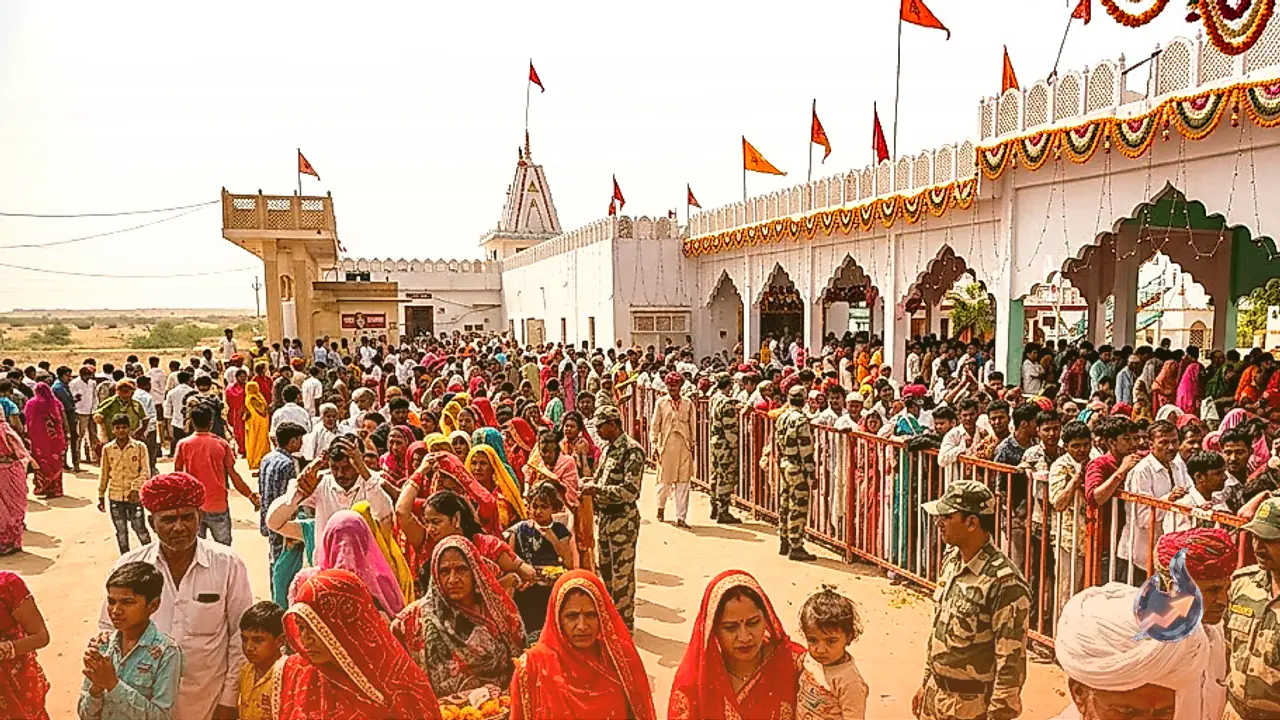



















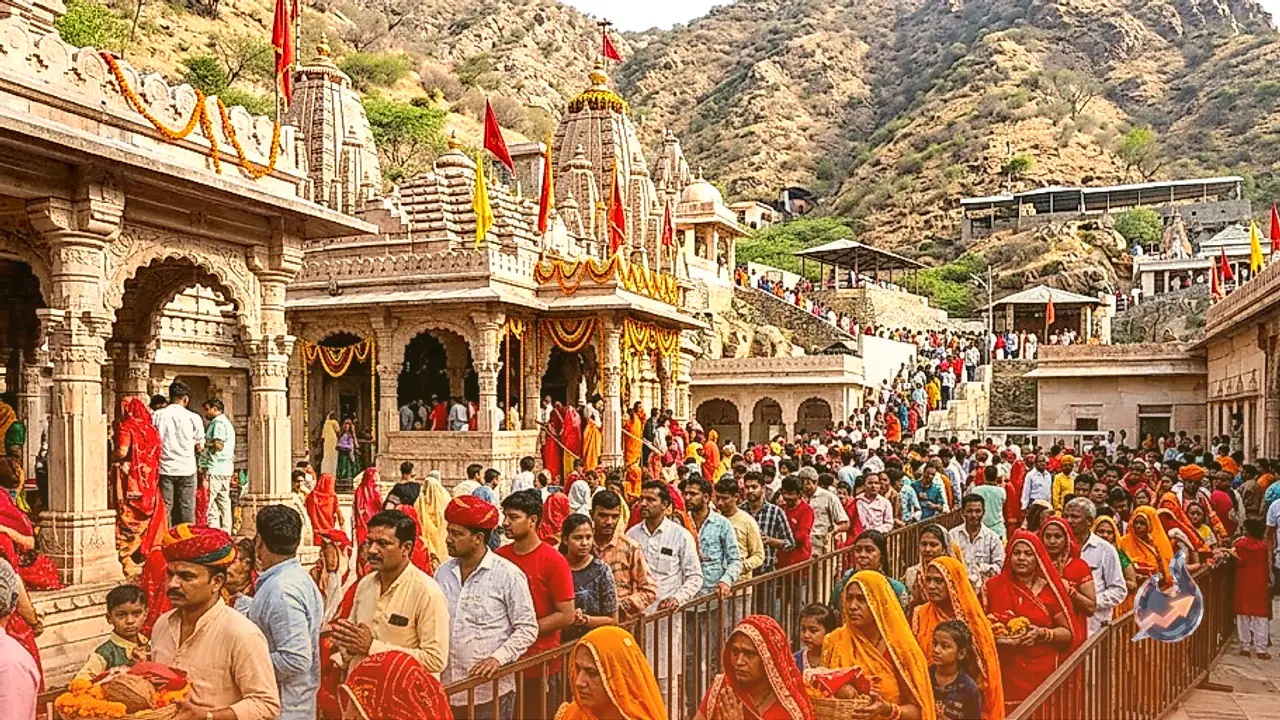

With the arrival of Sharad Navratri, temples dedicated to the divine feminine across the country are witnessing a massive turnout of devotees. Among the prominent centres of pilgrimage in Rajasthan, the ancient Jeen Mata shrine nestled in the Aravalli hills of Sikar district holds deep spiritual significance. Surrounded by rugged hills, this revered temple is celebrated for its centuries-old folklore, architectural resilience, and unique historical traditions. A massive nine-day fair takes place here during Navratri, drawing hundreds of thousands of pilgrims who come to offer prayers and participate in age-old rituals.
Located 30 Kilometres from Sikar Headquarters
The temple is situated in Jeenmata village, approximately 30 kilometres away from the Sikar district headquarters. While oral traditions describe the shrine as thousands of years old, authentic records documenting its original construction are not available. However, historical documentation does indicate that the temple underwent comprehensive renovation around 300 years ago.
Devotees worship Jeen Mata as an incarnation of Goddess Durga. Across the Shekhawati belt of Rajasthan, numerous communities revere her as their ancestral family deity, or Kuldevi. This brings a continuous stream of pilgrims not only from all corners of Rajasthan but also from adjoining states. The shrine is particularly renowned for the traditional head-shaving ritual of young children, locally referred to as Jadula, which families perform to seek divine protection and long life for their offspring.
The Legend of Siblings Harsh and Jeen
A poignant regional folk narrative explains how Jeen Mata came to renounce worldly life. According to this account, she was born into a Rajput family of the Chauhan clan and shared a deep bond of affection with her brother, Harsh. One day, while collecting water from the village pond with her sister-in-law, a debate arose regarding whom Harsh loved more.
The two decided to test his affection through a simple gesture: whoever had her water pot taken down from her head first upon reaching home would be deemed his favourite. Unaware of the wager, Harsh helped his wife lower her water vessel first. Deeply hurt by this occurrence, Jeen left home immediately and retreated to the secluded Kajal Shikhar peak in the Aravalli range to undertake austere penance.
Upon learning of the dispute, Harsh rushed to the mountain peak to persuade his sister to return home. Jeen remained resolute and refused to abandon her spiritual practice. Seeing her determination, Harsh decided to stay in the hills as well, dedicating himself to intense penance dedicated to Bhairav. Today, a separate shrine dedicated to Harsh Bhairav Nath stands atop the adjacent hill ridge, maintaining a spiritual bond with his sister's sanctuary below.
Mughal Defeat by Swarming Bees and the Eternal Flame
Among the most widely discussed historical accounts surrounding the shrine is its confrontation with the Mughal Emperor Aurangzeb. Local tradition holds that as Aurangzeb advanced through the region pulling down temples, his forces first vandalised the Harshnath Bhairav temple before marching towards the Jeen Mata shrine.
Witnessing the imminent threat, local residents and worshippers prayed fervently to the goddess for protection. Legends state that swarms of fierce bees suddenly emerged and launched a relentless attack on the advancing soldiers. Overwhelmed by the stinging onslaught, the Mughal troops were forced to retreat in disarray. Struck by this sudden event, Aurangzeb ordered an eternal flame, or Akhand Jyot, to be lit at the temple.
From Delhi Royal Court to the Jaipur Princely State
Historical lore records that following the military retreat, oil for maintaining the eternal flame was routinely dispatched from the imperial court in Delhi. With changing political landscapes over time, the responsibility for maintaining this offering transitioned to the royal house of Jaipur. The Maharaja of Jaipur subsequently revised the schedule, sending the required oil twice a year during the biannual Navratri festivals instead of every month. The continuous burning of this sacred flame remains a cornerstone of devotional reverence at the temple, attracting dense gatherings of worshippers during the festive fair.