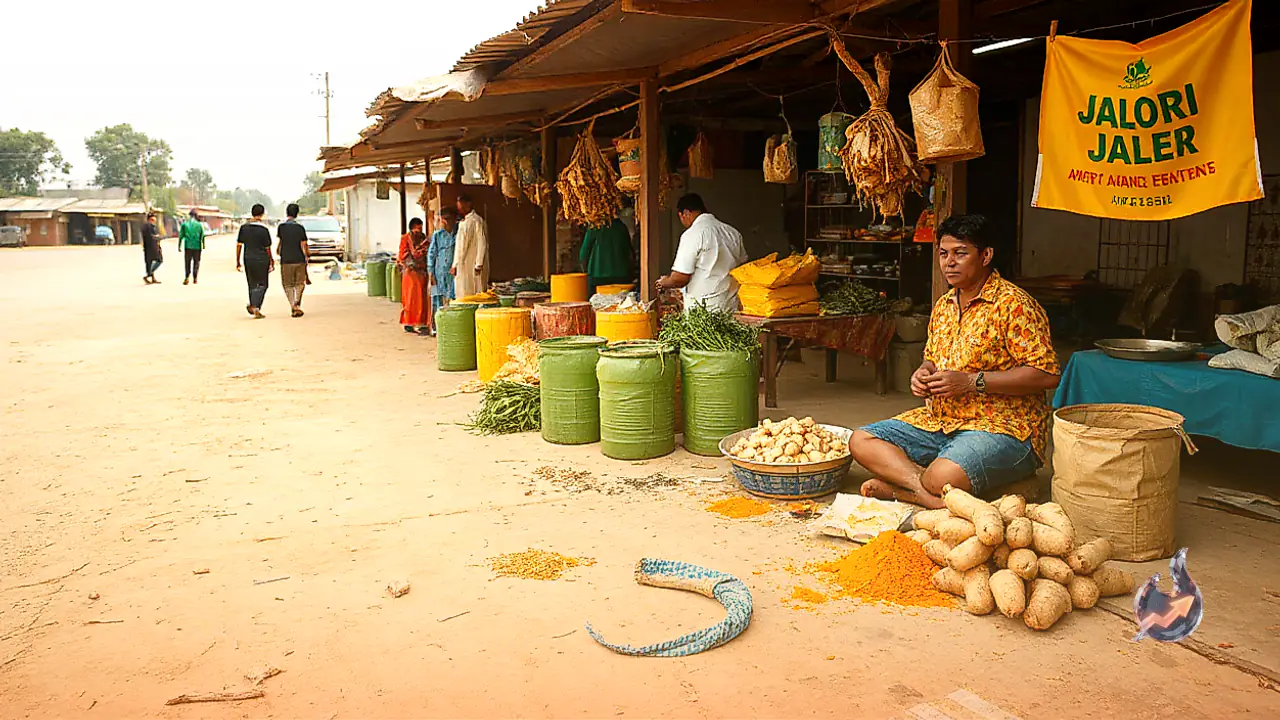

The onset of winter always brings noticeable shifts in dietary habits across households. As temperatures drop, markets begin receiving fresh supplies of raw turmeric, quickly transforming it into a seasonal favorite that appears regularly in domestic kitchens, hotels, and restaurants alike. In Jalore, a particularly unique regional delicacy takes center stage during these colder months, celebrated for both its distinctive flavor profile and its celebrated health attributes. What sets this particular preparation apart is that it relies not just on raw turmeric alone, but incorporates an assortment of tubers such as yam, churan, and taro, blending them together into a remarkably rich culinary creation.
Essential Ingredients And Preparation Steps
Crafting this regional specialty requires fresh raw turmeric, yam, churan, taro, onions, garlic, ginger, curd, and pure ghee. Additionally, whole spices, red chili powder, coriander powder, and salt are incorporated according to individual taste preferences. For those looking to elevate the dish further, ingredients like green peas, paneer, and assorted dry fruits can also be integrated. The process begins by thoroughly washing and cleaning the raw turmeric before grating it finely. Separate pastes of onion, garlic, and ginger are prepared, while the yam, churan, and taro are neatly chopped into small, manageable pieces.
The Cooking Method And Frying Process
The cooking sequence starts by heating a generous amount of ghee in a pan. The chopped pieces of yam, churan, and taro go into the hot ghee first and are gently fried until they turn lightly golden. Once achieving this color, they are removed and set aside. In the remaining ghee within the same pan, whole spices are added and allowed to crackle. Immediately following this, the grated raw turmeric is added and sautéed thoroughly. It is worth noting that this recipe requires no additional powdered turmeric, as the base ingredient provides all the necessary color and substance on its own.
Curd Gravy And Slow Cooking
Once the turmeric is fully cooked, the previously prepared onion, garlic, and ginger paste is mixed in and sautéed until aromatic. In a separate vessel, curd is combined with red chili powder, coriander powder, and salt. This prepared curd gravy is poured directly into the pan and blended evenly with the turmeric mixture. The pre-fried yam, churan, and taro pieces are then returned to the pan, joining the rest of the ingredients. Everything is stirred together thoroughly and left to simmer over a low flame for approximately 40 to 45 minutes. Periodic stirring is maintained throughout this period to prevent the mixture from sticking to the bottom of the vessel. After simmering sufficiently, the finished raw turmeric dish is ready to be served piping hot alongside fresh rotis or parathas.
Medicinal Properties And Traditional Uses
Beyond its culinary appeal, the core ingredient holds a strong reputation for its medicinal qualities. According to Ayurvedic physician Ashwin रोहिल्ला, turmeric contains powerful anti-inflammatory and antioxidant properties. The active compound curcumin found within it has been the subject of research across the globe for numerous years. Indian households have maintained a traditional reliance on turmeric since ancient times, preserving age-old customs such as mixing turmeric into warm milk whenever someone sustains an injury.