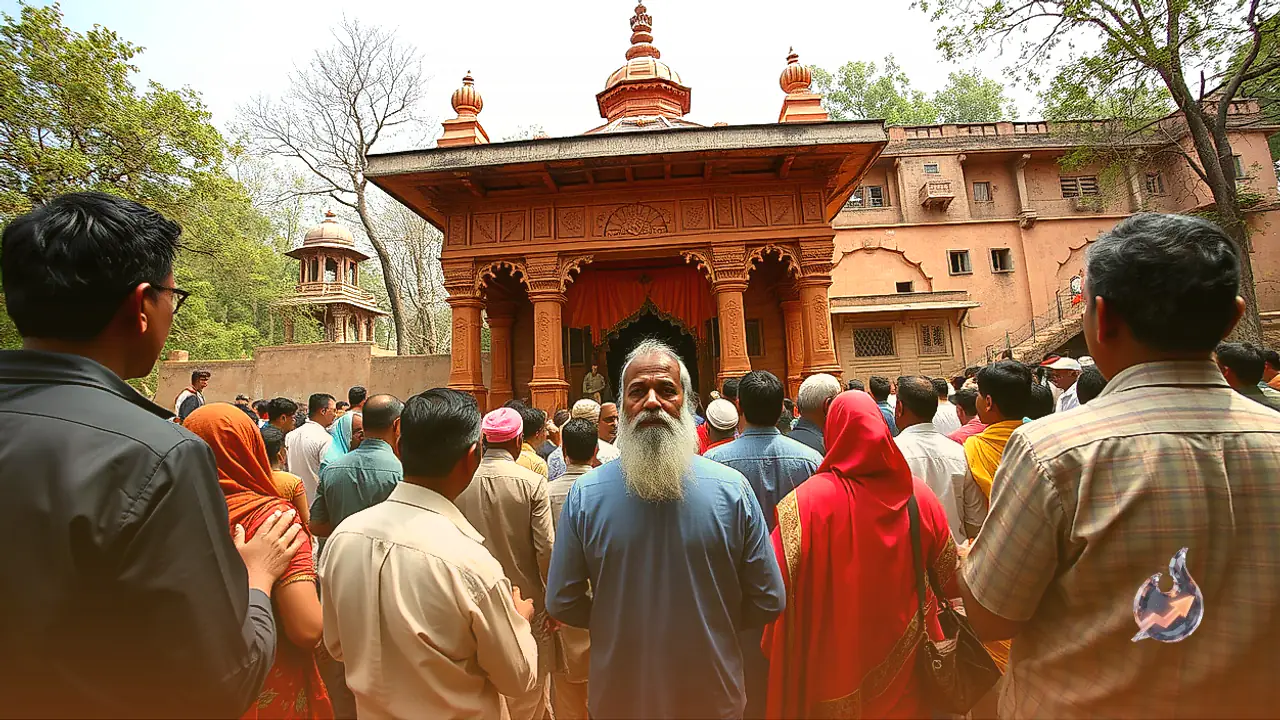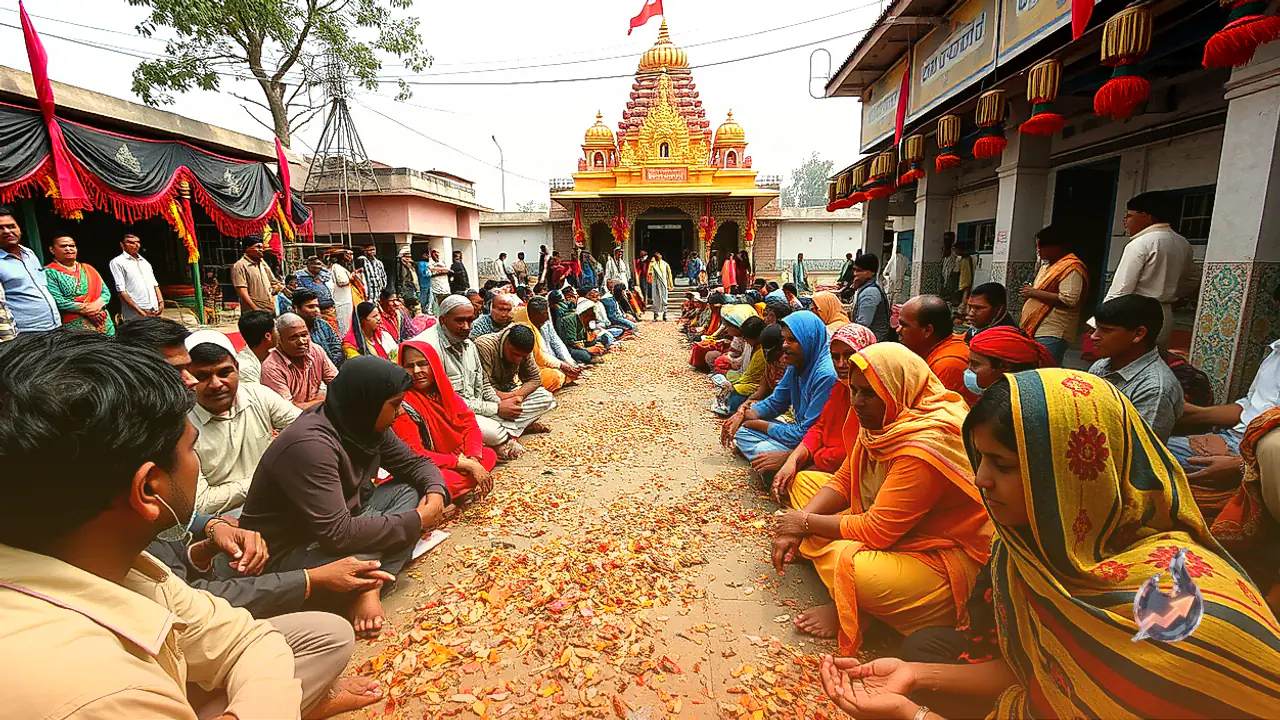
























Located in Rajasthan's Sikar district, the famed pilgrimage center of Khatu draws legions of devotees who come to witness the deity's striking adornment. Worship rituals here adhere to a precise rhythm, featuring five daily prayer ceremonies and two elaborate decoration sessions conducted at different hours. While traditional shrines often rely heavily on opulent garments and precious ornaments, this sacred site places supreme emphasis on fragrant blossoms and natural aromatic essences.
Devotion Centered on Fragrance and Rare Blooms
According to Mahant Mohandas Maharaj, a former president of the Shri Shyam Mandir Committee, divine favor here is drawn more through intoxicating aromas than lavish feasts of fifty-six delicacies. Consequently, temple caretakers source exquisite floral varieties from across India and international destinations to prepare the daily adornments. Pilgrims visiting the sanctum regularly carry fresh rose petals along with vials of scented extracts as personal offerings.
The Value and Craft of Pure Rooh Gulab
Priests within the inner sanctum routinely apply a meticulously prepared natural rose extract known as Rooh Gulab directly during the ritual dressing. Regarded among the purest scents anywhere, its powerful aroma easily carries well past the sanctum sanctorum to greet worshippers waiting in outer corridors.
Producing this precious extract requires extensive steam distillation of freshly gathered rose petals, ensuring an unadulterated botanical composition free of artificial additives. Because yields from this labor-intensive extraction remain extraordinarily small, market prices reach staggering heights. A compact 250-gram vial costs approximately 5 lakh rupees, while a full kilogram commands between 20 lakh and 25 lakh rupees.
The Enduring Legacy of Saint Aloo Singh Maharaj
The practice of adorning the sanctum with fine botanicals and concentrated scents traces back to Saint Shiromani Aloo Singh Maharaj. Mahant Mohandas Maharaj recounted that during an earlier era when the shrine was less known, the revered saint traveled directly to community households, sharing accounts of divine grace and motivating worshippers to undertake journeys to the temple.
Dedication defined the saint's entire existence, establishing a regular schedule of decorating the deity twice daily using saffron, sandalwood paste, fresh flowers, and aromatic oils. He also established the Shyam Bagichi garden directly on the temple grounds, where blossoming plants are still cultivated for ritual offerings. Alongside these fragrant ceremonies, long-standing customary food offerings continue to feature traditional sweet puddings and crushed wheat preparations known as kheer and churma.