




















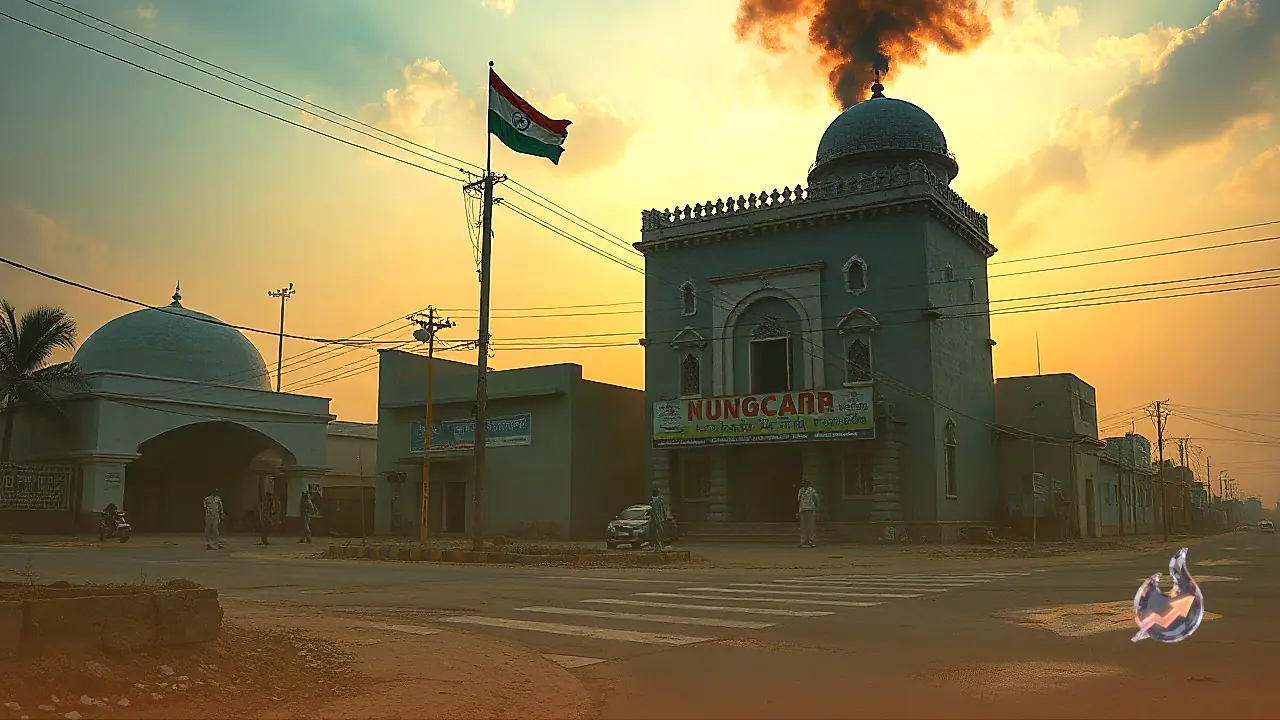

A deepening crisis over acute irrigation water shortages and extensive damage to standing kharif crops in the Indira Gandhi Nahar Project (IGNP) Stage 1 command area has triggered intense farmer unrest across Rajasthan's canal belt. Protesting agriculturalists encamped outside the Additional District Collector office in Anupgarh have explicitly warned the state administration that unless their core demands are conceded immediately, they will escalate their stir into a massive movement matching the scale of the historic 2004 Gharsana-Rawla uprising. Farmer representatives asserted that cultivators are no longer willing to accept verbal assurances and are resolved to pursue a decisive outcome. The regional anger was palpable on the ground as commercial markets in Rawla town and the 365 Head junction observed a complete shutdown in solidarity with the demonstrating cultivators, while farmer outfits formally called for a comprehensive regional transport blockade (chakka jam) on September 24.
Marathon Talks Fail to Break Administrative Impasse
The latest flare-up follows extensive, high-tension deliberations that began Monday morning at 10 AM and stretched until midnight. Seeking an immediate resolution, protesting farmers insisted on summoning the chief engineer of the irrigation department for face-to-face negotiations, but the extensive discussions concluded without any agreement. Despite prolonged late-night exchanges involving two Additional District Collectors, the local Sub-Divisional Magistrate (SDM), and senior irrigation officials, the stalemate persisted into Tuesday, marking the third consecutive day of the farmers' open-ended sit-in outside the administrative headquarters. As unrest threatened to spill onto highways, District Collector Amit Yadav and Superintendent of Police Hari Shankar arrived at the protest site on Tuesday to personally evaluate conditions and spearhead fresh rounds of dialogue with agitating representatives.
Delegation Presses Four-Point Charter of Demands
During the formal negotiation session presided over by District Collector Amit Yadav, a delegation of farmer leaders steered by prominent figure Sheopat Meghwal presented an unyielding four-point charter of demands. At the forefront of their representation was a demand for the prompt issuance of a binding, written order mandating canal operations in a two-out-of-four group rotation cycle to preserve remaining fields. Their second crucial grievance directly targeted the chief engineer of the irrigation department, Pradeep Rastogi, holding his administrative management directly accountable for the widespread destruction of standing kharif crops and calling for his immediate removal or transfer from the post. Furthermore, the delegation pressed for an expedited preliminary assessment of scorched crops to facilitate urgent compensation, the hassle-free disbursement of crop insurance claims, and the permanent infrastructural restructuring of the water distribution mechanism along the Anupgarh branch network.
Allegations Over Water Accord and Threats of Wider Mobilization
Emerging from the negotiation room, farmer leader Sheopat Meghwal voiced sharp condemnation of the administrative stance, attributing the devastating loss of kharif harvests to bureaucratic obstinacy and flawed canal regulation. Meghwal highlighted that under the historic Ajmer Water Accord, a dedicated 58 percent share of water is legally earmarked for Stage 1 command areas. He alleged that the irrigation bureaucracy has consistently undermined this entitlement through arbitrary adjustments while presenting fabricated dam storage data to mislead the farming community. Rejecting administrative pledges that their grievances would simply be forwarded to higher authorities, Meghwal insisted that empty reassurances would no longer pacify cultivators who have suffered massive financial ruination.
Vow to Replicate Historical Mass Demonstrations
Issuing an open ultimatum to the state authorities, Meghwal declared that if a formal regulatory order and punitive personnel action are not executed without delay, the agitation will adopt an unyielding, disruptive trajectory. He underscored that farmers would not hesitate to revive the intense mass mobilisation seen during the historic 2004 Gharsana-Rawla struggle and the protracted 2021 highway blockade campaigns. He warned that public administrative machinery across the entire Stage 1 region would face total paralysis. Immediately following the breakdown of discussions, hundreds of demonstrators gathered at the protest venue to draft a coordinated roadmap aimed at broadening the strike throughout the canal zone and executing widespread road blockades.
District Administration Outlines Ongoing Relief Steps
Addressing the developments following the dialogue, District Collector Amit Yadav indicated that the administrative apparatus held point-by-point discussions with farm unions while acknowledging both the 13-day-old continuous demonstration in Gharsana and the ongoing three-day sit-in outside the Anupgarh ADM office. The Collector stated that administrative procedures concerning the preliminary assessment of crop losses are virtually complete and that an exhaustive report is being dispatched to the state level to facilitate financial relief. Addressing concerns regarding water rationing and canal regulation, Yadav clarified that operational decisions are routed through the Water Advisory Committee, comprising elected local representatives, following formal directives from the Bhakra Beas Management Board (BBMB). He assured that as soon as the final water availability figures are established, a committee session will be convened swiftly.
Official Discretion and Insurance Survey Protocols
Responding directly to the farmers' contentious demand to remove Chief Engineer Pradeep Rastogi and bar him from the Water Advisory Committee proceedings, the District Collector noted that personnel actions of this nature constitute policy decisions falling exclusively within the jurisdiction of the state government. Consequently, an objective assessment detailing the sentiments of the farming community on this issue is being submitted to higher administrative tiers. In relation to grievances regarding crop insurance survey discrepancies, Yadav clarified that field evaluations are conducted jointly by operational teams comprising representatives from the designated insurance firm, the revenue department, and the agriculture department in accordance with statutory guidelines. He reminded cultivators that any individual dissatisfied with the damage survey retains the full statutory right to lodge a formal appeal before the designated review committee.