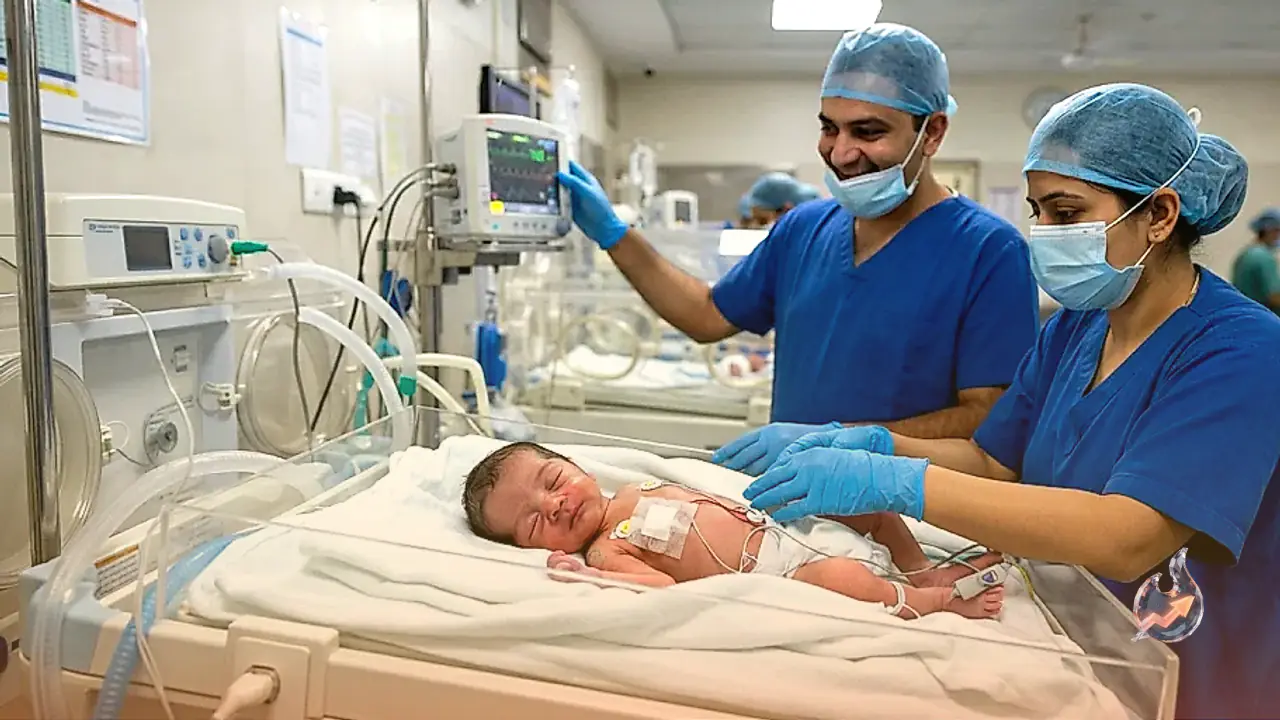

In a remarkable feat of medical modern technology and surgical expertise, doctors in Jaipur have saved the life of a newborn by performing a complex pacemaker implantation just 17 hours after birth. The procedure took place at Mahatma Gandhi Hospital located in the Sitapura area, where the baby weighed a mere 1.5 kilograms. The infant's heart rate had dropped dangerously low to between 30 and 40 beats per minute, posing an immediate and severe threat to its life. Despite the immense challenges posed by the extremely low body weight and fragile blood vessels, the hospital's medical team successfully completed the intricate procedure, leading to an immediate improvement in the baby's heart rate and breathing pattern.
Detection of the condition during pregnancy
Dr. Sunil Kaushal, a senior paediatric heart surgeon at the hospital, explained that the complication regarding the baby's abnormally low heart rate was identified during the pregnancy itself. Paediatric cardiologist Dr. Prerna Bhatt had conducted a specialized foetal echocardiography examination of the infant's heart while still in the womb. The tests revealed that the natural electrical system responsible for regulating the heartbeat, known as the cardiac conduction system, had not developed properly. Due to this congenital anomaly, the baby's heart rate after birth was significantly lower than that of a normal newborn. Doctors attempted to boost the heart rate using medications and injections before delivery, but those efforts yielded no substantial improvement. Consequently, the delivery was conducted under close medical supervision to ensure immediate postnatal intervention.
Overcoming the challenge of low weight and delicate veins
According to Dr. Sunil Kaushal, the infant's weight of only 1.5 kilograms and extremely delicate blood vessels presented a monumental challenge. Implanting a pacemaker in a body of such minuscule size and age is rarely attempted. The baby's blood vessels were extremely fine and fragile. To navigate this, surgeons created a dedicated space inside the abdomen to securely place the pacemaker and its connected leads before completing the implantation. The defining highlight of the case was executing this complicated surgery within a mere 17 hours of birth, which played a critical role in preserving the newborn's life.
Noticeable recovery and health improvements
Following the successful pacemaker installation, the baby's heart rate stabilized, and breathing difficulties subsided significantly. During the subsequent period of continuous hospital monitoring, the infant's weight also registered an increase of approximately 700 grams. Medical experts emphasize that early diagnosis and timely intervention are paramount when dealing with congenital heart conditions. Advanced screenings during pregnancy allow doctors to detect serious cardiac abnormalities beforehand, ensuring that necessary medical arrangements are kept ready right at the moment of birth.
Coordinated efforts by specialized medical teams
This intricate medical intervention was made possible through the collaborative expertise of Dr. Sunil Kaushal, paediatric cardiologist Dr. Prerna Bhatt, Dr. Gaurav Goyal, along with experienced technical specialists and the nursing staff. Medical professionals point out that modern advancements in healthcare are making it increasingly feasible to treat complex congenital heart diseases in newborn babies, with several conditions now manageable even without resorting to open-heart surgery.