

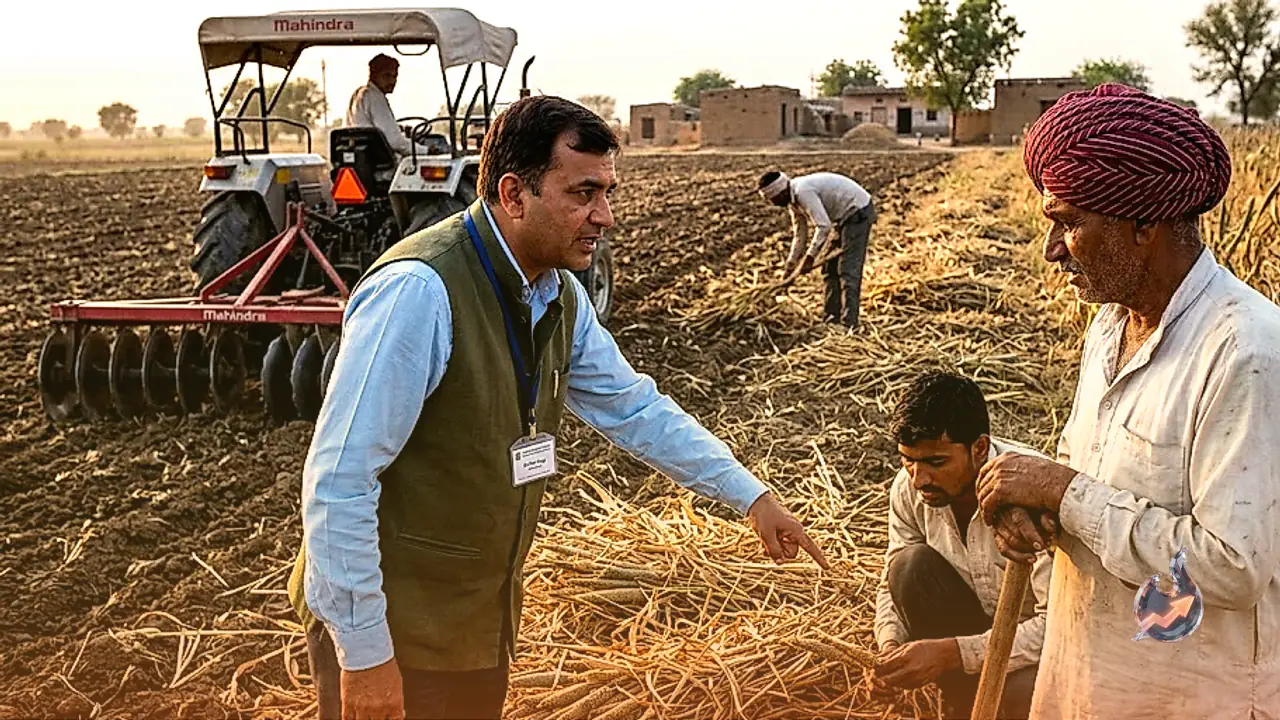



















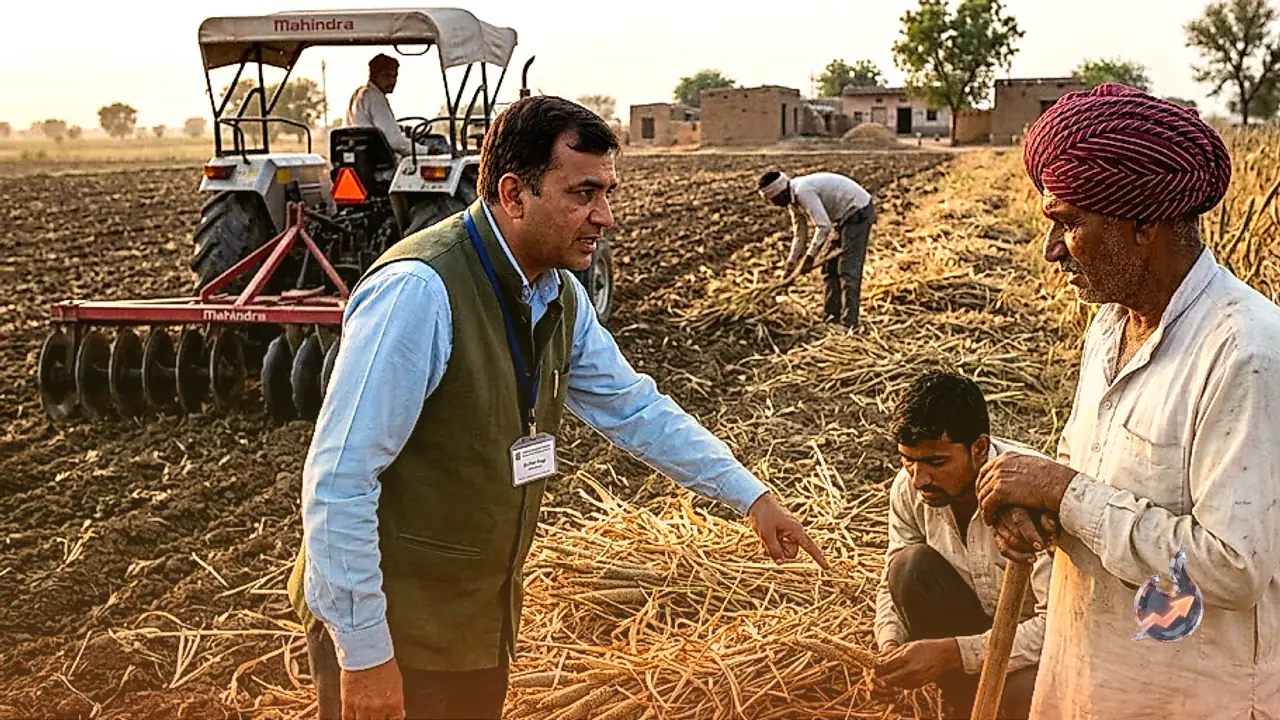

Across the rural belt of Rajasthan, including the Bharatpur region, the harvesting of pearl millet, locally known as bajra, is currently underway at a rapid pace during the Kharif season. Farming families are working day and night across their fields to reap and gather their standing produce. However, the completion of the harvesting process leaves behind a vast volume of crop residues spread over the soil. These leftover materials mainly comprise thick and rigid bajra stalks, crushed straw known as boola, root stumps sticking out of the ground, and various wild weeds and grass patches. Many growers tend to leave their fields untended for several days following the harvest, creating avoidable hurdles for the next crop cycle.
Agricultural specialists point out that managing these residual materials systematically and thoroughly cleaning the agricultural plots prior to the sowing of the upcoming Rabi season crops is crucial for farmers. Neglecting the timely clearing of the land can lead to complications during soil tillage and severely undermine the yield potential of the succeeding crop.
Practical Challenges During Tillage and Seed Sowing Operations
Allowing hard pearl millet stalks and residual waste to remain scattered across the plots for extended periods poses severe difficulties during subsequent field operations. The greatest mechanical challenge occurs during plowing and seeding activities. When farmers operate tractors along with modern farming implements such as cultivators or seed drills, the tough, fibrous stalks get tangled within the rotating parts and tines of the machinery. This clogging prevents implements from penetrating the ground properly, resulting in shallow, uneven, and poorly prepared seedbeds that cannot support optimal seed placement.
Moreover, unmanaged wild grass and unwanted weeds left in the soil worsen weed infestation throughout the upcoming crop season. If the land is not cleared down to the ground, older weeds revive alongside the freshly sown Rabi crops. These aggressive weeds absorb moisture, fertilizers, and critical soil nutrients intended for the new plants, depriving the seedlings of nourishment and stunting their early vegetative growth.
Utilizing Crop Waste as Livestock Fodder and Organic Compost
Rather than treating the harvested residues as useless waste, growers can put these plant parts to constructive agricultural use through organized collection. Useful components of the harvested pearl millet can serve as nutritious feed for livestock or support other farming requirements. The crushed pearl millet straw, known as boola, is widely recognized as a highly beneficial dry fodder option for cattle and buffaloes, providing substantial nutritional bulk during the dry months.
On the other hand, the unusable root segments and coarse debris that cannot be digested by livestock should be gathered and transferred to compost pits. Converting these biological leftovers into organic compost helps recycle organic matter back into the farm, enriching the physical structure of the soil and lowering the overall demand for chemical fertilizers over time.
Detrimental Effects of In-Field Stubble Burning
Setting fire to leftover crop residue as a quick disposal shortcut has been strongly condemned by farm experts. Burning stubble directly on the field generates extreme surface heat that penetrates the topsoil, annihilating vital earthworm populations and beneficial soil microorganisms. These natural biological organisms are responsible for aerating the soil and processing organic nutrients; their destruction causes an immediate decline in the natural fertility and moisture-holding capacity of the land.
Simultaneously, the thick smoke produced by open field burning causes severe environmental degradation. The resultant air pollution blankets rural settlements, triggering breathing difficulties, throat irritation, and respiratory problems for village residents, particularly affecting vulnerable elderly people and young children.
Optimizing Seedbeds for a Productive Rabi Season
Agricultural authorities emphasize that giving the succeeding crop an optimal start depends heavily on how well the land is preconditioned. Eliminating all remnants of bajra stalks, boola, and dry vegetation on schedule, followed by systematic, deep plowing, creates a loose and aerated soil structure. This well-prepared seedbed provides a balanced microclimate that accelerates seed germination and supports uniform sprouting across the entire plot.
Minimizing weed competition from the very beginning ensures that the tender seedlings receive adequate sunlight, moisture, and fertilizer. Consequently, farmers are urged not to leave harvested plots unattended, but rather to begin residue clearance and soil preparation immediately, enabling smooth Rabi sowing and maximizing agricultural profits in the upcoming season.