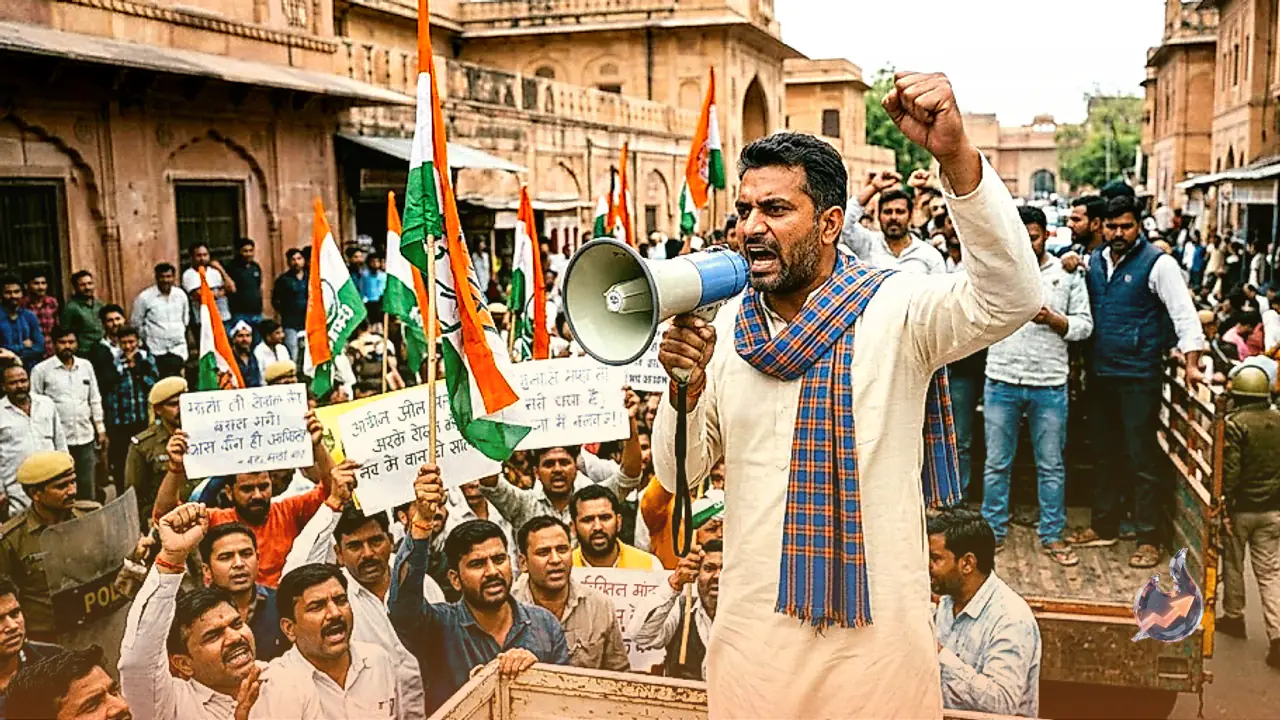


















Political activity in Rajasthan's educational hub of Kota has reached a fever pitch as campaign activities for the upcoming municipal corporation elections gain momentum. Following the successful completion of the nomination process, official candidates from various political parties alongside independent contenders have actively launched their door-to-door public outreach drives across the city. Amidst this heightened political atmosphere, residents across Kota's diverse municipal zones have articulated explicit expectations regarding local infrastructure and urban management. Voters are increasingly distancing themselves from voting purely on party lines, insisting instead on choosing representatives who demonstrate a genuine commitment to resolving baseline civic issues.
Voter Expectations and Accountability Criteria for Ward Councillors
Discussions among residents across various ward segments reveal a decisive voter consensus that candidates seeking support solely under a party banner are no longer adequate. Urban residents emphasize that regardless of political affiliation, a ward councillor must possess an intimate understanding of local geography and ward-specific grievances. The electorate in Kota is explicitly prioritizing educated, sensible, and accountable candidates who can systematically comprehend public grievances and navigate them through the appropriate municipal departments.
Mere submission of complaints to city departments is considered insufficient by voters. Representatives are expected to actively track each issue through continuous follow-up actions until a tangible solution is achieved. Furthermore, regular physical presence within the ward is deemed non-negotiable. Citizens demand that councillors conduct physical inspections of their entire ward at least once or twice a month. By personally walking through residential lanes, neighborhood colonies, public parks, and primary thoroughfares, councillors can directly assess the daily difficulties experienced by residents.
Sanitation Infrastructure, Lighting, and Priority Ward 76 Concerns
Residents in Ward 76 as well as several other municipal divisions across Kota have identified deteriorating civic amenities as primary election issues. Inadequate routine sanitation, accumulated filth in drainage lines, inefficient solid waste disposal, irregular drinking water distribution, neglected public parks, and non-functional street lighting form the core of current political debates. Local citizens point out that minor unresolved infrastructure defects frequently escalate into major municipal breakdowns when neglected over time. Consequently, voters demand an effective ward-level grievance redressal framework capable of swift intervention.
Residential Security Enhancements and Public Safety Priorities
Strengthening security measures across residential housing colonies has emerged as another urgent requirement expressed by Kota citizens. Neighborhood residents advocate for the installation of high-definition closed-circuit television (CCTV) cameras at vulnerable junctions and key entry streets. Such localized security measures are expected to significantly enhance safety conditions for women, children, and senior citizens. Alongside camera surveillance, prompt repair and maintenance of dysfunctional street lights are highlighted as critical to eliminating dark stretches and deterring street crime.
Demands from the Next Mayor: Field Oversight and Strategic Planning
Public expectations regarding the position of Kota's municipal mayor are similarly demanding. Citizens state that the incoming mayor must not remain confined to indoor administrative meetings. Instead, the municipal leader must personally execute field inspections, observe ground realities, and directly enforce accountability among civic officials. The electorate expects rapid official acknowledgment and action whenever public complaints are logged. Furthermore, residents urge the development of structured, reviewable master plans addressing citywide sanitation, road repairs, drinking water distribution, traffic management, and dedicated parking facilities.
Adopting the Indore Sanitation Model for Kota’s Civic Upgrades
When addressing urban cleanliness standards, Kota residents frequently cite the city of Indore as a national benchmark. Citizens express a strong desire for Kota to target top positions in national cleanliness rankings (Swachh Survekshan). Achieving this goal will require moving beyond surface sweeping to implement systematic desilting of major stormwater drains, modernized door-to-door waste collection networks, and continuous maintenance of public zones.
Managing Traffic Density, Parking Shortages, and Stray Animals
Escalating traffic congestion and severe parking shortages along commercial corridors have also transformed into central election points. Unregulated vehicle movement through major markets and busy arterial roads subjects local shopkeepers and commuters to daily inconvenience. Citizens have requested that the municipal corporation construct organized, multi-level parking facilities in high-density commercial hubs. Additionally, residents seek a permanent municipal policy to address stray cattle roaming main roads and stray dogs occupying residential lanes.
Leadership Standards for Women Mayors and Final Voter Deciding Factors
Kota residents maintain a pragmatic perspective regarding female leadership in the municipal corporation. Citizens stress that whether the mayoral office is held by a woman or a man, the core criteria remain individual competence, administrative understanding, integrity, and execution ability. A female mayor must possess the leadership capacity to coordinate efficiently with municipal officers while shaping long-term urban development strategies. Local women highlight clean surroundings, safety, and functional utilities as their foremost priorities. As polling day approaches, voter choice will ultimately depend on candidate credibility, accessibility, working capacity, and developmental vision rather than mere political branding.