



















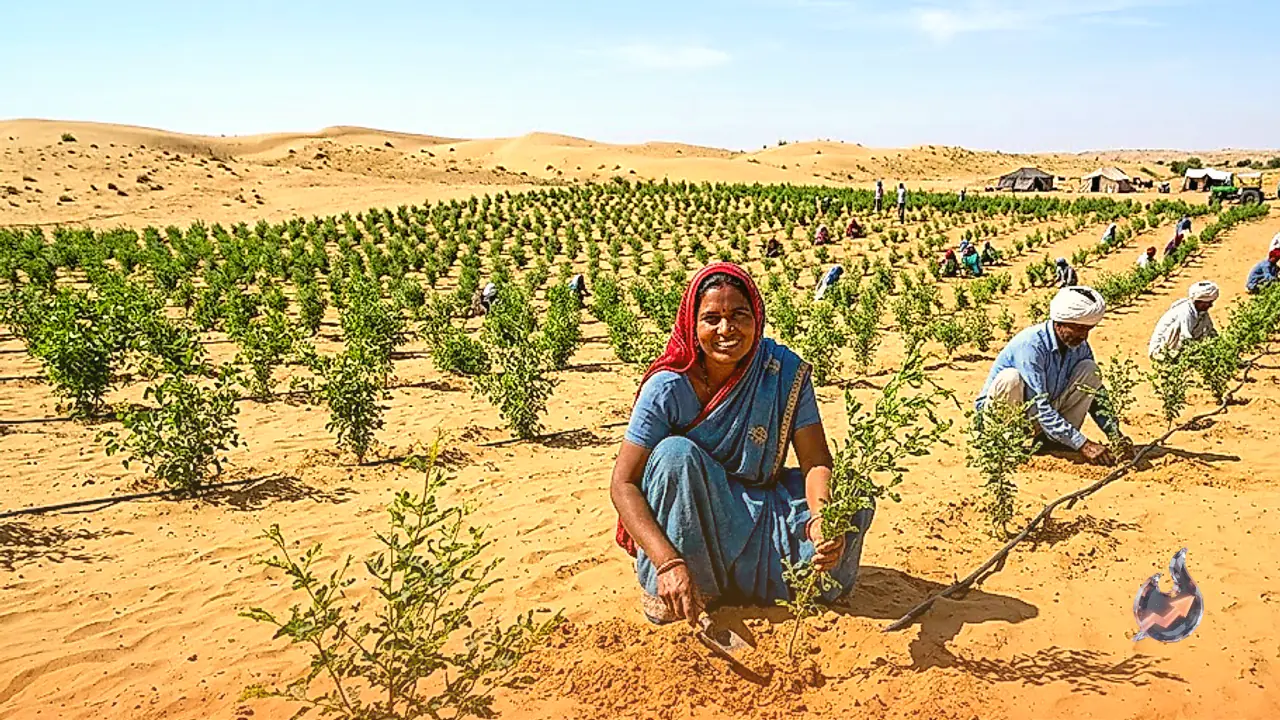

Cultivating resilient vegetation amid blistering heatwaves, scarce rainfall, and shifting sand mounds has perpetually tested conservation efforts across arid regions. Defying these natural odds, an expansive green belt is taking shape across the barren landscape of Barmer. Over the past two years, Vedanta Oil & Gas collaborated with the Forest Department and local village communities to plant nearly 3.5 lakh saplings spanning across 700 hectares of territory. Remarkably, around 80 percent of these young plants continue to thrive despite severe climatic pressures. This resilience stems from the conscious selection of indigenous botanical species naturally adapted to survive the uncompromising desert weather of the Thar.
Indigenous Flora Selected to Restore Desert Ecology
Transforming the barren terrain required choosing native trees known for endurance in arid zones. Across the designated 700-hectare spread, plantations comprise resilient species including Khejri, Rohida, Neem, Shisham, Kumat, Jaal, Ber, Arandu, Moringa, Guggul, and Jungle Jalebi. These local varieties naturally anchor shifting soils and offer ecological sustenance to native desert wildlife.
The inaugural phase of this undertaking focused on several regional belts, including Dhamdali, Goyana Mahadev Bhakhar, Gangali, and Aawadi Manjhi. This initial push covered nearly 400 hectares, successfully introducing 2 lakh saplings to the ground. During this period, field teams placed intense focus on protective measures and nurturing saplings through their vulnerable initial stages, ensuring that harsh climate swings did not deplete survival rates.
Secondary Expansion and the Road Toward 2030
Building on early progress, the second phase expanded the greening perimeter into areas such as Juna Patrasar, Bijrad, Itada, and Badra. This segment covered an additional 300 hectares of land and introduced 1.5 lakh saplings. Combining both development cycles brings the total restored footprint to 700 hectares across the district. Looking forward, organizers have established a broader ecological blueprint aiming to plant a cumulative total of 20 lakh trees across Barmer district by the year 2030.
Engineering Moisture Retention Through Trenches and Bunds
Maintaining adequate soil moisture within highly porous desert earth presented the single greatest technical obstacle. To counter this, Vedanta Oil & Gas alongside forestry officials moved beyond conventional pit planting by integrating specialized rainfall harvesting mechanisms. Field workers excavated contour and staggered trenches along natural slopes to capture rainwater run-off and slow surface drainage.
Furthermore, teams constructed crescent-shaped earthen bunds and micro-catchment barriers that route scarce desert rain directly toward deep root networks. These targeted water management structures played a decisive role in sustaining the impressive 80 percent survival benchmark across these challenging dunes.