


















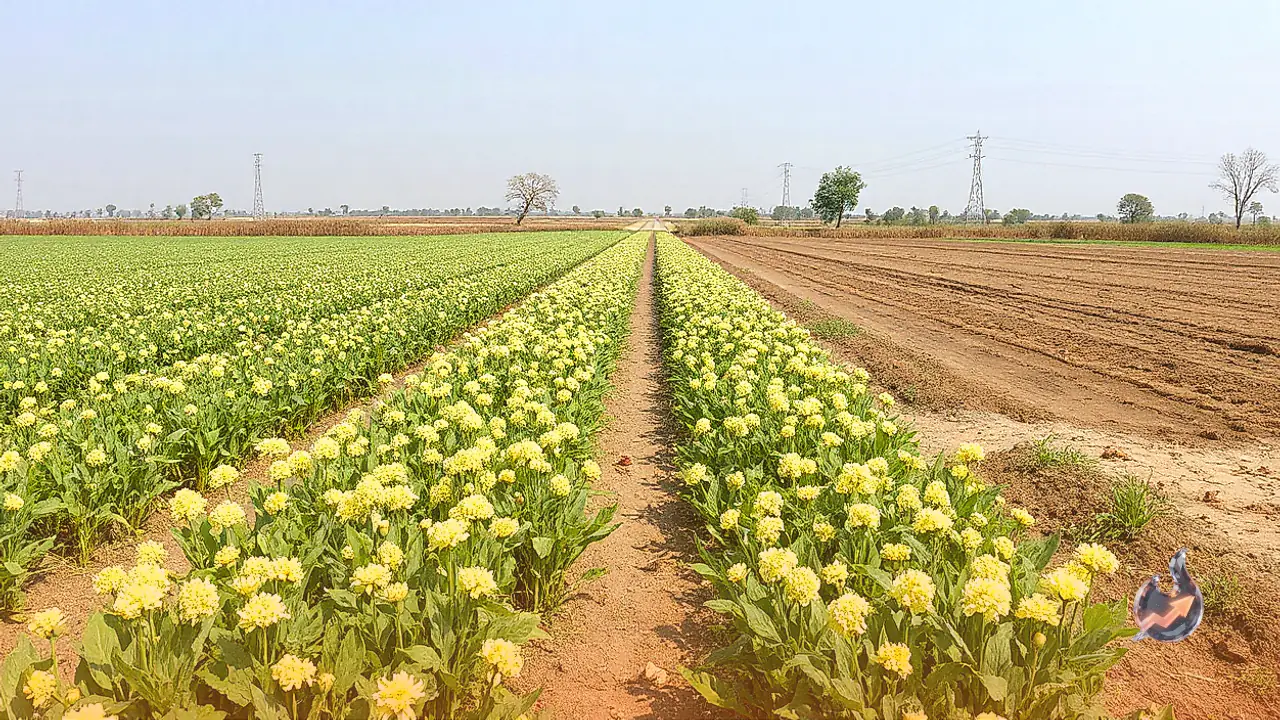

With the commencement of the rabi farming season, agricultural fields have turned active as growers initiate comprehensive land preparation and crop sowing routines. During this agricultural cycle, mustard cultivation stands out as a highly lucrative cash crop for the farming community. Across multiple belts of Bhilwara district in Rajasthan, farmers undertake mustard farming on an extensive scale. Beyond Bhilwara, the crop is widely cultivated in neighboring districts including Chittorgarh, Tonk, and Rajsamand. Securing an abundant harvest, however, requires much more than basic field plowing; picking the correct seed variety and completing sowing within the recommended calendar window remain vital determinants of success. Any negligence during the initial sowing stage can directly diminish overall farm yields.
Selecting Suitable Seed Varieties Based on Local Climate
Former agriculture officer Dr. Inder Singh Sancheti emphasizes that farmers must evaluate several foundational technical factors before placing seeds into the ground. Variety selection should strictly align with the local microclimate, the specific soil structure of the farmland, and the reliability of available irrigation sources. Consulting agricultural experts and local agriculture department officials remains essential before finalizing seed choices for the season.
Across Rajasthan, a select group of improved mustard varieties has earned substantial trust and widespread popularity among growers. These prominent varieties include RH-30, RH-749, Giriraj (DRMR-IJ-31), Pusa Vijay, and Pusa Bold. When managed under sound agronomic practices, these certified varieties demonstrate robust yield potential, providing farmers with dependable returns on their input investments.
Soil Preparation, Seed Treatment, and Optimal Sowing Windows
Achieving superior mustard production hinges upon meticulous seedbed preparation. The field must be tilled thoroughly until the soil becomes friable, loose, and evenly leveled, ensuring uniform seed germination across the entire acreage. Growers should strictly rely on certified, high-grade seeds. Treating the seeds prior to planting is equally crucial, as systematic seed treatment protects emerging seedlings from devastating early-stage soil-borne and fungal diseases.
Agronomists identify the window stretching from mid-October to the early days of November as the most advantageous period for mustard sowing. This operational timeframe can slightly shift depending on specific variety characteristics and regional temperature patterns. Delaying planting beyond this optimal threshold exposes the crop to elevated temperatures later in the season. Unfavorable heat during subsequent growth stages disrupts flowering and impairs grain development inside the pods, triggering notable declines in net harvest volumes.
Row Spacing, Irrigation Scheduling, and Crop Maintenance
Maintaining precise field geometry while sowing plays a decisive role in plant vigor. Farmers need to preserve recommended distances both between rows and between individual plants. Proper spacing guarantees that each mustard plant receives unrestricted sunlight, adequate air circulation, and an uninterrupted share of soil nutrients, encouraging balanced vegetative expansion and healthy branching.
Moisture management demands calibrated attention throughout the growing cycle. Water should be applied strictly according to soil moisture demands. In mustard farming, scheduling the first irrigation just prior to flowering and providing the second irrigation during the grain formation stage delivers optimal agronomic benefits. Concurrently, rigorous weed management and frequent field scouting for early pest infestations remain mandatory. Fertilizer applications should strictly reflect soil health test recommendations and expert advice. By integrating validated seed varieties, punctual sowing, treated planting material, and timely crop care, farmers can secure maximum yield potential from their mustard fields.