





















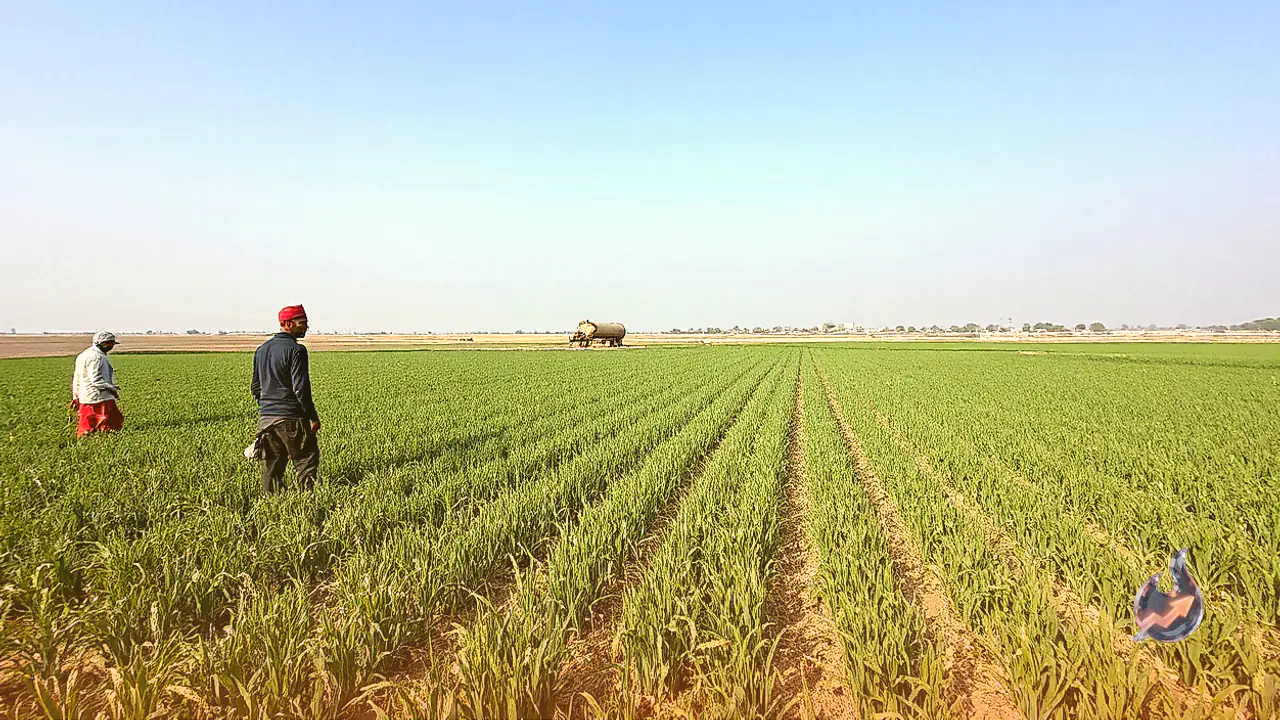

With the onset of the Rabi agricultural calendar in Rajasthan's Nagaur district, rural cultivators and livestock owners have initiated the planting of oat crops to ensure an ample reserve of green fodder. Maintaining a dependable, nutrient-rich diet for dairy animals remains a central priority across agricultural households in the region. Agricultural specialists point out that the opening days of November present the most suitable climatic conditions for sowing oats. Completing the planting process during this window allows crops to establish robust root systems and foliage, helping farmers maximize seasonal biomass. By securing a reliable harvest on their own fields, livestock keepers not only stabilize their year-round feed arrangements but also substantially curb recurring expenditures on packaged cattle feed purchased from commercial markets.
Nutritional Value for Dairy Herds and Rural Livestock Health
The green succulent leaves of the oat plant offer a tasty, easily digestible, and highly nourishing ration for farm animals. Rich in essential minerals and feed elements, oats directly support cattle health, vitality, and milk productivity. Green oat forage proves especially beneficial for lactating cows and buffaloes that demand a balanced diet during peak winter lactation. In Nagaur, where dairy farming and animal husbandry constitute the backbone of the village economy, expanding the acreage under forage crops offers a dependable hedge against seasonal shortages. Cultivating oats in irrigated plots is straightforward and manageable, providing farmers with a continuous supply of fresh feed that shields them from the volatile costs of commercial dry fodder and feed supplements.
Selecting Certified High-Yield Oat Varieties
The overall yield and nutritional quality of the forage stand heavily rely on the caliber of seeds selected at planting. Agriculture expert Ramniwas Choudhary noted that cultivators looking for optimum vegetative growth should choose certified seeds of recommended crop varieties. He pointed out that cultivars such as OS-6, OS-7, and Kent have proven highly productive and reliable for green forage harvesting. When deciding on a particular seed stock, farmers need to evaluate local field conditions, including soil characteristics, seasonal temperature patterns, and the availability of irrigation water. Utilizing certified seed lines guarantees uniform emergence, superior plant establishment, and a markedly higher potential for biomass generation across the acreage.
Land Preparation, Seeding Rates, and Row Spacing Guidelines
Proper seedbed preparation and structured planting geometry play a critical role in facilitating vigorous oat growth. Young farmer Arjun Choudhary outlined that field preparation demands thorough plowing, recommending that the soil be turned two to three times to achieve a friable, well-aerated tilth. Leveling the plowed acreage afterward ensures uniform water movement during irrigation cycles, preventing water from pooling unevenly in depressions. The recommended seeding requirement ranges between 75 and 100 kilograms per hectare. Farmers are advised to sow in orderly rows, preserving a row-to-row spacing of 25 to 30 centimeters. This uniform distance provides each seedling adequate sunlight, moisture, and ground space to develop strong tillers, while simultaneously making routine weeding and hoeing far simpler. Maintaining sufficient soil moisture at the time of sowing is vital to secure prompt and uniform seed emergence.
Irrigation Scheduling and Weed Management
Sustaining vigorous vegetative growth throughout the crop cycle requires meticulous water management. The soil profile should not be allowed to dry out completely, with irrigation timing carefully calibrated against local weather patterns and soil texture. At the same time, farmers must prevent waterlogging, as excessive standing water can hinder root respiration and retard vegetative growth. Controlling unwanted wild vegetation during the initial development phases is equally essential. Swift weeding keeps aggressive weeds from competing for soil nutrients and moisture, ensuring that the young oat plants receive the full benefit of soil fertility and water applications.
Cost Reduction and Economic Viability for Dairy Farmers
Securing sufficient high-grade feed remains one of the heaviest operational overheads for dairy operators, especially during periods of regional dry fodder deficits. Sowing oats provides farmers with a direct pathway to harvest abundant, nutritious feed directly from their land, sharply lowering daily outlays on commercial cattle feeds. By adhering to recommended planting schedules, sowing certified seed strains, and implementing disciplined field care, growers can attain maximum tonnage per hectare. This steady supply of farm-grown forage improves milk yields, protects livestock stamina, and leaves rural households with healthier operating margins, transforming dairy husbandry into a far more remunerative enterprise.