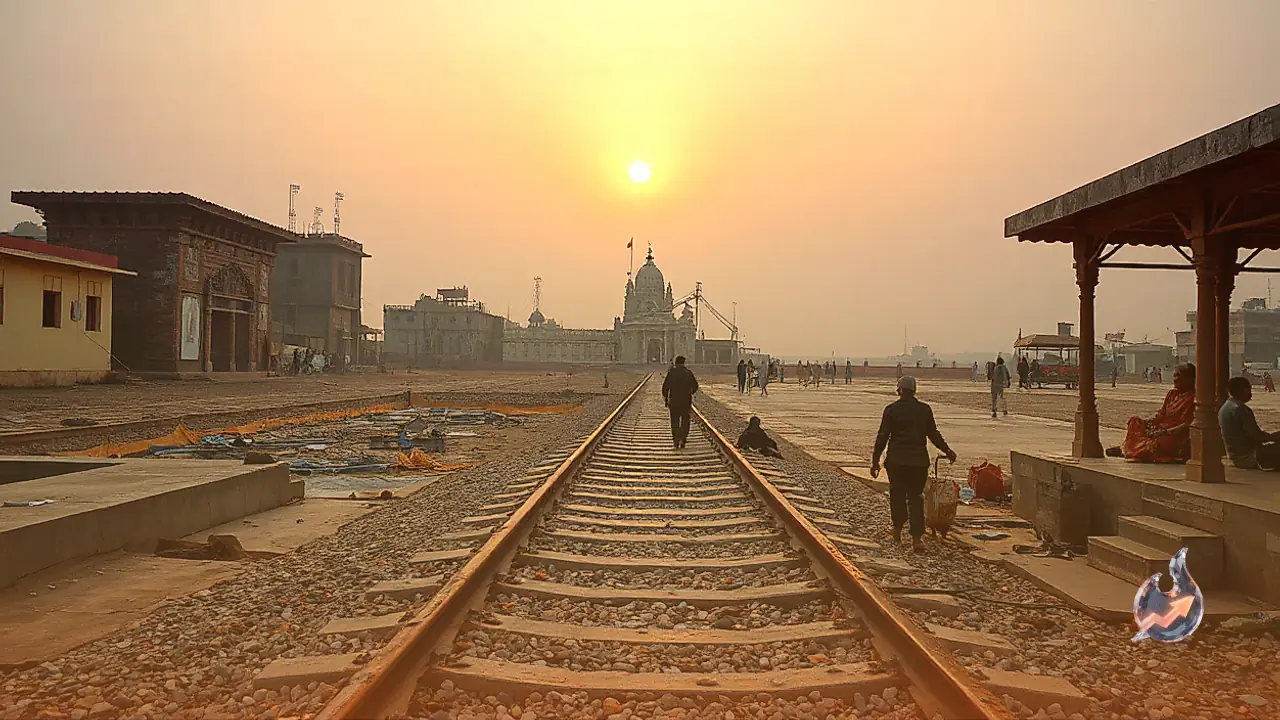















A coordinated infrastructure drive between the central and state governments is transforming Rajasthan's connectivity, power capacity, and industrial landscape. Sweeping development works covering highways, rail tracks, airport upgrades, energy grids, and urban rapid transit systems have gained momentum across the desert state. Following official deliberations between Rajasthan Chief Minister Bhajan Lal Sharma and union ministers in New Delhi, persistent operational hurdles have been tackled to keep long-pending projects on track. Central government data reveals that central infrastructure projects worth an estimated ₹2,61,000 crore are currently under active execution across the state, with financial outlays exceeding ₹1,17,000 crore already deployed across 82 ongoing initiatives.
Execution timelines have seen substantial advancement, with 29 major projects valued at ₹1,22,000 crore achieving over 80 percent physical completion. A cornerstone of the state's industrial trajectory is the development linked to the country's first greenfield refinery situated in Barmer. The dedicated petrochemical evacuation and marketing terminal at this facility has now registered 99 percent construction completion, laying the foundation for a vibrant regional petrochemical and derivative manufacturing ecosystem.
Expanding Aviation Capacity in Jodhpur and Udaipur
To support expanding commercial travel and tourism, civil aviation facilities in western and southern Rajasthan are undergoing significant expansion. A brand-new passenger terminal building constructed at an outlay of ₹480 crore has been completed at Jodhpur airport to accommodate growing flight movements. Meanwhile, civil construction on the new integrated passenger terminal building at Udaipur airport has achieved an 88 percent completion mark. These upgraded airport facilities are designed to deliver smoother transit experiences for travelers while opening new economic avenues for local tourism and handicraft trades.
Power Grids and Large-Scale Solar Generation
Substantial capital has been directed into safeguarding electrical supply and scaling green energy production. Around 19 key power projects involving an investment of ₹98,759 crore are moving forward across the state. This portfolio features the ambitious 6 gigawatt solar installation within the Barmer complex alongside the Fatehgarh-II transmission system, designed to transport clean energy seamlessly into the broader national grid. Strategic planning is also advancing around the Mahi-Banswara nuclear power project to reinforce baseload energy capacity for Rajasthan's long-term industrial requirements.
Rail Network Modernization and National Highway Works
Transportation networks are receiving heavy capital allocations to streamline passenger movement and cargo logistics. The railway sector alone accounts for 22 separate projects valued in excess of ₹33,572 crore. Key corridors undergoing upgrades include the Bikaner-Merta-Jodhpur, Ajmer-Chittorgarh-Udaipur, and Sadulpur-Ratangarh rail lines. On the road front, ₹16,241 crore is being invested across 22 national highway development projects. Complementing these inter-city arteries, civic bodies are implementing urban public transit systems backed by project budgets totaling ₹14,222 crore.
Easing Congestion with Jaipur Ring Road and Metro Phase-2
Comprehensive measures have been initiated to alleviate intense traffic bottlenecks within Rajasthan's capital city, Jaipur. Civil works will be undertaken for the Jaipur Ring Road (North) development, which carries a projected budget of ₹11,764 crore to direct heavy highway traffic away from downtown streets. Alongside this bypass route, the mass transit system is preparing to expand through the Jaipur Metro Phase-2 initiative, projected to cost more than ₹13,000 crore. Together, these modern transit channels are planned to streamline everyday commuter transit and curb vehicular congestion across municipal limits.
Regional Water Security and Industrial Hubs
Addressing persistent water availability challenges remains central to the state's broader development strategy. The Ram Jal Setu link initiative is aimed at delivering secure drinking water to over 3 crore citizens across 17 districts of Rajasthan. Furthermore, the water infrastructure scheme aims to bring reliable irrigation access to approximately 4 lakh hectares of agricultural acreage. Progress under interstate water agreements concerning the Yamuna, Kishau, and Narmada rivers is also expected to bolster regional water distribution. Industrial growth is receiving targeted support through zones like the Jodhpur-Pali-Marwar industrial area, creating fresh commercial potential and employment prospects across the state.