




















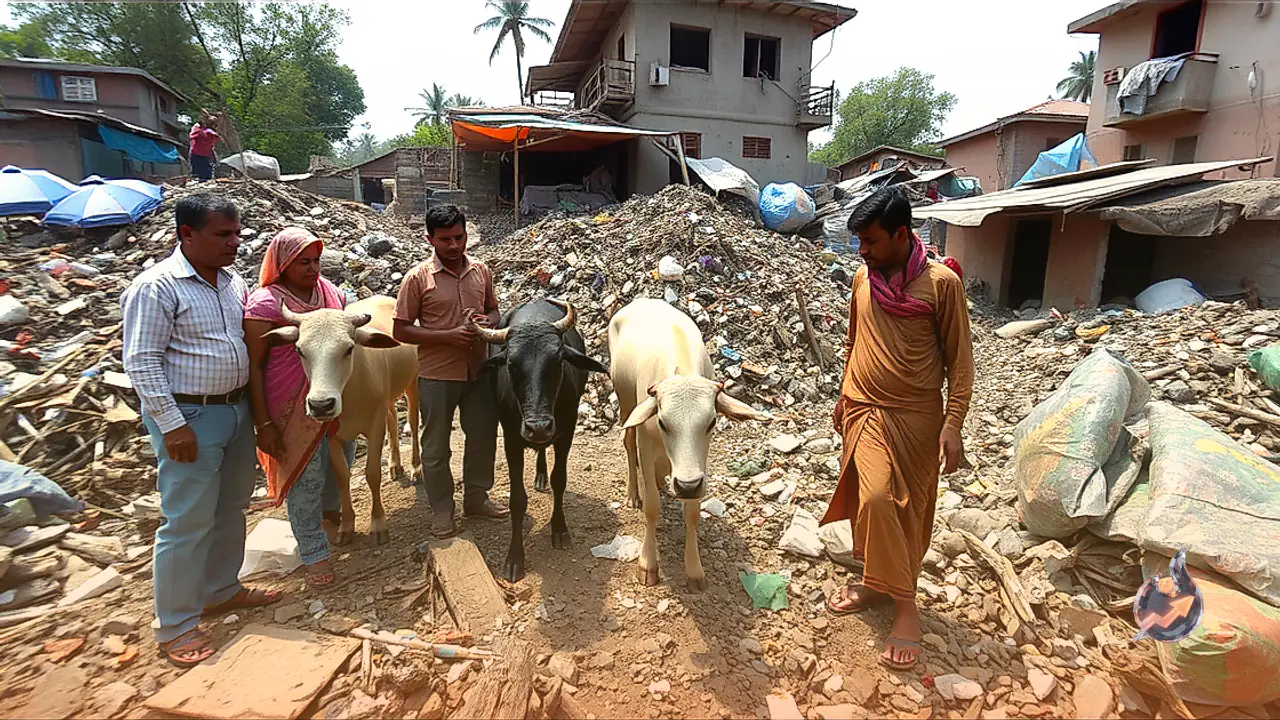

A severe breakdown of municipal sanitation and basic civic amenities has come to light in Rawatbhata, located in the Chittorgarh district of Rajasthan. While urban local bodies routinely advertise major infrastructure improvements, on-ground realities for residents paint a starkly contrasting picture marked by administrative neglect, unmanaged hazards, and persistent public distress. At the center of the controversy is a municipal dumping ground set up right next to the Shiv Colony residential development, situated barely a few meters away from the Rawatbhata municipal board office itself.
Despite its close proximity to the administrative headquarters, civic authorities have allowed waste from across the town to be dumped directly on the edge of Shiv Colony. Over time, this uncontrolled unloading has formed a massive heap of decomposing trash. The resulting foul stench blankets the surroundings round the clock, making even normal outdoor breathing an ordeal for local families while routine sanitation remains restricted to superficial tokenism.
Surging Vector Infestation and Infectious Disease Risks
The accumulation of unmanaged solid waste right beside private dwellings has created an unbearable living environment. The sheer size of the refuse pile has triggered a massive infestation of flies and mosquitoes across the entire neighborhood. Conditions have deteriorated to the point where families are afraid to keep their windows and doors open even during the day.
Residents voice serious concerns that the site has transformed into a dangerous breeding hub for infectious outbreaks. The constant presence of stagnant muck and vector swarms exposes the locality to dengue, malaria, and numerous seasonal infections. Community members emphasize that administrative lethargy is directly forcing them to compromise their physical health and personal safety.
Starving Cattle Ingesting Plastic Waste
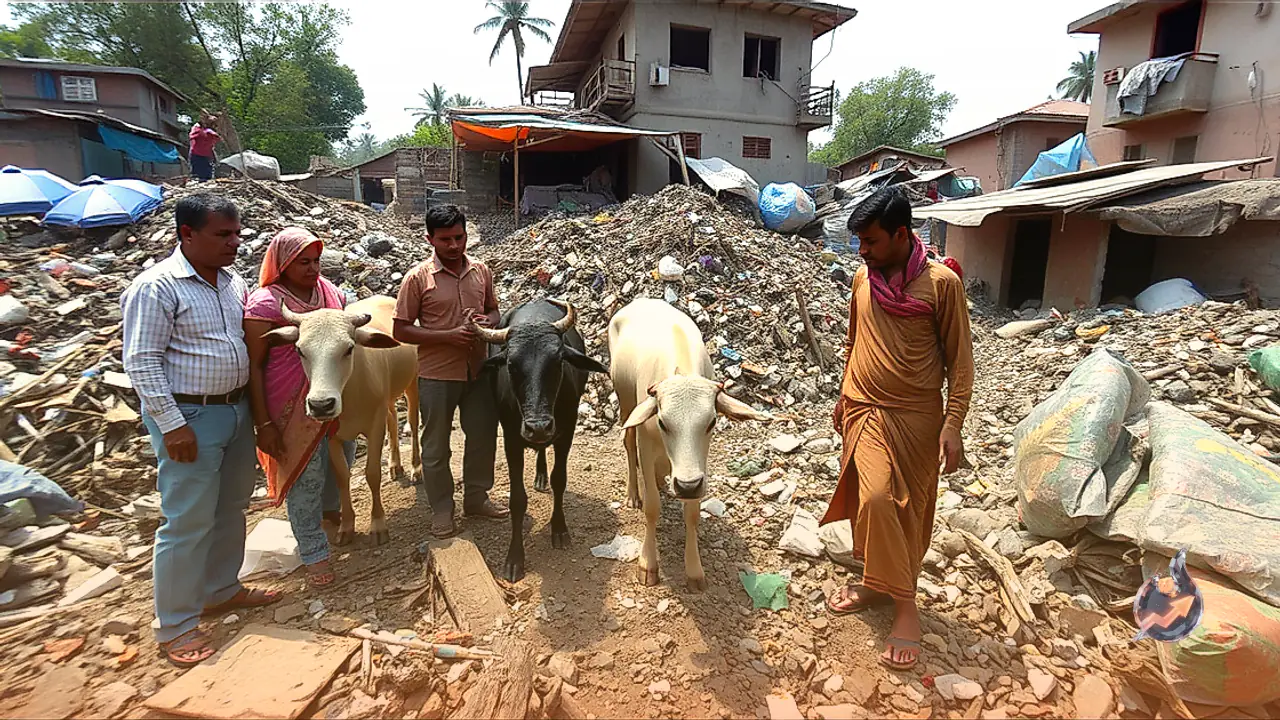
Perhaps the most distressing outcome of this mismanaged facility involves local livestock. Strays and destitute cattle, wandering in search of sustenance, congregate at the dump site to scour through the garbage. With nothing else available, the animals end up ingesting discarded polythene, toxic plastic wrappers, and decomposing organic refuse, leading to internal blockages and fatal diseases.
As these animals scatter the garbage mounds looking for feed, the litter spills further onto access routes and closer to homes. This unchecked visual and environmental degradation underscores how nationwide cleanliness targets under the Swachh Bharat Abhiyan have been reduced to mere bureaucratic slogans within this urban limit.
Toxic Smoke Clouds from Deliberate Garbage Burning
The crisis extends well beyond odors and scattered litter. Employees of the municipal body frequently set fire to the accumulated rubbish piles to reduce their volume. Because the garbage is densely packed with polyethylene bags and synthetic polymers, the combustion releases dense, noxious fumes into the local atmosphere.
These toxic clouds drift straight into Shiv Colony and adjoining domestic clusters. Prolonged exposure to this chemical smoke has caused a noticeable rise in chronic asthma cases, severe breathing difficulties, and related respiratory complaints among residents of all age groups.
Grid Failures and Disrupted Municipal Water Supply
The municipal council's mismanagement has also begun crippling vital utility infrastructure, directly knocking out power grids and municipal water lines. Shedding light on this operational breakdown, Junior Engineer Saudas Meena of the electricity department leveled serious allegations against civic handling.
According to Saudas Meena, sanitation workers dump animal carcasses out in the open just outside the designated yard perimeter. These carcasses draw flocks of egrets and other scavenging birds to the site. When taking off, these large birds repeatedly collide with nearby electrical lines, triggering line trips and widespread power outages. These recurring blackouts shut down Public Health Engineering Department (PHED) pumping operations, abruptly cutting off the municipal water supply and leaving residents and villagers facing severe water shortages.