
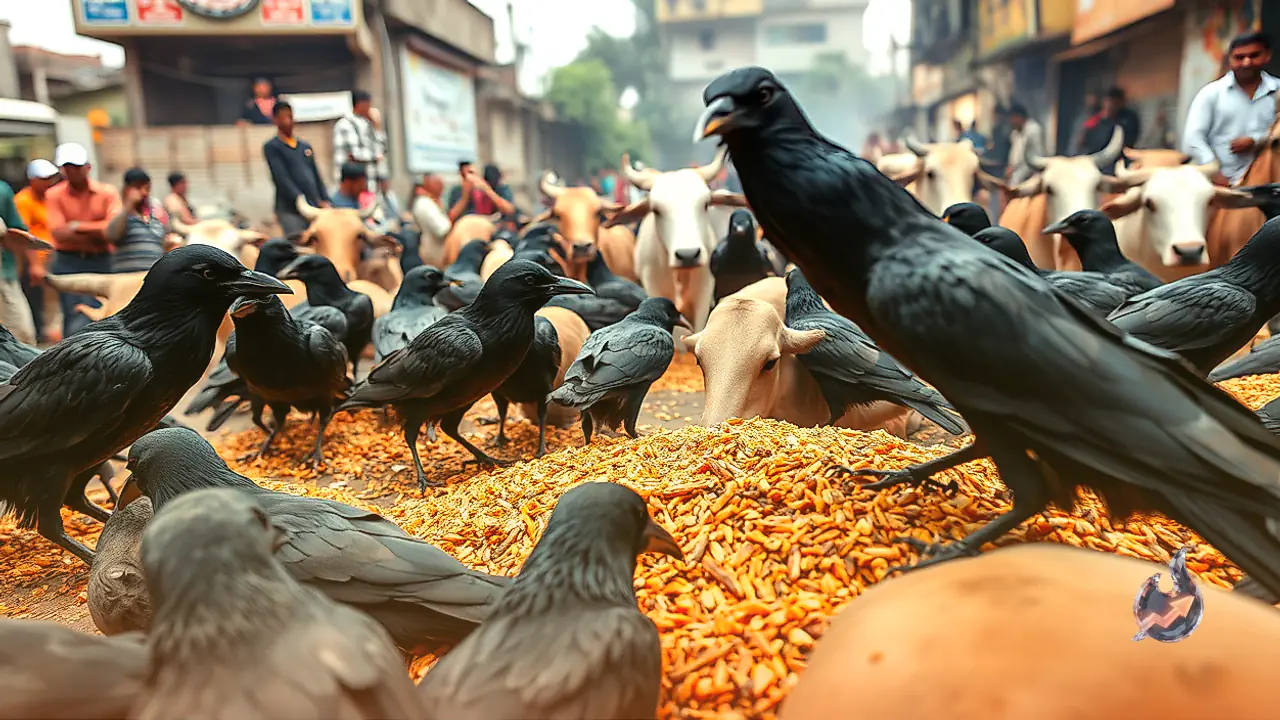


















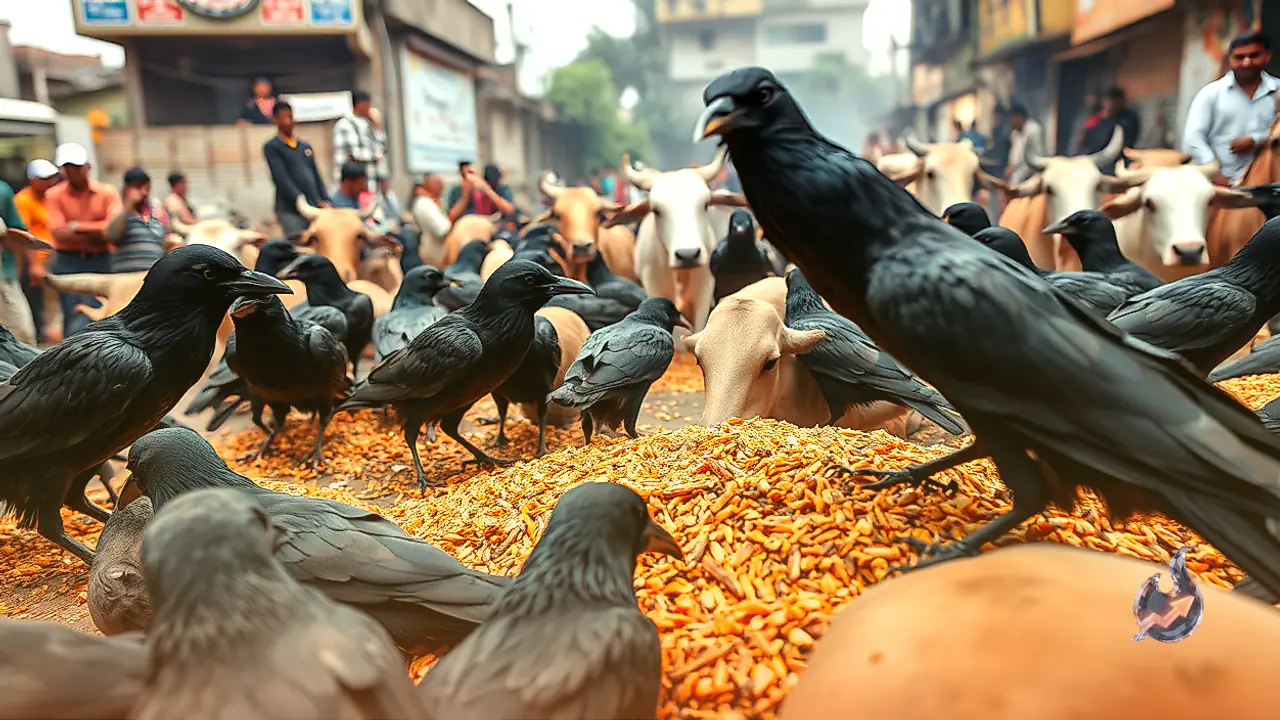

During the period of Pitru Paksha, traditional rituals such as Shraddh and Tarpan are performed to bring peace and satisfaction to departed ancestors. According to Hindu beliefs, offering food to crows during these days is a centuries-old custom. It is traditionally believed that ancestors take the form of crows to visit the earth and accept the offerings prepared by their family members. However, rapid urban growth and modern environmental changes have made crows increasingly scarce across towns and cities. Many families wait for hours hoping to spot a crow, only to find none. This widespread issue leaves many people wondering how to properly carry out their ancestral offerings when no crows can be found.
Alternative Animals and Birds to Receive Offerings
Addressing this common practical dilemma, Pandit Kamlesh Vyas, the Nagar Vyas from Bhilwara headquarters, has provided reassuring clarity for devotees. He explained that Pitru Paksha is fundamentally centered on genuine devotion and selfless reverence toward one's forebears. While offering food to a crow holds a dedicated place in traditional rituals, the unavailability of crows should not cause distress. Devotees can comfortably offer the Shraddh meal to other living creatures to fulfill the rite. For instance, people can offer fresh flatbread or green fodder to cows, feed dogs, or spread flour mixed with sugar for ants. In addition, grains like pearl millet and sorghum can be scattered on rooftops or in open spaces to nourish other nearby bird species.
Compassion for Nature as the True Purpose
According to Pandit Kamlesh Vyas, offering food to living beings is far more than an outward religious formality. The foundational purpose underlying this tradition is cultivating kindness, charity, and active care toward all living creatures. The Sanatan tradition has consistently placed the care of nature and mute animals at the highest moral standing. When someone relieves the hunger of an animal or bird, the spiritual virtue earned directly reaches the ancestors, bringing peace to their departed souls. In numerous households, this practice has been handed down through generations, with an initial portion of the ceremonial meal always set aside specifically for animals and birds before anyone else eats.
Key Precautions When Offering Food to Animals
Certain essential precautions must be observed while serving food to animals and birds. Cleanliness and the pure nature of the meal are the most critical factors. The food provided must be wholesome, freshly prepared, and purely vegetarian. Spoiled, decayed, or harmful food items should never be fed to animals, as these could jeopardize their health and well-being. Pandit Vyas also noted that customs connected to Shraddh may vary slightly depending on region and family background. Families are therefore encouraged to carry out their rituals in line with their specific ancestral traditions and local customs. Giving food with heartfelt sincerity and caring for voiceless creatures remains the finest way to pay homage to ancestors while fostering social goodwill.