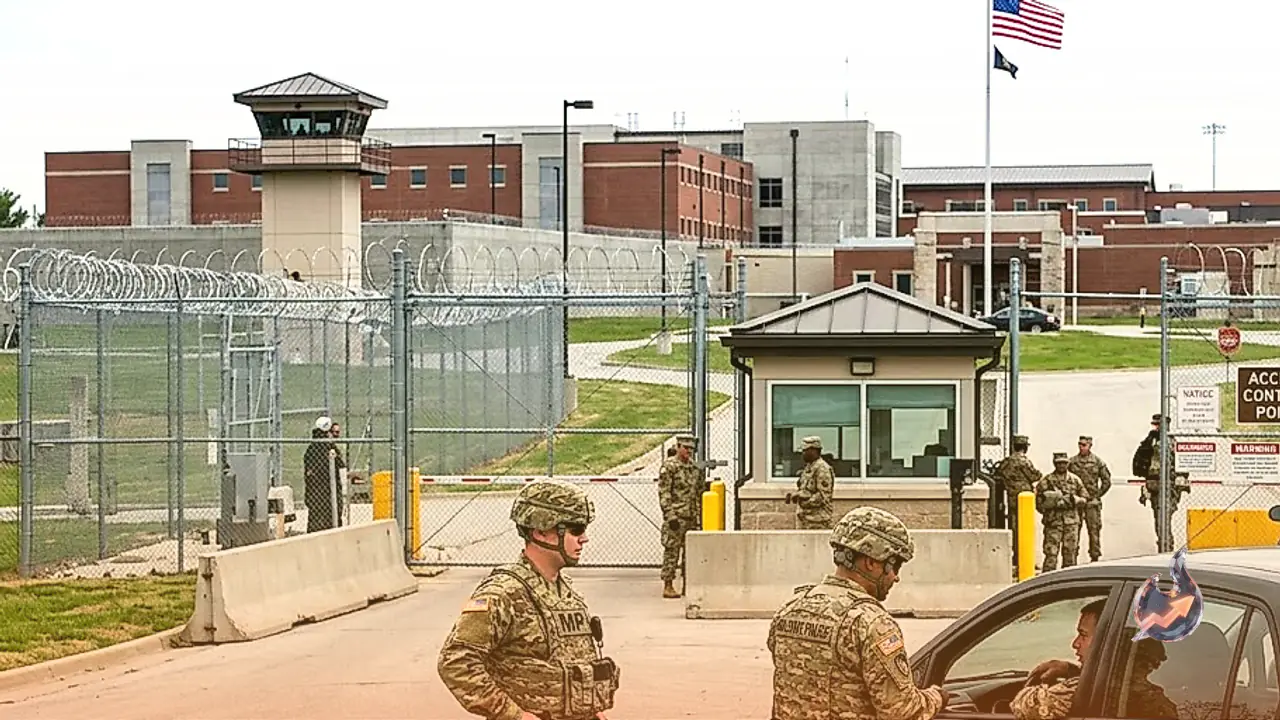























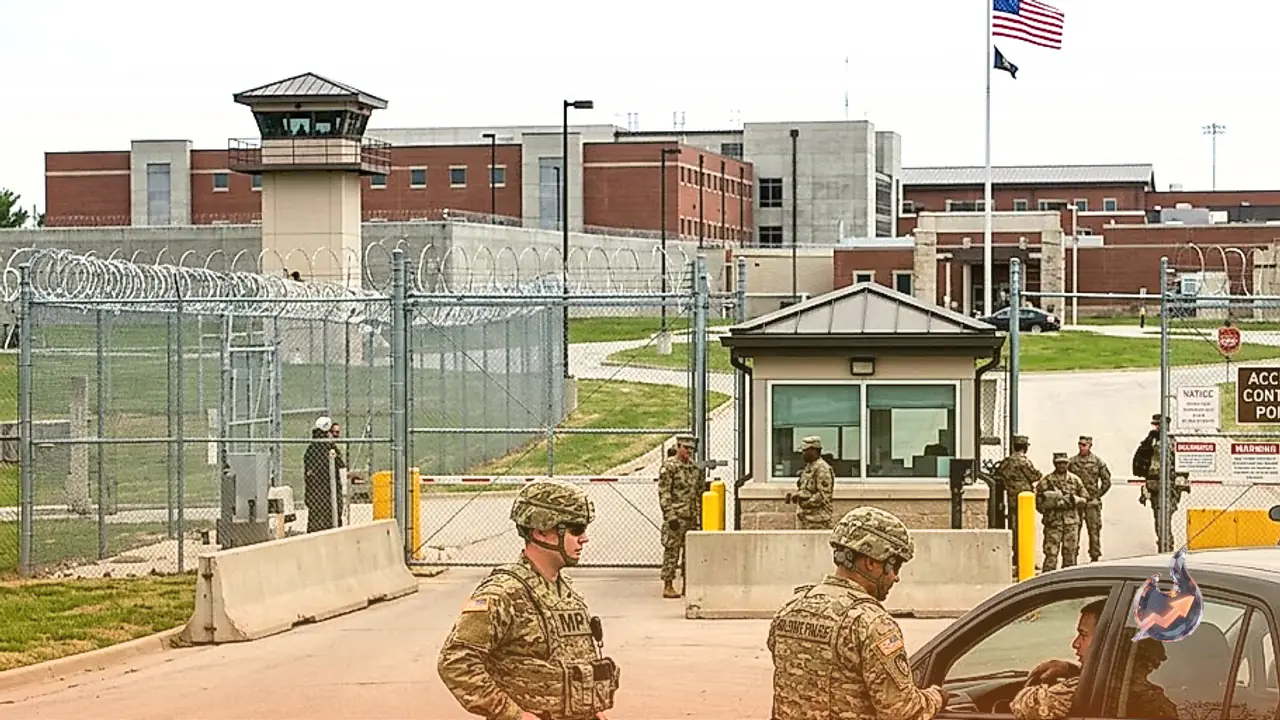

A historic and exceedingly rare military execution is scheduled to take place in the United States, marking the first time in more than eight decades that the armed forces will execute a service member by firing squad. Former Army Major Nidal Hasan, convicted in the mass shooting at the Fort Hood military installation in Texas, will face the firing squad after official authorization was granted at the highest level of government. The execution ends a 17-year legal progression stemming from one of the deadliest insider attacks on American soil.
Presidential Authorization and Execution Timeline
Under American military jurisprudence, a sentence of capital punishment handed down by a court-martial cannot be carried out without the explicit written confirmation of the President of the United States. Pentagon spokesperson Sean Parnell confirmed the development on X, stating that President Donald Trump signed the execution order following a formal recommendation submitted by Defense Secretary Pete Hegseth. The execution date has been set for December 3, 2026, at the very same Fort Hood installation where the mass casualty event took place.
The Massacre at Fort Hood on November 5, 2009
The underlying events date back to the afternoon of November 5, 2009, an incident widely recognized as the deadliest non-combat attack ever carried out inside an American military facility. Hasan was serving as a psychiatrist holding the rank of Major in the US Army. His professional assignment was to counsel soldiers dealing with severe battlefield trauma and mental health strain as they prepared for or returned from deployments overseas. Instead of fulfilling that mission, he orchestrated a deadly assault against fellow service personnel.
Armed with weapons, Hasan walked into a crowded medical processing facility at Fort Hood. Dozens of unarmed soldiers were gathered inside the complex, waiting in queues for mandatory final medical evaluations and vaccinations immediately prior to their operational deployments to Iraq and Afghanistan. Without hesitation, Hasan opened fire on the assembled personnel. The attack resulted in the immediate deaths of 13 soldiers, while 32 other service members sustained serious gunshot wounds and critical injuries.
Court-Martial Proceedings and Confession
Following the shooting, Hasan was taken into custody and subsequently faced formal military prosecution. During his court-martial trial in 2013, Hasan declined to offer a conventional defense and openly admitted to orchestrating the assault. He stated before the tribunal that his motive was to defend the Taliban and fellow Muslims in Afghanistan by killing American troops before they could deploy abroad. Based on the evidence, eyewitness testimony, and his own admission, the military panel found him guilty of premeditated murder and attempted premeditated murder, handing down a unanimous death sentence.
Protocol and Mechanics of the Firing Squad Method
The mechanics of execution by firing squad follow a precise and unyielding protocol designed to produce immediate trauma to the vital organs. The condemned prisoner is secured to a heavy chair using robust leather straps or rigid metal restraints to prevent any involuntary movement. A dark hood is placed over the individual's face to restrict visibility.
A medical practitioner then examines the prisoner's chest, using medical instruments to pinpoint the exact location of the heart, where a small white fabric or paper target is affixed. Positioned roughly 20 feet away, five designated shooters armed with rifles form a synchronized line. Upon a counted command, all five marksmen simultaneously discharge their firearms directly at the white target on the chest. The simultaneous penetration of multiple high-velocity bullets ruptures the heart within moments, bringing about rapid unconsciousness and death.
The Uniform Code of Military Justice and Legal History
Military justice in the United States operates under the distinct statutory framework of the Uniform Code of Military Justice, which governs disciplinary actions and serious capital crimes separate from civilian legal jurisdictions. A core requirement of this code dictates that no military execution may proceed without the signed endorsement of the commander-in-chief.
The legal history surrounding military capital punishment has undergone significant shifts over the past century. In 1983, the Court of Military Appeals struck down the existing capital punishment procedures as unconstitutional. However, in 1984, President Ronald Reagan issued an executive order establishing revised constitutional rules and restoring the death penalty for the armed forces. While 27 civilian states retain capital punishment laws, the firing squad remains an extraordinarily rare mechanism, authorized only in select jurisdictions such as South Carolina, Idaho, Oklahoma, and Utah. Inside the US military, the firing squad has not been utilized since 1945, at the close of World War II.
Policy Shift and Executive Authority in Washington
The current scheduling of Hasan's execution reflects a decisive shift in administrative policy in Washington. Under the administration of Joe Biden, the Department of Justice maintained a moratorium on federal death row executions. Following Donald Trump's return to the presidency, that posture changed abruptly. On his first day back in office, Trump issued an executive order designed to reinstate and enforce capital punishment at both federal and military levels.
The administration has maintained that imposing the ultimate penalty serves as a necessary deterrent against heinous crimes committed against the nation and its citizens. Acting on this directive, Defense Secretary Pete Hegseth recommended the execution order for Hasan, which was promptly ratified by Trump. Following nearly two decades of mandatory appellate reviews, the final execution date of December 3, 2026, marks the impending conclusion of this long-running military case.