













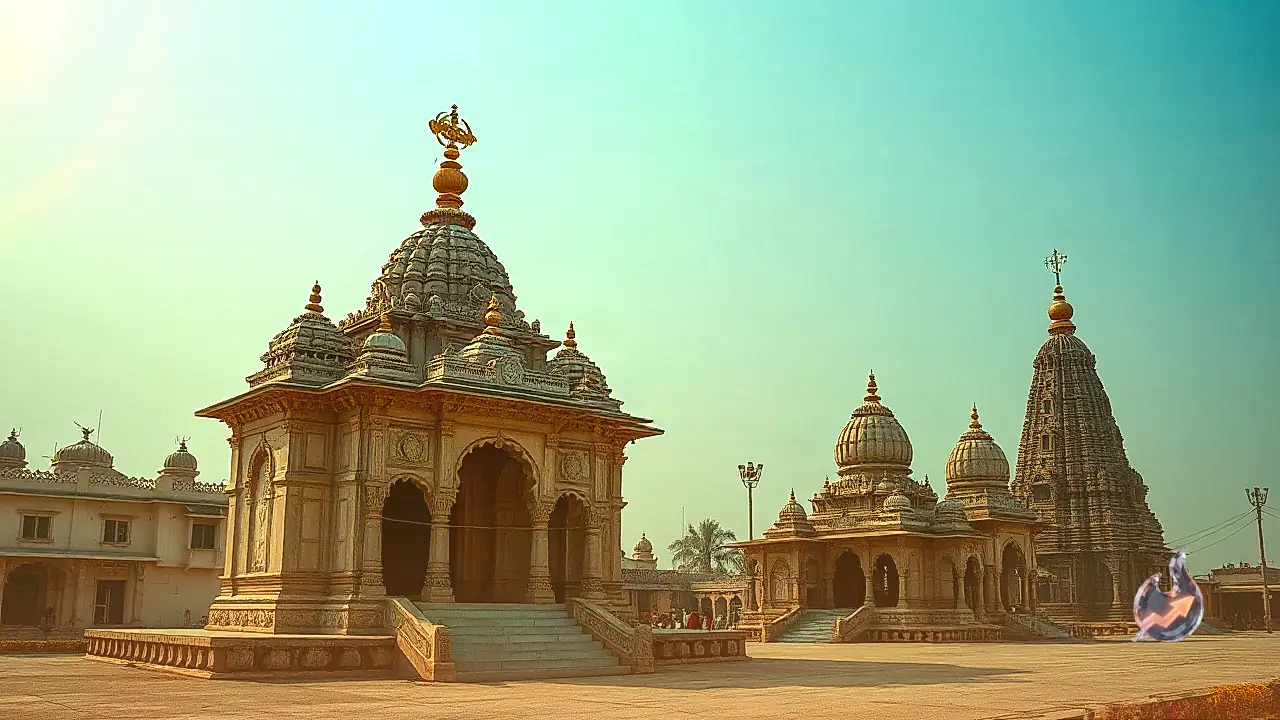

During the highly revered festival of Paryushan, a significant influx of Jain devotees is being witnessed across famous temples in the Sirohi district of Rajasthan. Historical records indicate that Lord Mahavira, the 24th Tirthankara of Jainism, traveled extensively through this region during his lifetime. The region's unique identity in Jain heritage stems from these sacred footprints and the ancient holy sites scattered across its landscape.
Pavapuri Tirth: A Harmony of Heritage and Animal Welfare
Situated in the Reodar tehsil of Sirohi, Pavapuri Jain Tirth stands out as one of the most prominent pilgrimage destinations. Mahavir Jain, representing the Jain community, noted that Pavapuri holds exceptional spiritual importance for pilgrims visiting the district. Dedicated jointly to Lord Shankheshwar Parshwanath and Lord Mahavira, the main complex showcases outstanding traditional artwork and murals created by local artisans.
Beyond the primary shrine, the expansive complex houses several notable features, including the Lord Mahavira Chaumukha Water Temple, the Shri Ajitnath Bhagwan Center, a Saraswati Temple, and a bird shelter. Crucially, Pavapuri also functions as a massive shelter for animal protection, caring for thousands of abandoned, ailing, and vulnerable cattle and cows.
Bamanwad Jain Tirth: The Trials of Lord Mahavira and the 'Jeevit Swami' Idol
Another prominent pilgrimage site is the Bamanwad Jain Tirth, located near Veerwada village in Pindwara tehsil. Devotees hold that this ancient temple was commissioned by King Nandivardhan, the elder brother of Lord Mahavira. Local tradition associates this land with the painful episode known as 'Kan Keelan Upsarg', where nails were driven into Lord Mahavira's ears during his austere penance.
Ancient Jain texts refer to this holy site as 'Brahman Vatak', a name that gradually evolved into Bamanwad over centuries. The shrine houses a remarkably detailed, coral-red Padmasana idol of Lord Mahavira measuring approximately 60 centimeters in height. Revered as 'Jeevit Swami' (the living master), it draws devotees from far and wide. The complex is equipped with residential quarters (Dharmashala) and dining facilities (Bhojanashala) to accommodate visiting pilgrims.
Nandiya Tirth and the Legend of Chandkaushik
Located in Nandiya village within Pindwara tehsil, the Nandiya Jain Tirth is another essential landmark connected to Lord Mahavira. It is believed that the central idol (Mulnayak) was carved during the lifetime of Lord Mahavira by his brother Nandivardhan, symbolizing his living presence.
A small hillock adjacent to the temple is historically associated with the legendary encounter between Lord Mahavira and the venomous snake Chandkaushik. The intricate architecture and 52 Devkulika shrines inside the temple complex remain a major attraction for visiting devotees.
Cultural Legacy of Veerwada and Ajari Temples
The ancient shrines in Ajari and Veerwada villages further enrich the religious heritage of Sirohi district. At Ajari Tirth, an exquisite idol of Lord Mahavira sculpted from white stone serves as the Mulnayak, set within a grand layout featuring 52 Jinalayas. Meanwhile, the Veerwada area, historically known as 'Veer Kulika' or 'Veer Vatak', houses a renowned Mahavira temple celebrated for its architectural beauty and historic antiquity.