


















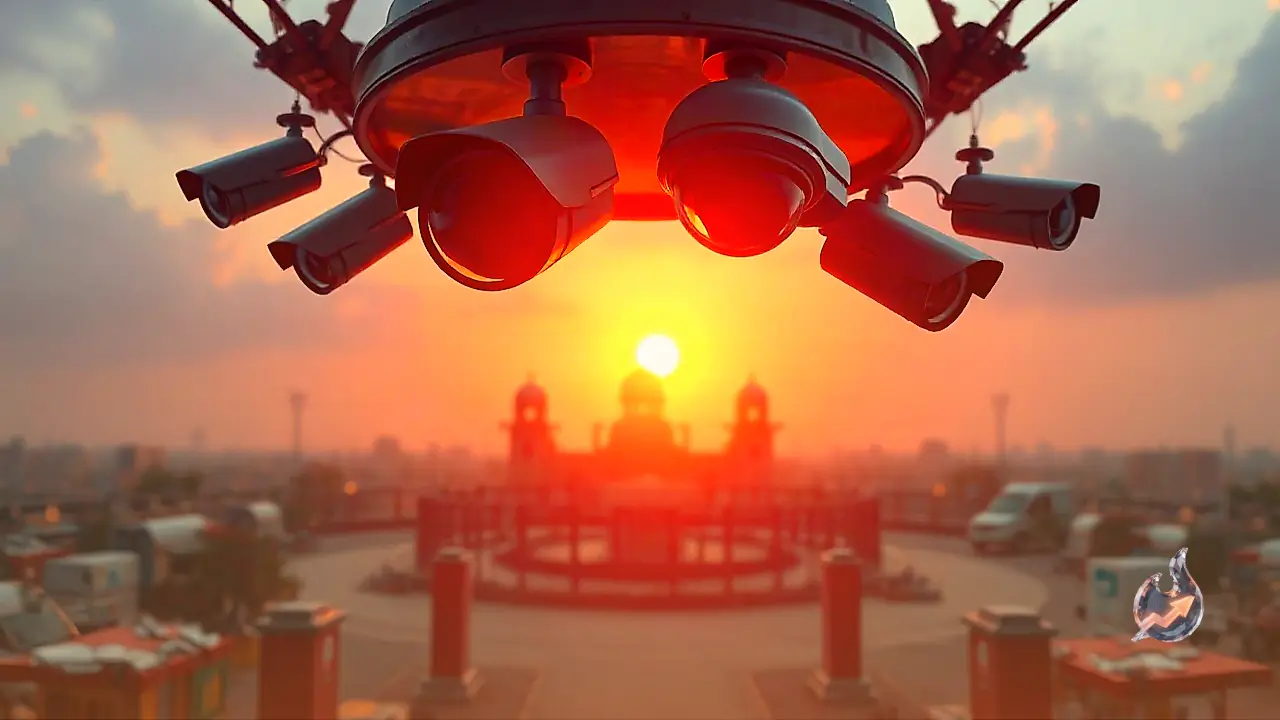

The Rajasthan government has significantly accelerated the implementation of its ambitious initiative aimed at enhancing the safety and protection of women and young girls across the state. Under this comprehensive security drive, a network of 14,122 high-definition CCTV cameras is being deployed across educational institutions, busy public locations, and identified vulnerable spots. By building this modern surveillance infrastructure, the state administration intends to create a secure environment for female students and working women while enabling prompt law enforcement intervention against criminal activities.
Addressing Security Concerns for Female Students and Working Women
The initiative addresses long-standing safety concerns stemming from anti-social elements and harassment frequently reported near girls' schools, colleges, coaching centers, and residential hostels. Furthermore, working women commuting late at night through commercial markets, bus terminals, and railway stations often face heightened vulnerability. To neutralize these risks, the state government has instituted this technology-driven surveillance network. The continuous monitoring is designed to deter potential offenders while fostering a sense of confidence among women navigating public spaces at all hours.
Strategic Locations Designated for Surveillance Coverage
The deployment plan prioritizes areas with heavy female footfall as well as locations identified as high-risk zones across Rajasthan
- Educational Establishments: Girls' secondary schools, degree colleges, university campuses, and both government-run and private female hostels.
- Public Transit and Commercial Hubs: Major commercial markets, busy street intersections, bus terminals, railway stations, and public parks.
- Identified Black Spots: Poorly illuminated stretches and isolated urban corridors prone to illicit or suspicious activities.
Key Features of the 14,122 Camera Security Grid
To ensure round-the-clock reliability, the monitoring network relies on advanced high-definition cameras capable of capturing crisp video footage during both daytime and nighttime conditions. All 14,122 cameras are integrated directly with the Central Police Command and Control Center. This real-time feed enables operators at the control facility to identify suspicious movements immediately and dispatch nearby police patrols to the scene without delay.
To aid legal proceedings and criminal investigations, the system archives video recordings for a duration of 15 to 30 days. This retained footage will serve as verifiable evidence in court proceedings while helping investigators resolve incidents swiftly. To prevent monitoring blackouts during power outages, every setup is equipped with auxiliary power units, including UPS units and solar panel arrays. Additionally, strict privacy guidelines govern the deployment, with a total ban on camera installation inside private facilities such as washrooms, restrooms, dressing areas, and changing rooms.