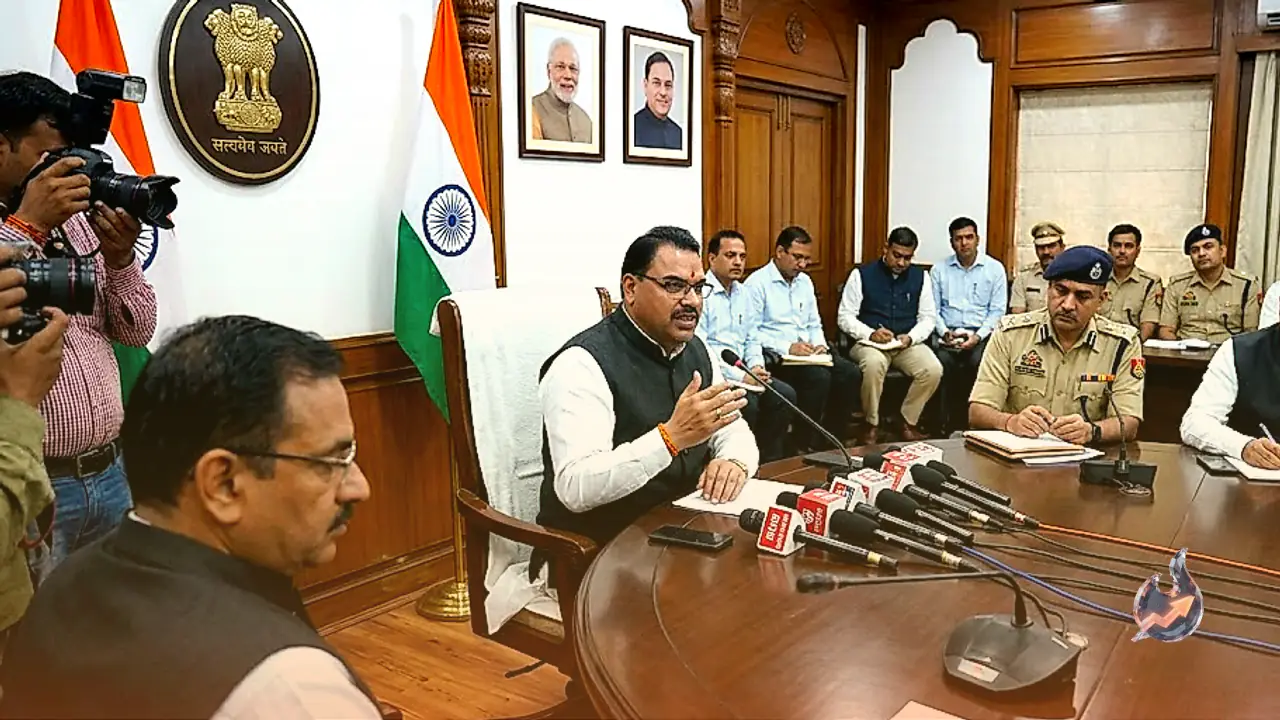



















Rajasthan has undergone a substantial transformation in its energy infrastructure over the past 34 months, registering significant gains in both conventional electricity generation and renewable energy sectors. Under the administration led by Chief Minister Bhajan Lal Sharma, the state government has prioritized energy security and capacity additions to meet accelerating demand. Official data indicates that during this 34 month tenure, Rajasthan augmented its total electricity generation capacity by 10,920 megawatts. Simultaneously, the state registered an expansion of 28,303 megawatts in solar energy generation capacity. The primary objectives guiding these initiatives include supplying daytime power to farmers, extending stable electricity access to rural villages and hamlets, and steering Rajasthan toward complete self-reliance in power generation.
Surge in Generation Capacity and Comparison with Previous Administration
The state government highlighted its operational benchmarks by drawing direct comparisons with the record of the preceding Congress administration. According to the state figures, the 10,920 megawatt generation capacity added during the 34 months of the current Bharatiya Janata Party government is nearly two and three-quarters times higher than the capacity created during the full five-year term of the previous administration. Across its entire five-year tenure, the previous government had added 3,958 megawatts to the generation pool.
Furthermore, when comparing the opening 34 months of both administrations, the current pace of capacity addition is more than five times faster. Authorities attributed this growth to accelerated project clearances, regular administrative monitoring, and expedited construction workflows. This expanded baseline has enhanced grid stability across the state and established a buffer against seasonal peaks in consumer and industrial electricity consumption.
Rapid Acceleration in Solar Energy Capacity
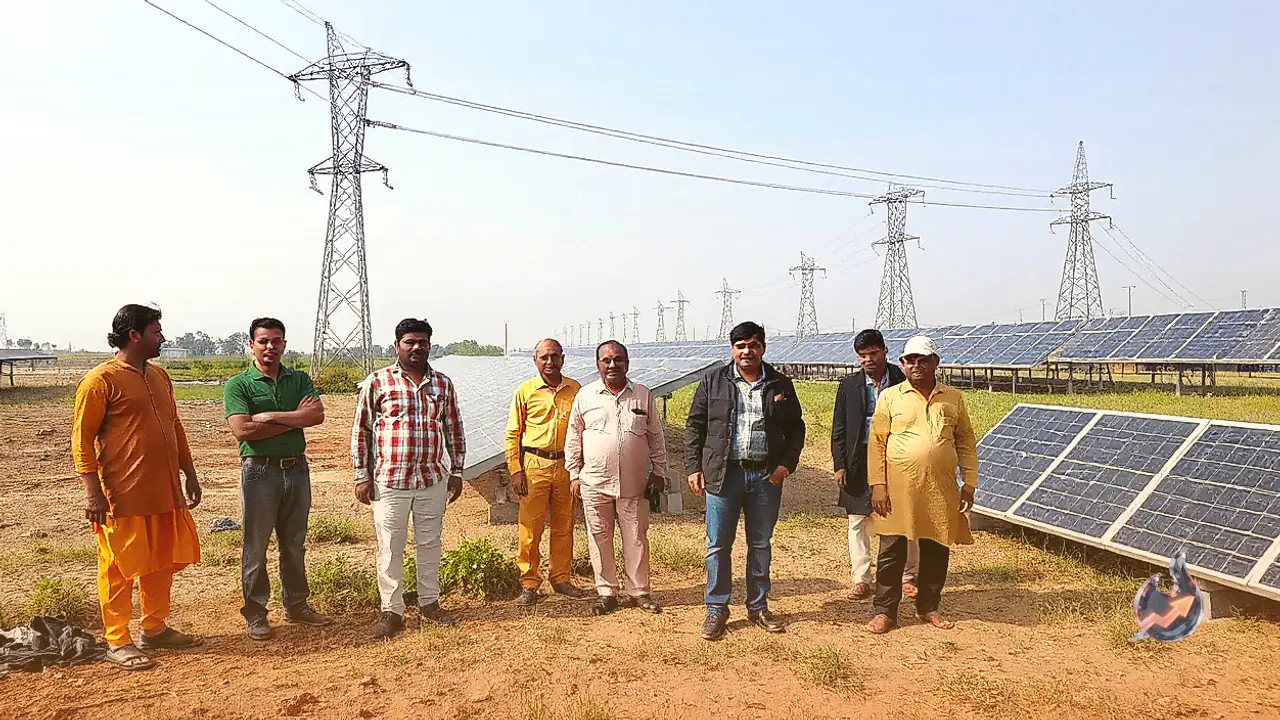
Capitalizing on Rajasthan's immense solar irradiance, the administration has placed clean energy transition at the heart of its development policy. Official statistics reveal that solar power capacity expanded by 28,303 megawatts during the current 34 month period. This represents a marked scale-up in the deployment of large-scale renewable projects across arid and semi-arid districts.
In contrast, the earlier Congress government had added 3,985 megawatts of solar capacity during its initial 34 months, eventually reaching a total addition of 14,878 megawatts over its full five-year period. The current figure of 28,303 megawatts reflects an aggressive pivot toward commercial and utility-scale solar installations. State officials noted that this scale of clean energy expansion directly aids in stabilizing the state energy basket while meeting national emission reduction targets.
Daytime Power for Farmers Across 26 Districts
One of the central priorities of the power sector expansion has been reforming agricultural power delivery. Chief Minister Bhajan Lal Sharma stated that farmers in 26 districts are now provided electricity during daylight hours in two separate operating blocks. Historically, agricultural power in rural Rajasthan was often supplied during night hours, forcing farmers to irrigate fields in extreme cold and navigate safety hazards associated with darkness and wildlife.
The government maintained that systematic efforts are underway to guarantee reliable voltage and uninterrupted electricity to cities, towns, rural villages, and remote hamlets alike. In parallel, the current administration pointed to past structural mismanagement and mounting operational deficits in the state power distribution companies under the previous regime, asserting that proactive planning has restored operational discipline to the power delivery chain.
Transmission Infrastructure: Network Expansion Across Grid Sub-Stations
Increasing generation without modernizing transmission pathways leads to system bottlenecks. To ensure seamless wheeling and distribution of newly generated electricity, the state undertook a structured rollout of high-voltage and medium-voltage grid sub-stations across multiple regions
- 2 grid sub-stations with a capacity of 400 kV were commissioned.
- 9 grid sub-stations operating at 220 kV were constructed and energized.
- 51 grid sub-stations rated at 132 kV were completed across critical nodes.
- 532 local distribution sub-stations of 33 kV capacity were installed.
By comparison, during the entire five-year tenure of the preceding administration, the state had installed 1 sub-station of 400 kV, 5 sub-stations of 220 kV, and 38 sub-stations of 132 kV capacity. In the 33 kV segment, the previous government established 477 sub-stations during its first 34 months, a total that has been surpassed by the 532 sub-stations commissioned under the current administration, thereby reducing local transmission losses and stabilizing rural feeders.
National Leadership in the PM Kusum Scheme
Rajasthan has emerged as the leading state across India in the execution of the PM Kusum Yojana, aimed at decentralizing solar energy for farming operations. Official disclosures show that the state has established 5.57 gigawatts of decentralized solar power capacity under the scheme, achieving the highest installed volume nationwide.
This program has directly benefited more than 378,000 farmers across the state. Through the scheme, cultivators receive subsidized solar equipment, solar-powered agricultural water pumps, and opportunities to generate supplementary household income by leasing or utilizing barren land for solar projects, minimizing their reliance on conventional fossil-fuel power grids.
Turnaround in Discom Finances and Broader Economic Vision
Alongside physical infrastructure expansion, the financial health of the state power distribution corporations showed measurable recovery. Official financial data indicates that Ajmer Discom registered a net profit of 825 crore rupees in financial year 2023-24. Similarly, Jaipur Discom reported a net profit of 931 crore rupees in financial year 2025-26.
State officials underscored that an efficient transmission system combined with financially viable distribution entities creates an enabling climate for commercial enterprises and heavy industries. The dependable availability of electricity is projected to boost local manufacturing, stimulate private investment, and support economic expansion, serving as a foundational stepping stone toward the broader objectives of Viksit Rajasthan and Viksit Bharat.