
























A stark climatic divide is currently playing out across the vast terrain of Rajasthan. While vast expanses of the western arid belt continue to experience unyielding daytime heat and clear blue skies, the eastern and south-eastern sectors of the state are contending with sudden cloud build-ups, thunderstorms, and sporadic rains. On 20 October, dry conditions are projected to dominate across the majority of the state, yet seven specific districts have been placed under alert for convective activity, potential lightning strikes, and gusty winds blowing at velocities between 30 and 40 kilometres per hour, accompanied by light to moderate showers.
Severe Squalls and Lightning Threat Across 7 Eastern Districts
The regional meteorological centre based in Jaipur has urged residents across seven districts of eastern and south-eastern Rajasthan to exercise vigilance. The alert encompasses the entire Hadoti region comprising Kota, Bundi, Baran, and Jhalawar, alongside the neighbouring districts of Bhilwara, Chittorgarh, and Tonk. Atmospheric instability across these territories could trigger localized thunderstorm cells capable of generating sudden squalls ranging from 30 to 40 kilometres per hour, along with the distinct hazard of cloud-to-ground lightning.
Forecasters pointed out that a yellow advisory indicates localized events rather than widespread downpours across entire administrative territories. Some pockets might experience intense showers and strong winds, while adjoining rural blocks remain relatively calm. The disaster management authorities have cautioned the public to seek sturdy shelter during convective storms, specifically warning against taking refuge beneath tall solitary trees, tin canopies, or near electrical pylons and overhead cables.
Rain Prospects for Jaipur, Ajmer, and Bharatpur Divisions
Scattered moisture could also prompt localized rain showers across parts of Jaipur, Ajmer, Bharatpur, and Kota divisions. However, atmospheric conditions will not be uniform throughout these administrative zones. In Jaipur, sky conditions are slated to stay heavily reliant on localized cloud formations driven by afternoon thermal convection. A day-long persistent deluge in the state capital is highly unlikely, though brief, isolated passing squalls cannot be ruled out.
Similarly, sporadic cloud development could trigger patchy showers across rural pockets of Ajmer and Bharatpur divisions. Meteorologists observe that this transitional post-monsoon period often produces contrasting local microclimates within short distances, where one locality experiences radiant sunshine while a nearby sub-division encounters sudden thunder and wind. Residents have consequently been advised to follow real-time weather trackers to plan daily travel and outdoor routines safely.
Western Rajasthan Grapples with Ongoing Heat and Aridity
In sharp contrast to the unsettled eastern quadrant, western Rajasthan remains securely locked in dry, cloudless weather. Major desert districts including Barmer, Jaisalmer, Bikaner, Jodhpur, Sri Ganganagar, Hanumangarh, Churu, Jalore, Pali, Phalodi, and Nagaur are not subject to any severe weather warnings under the current forecast. These localities will continue to see unhindered solar radiation, ensuring elevated daytime temperatures across the arid plains.
Recent meteorological observations reveal that Barmer recorded the highest day temperature in the entire state, with the mercury touching 38.9 degrees Celsius. This late-October warmth keeps daytime discomfort levels high for residents across the border districts. While night-time temperatures are gradually cooling to herald the initial phase of winter chill, daytime heating remains a notable factor throughout the western expanses.
Precipitation Review Over the Past 24 Hours
Localized rainfall has already made its presence felt over eastern districts during the preceding 24-hour cycle. Light to moderate precipitation occurred in specific zones within Ajmer, Tonk, Karauli, Sawai Madhopur, Baran, and Jhalawar. The highest cumulative rainfall was documented at Sapotra in Karauli district, which logged 28 millimetres of rain within a single day. Nearby agricultural belts also experienced rapid gusts accompanying the passing shower activity.
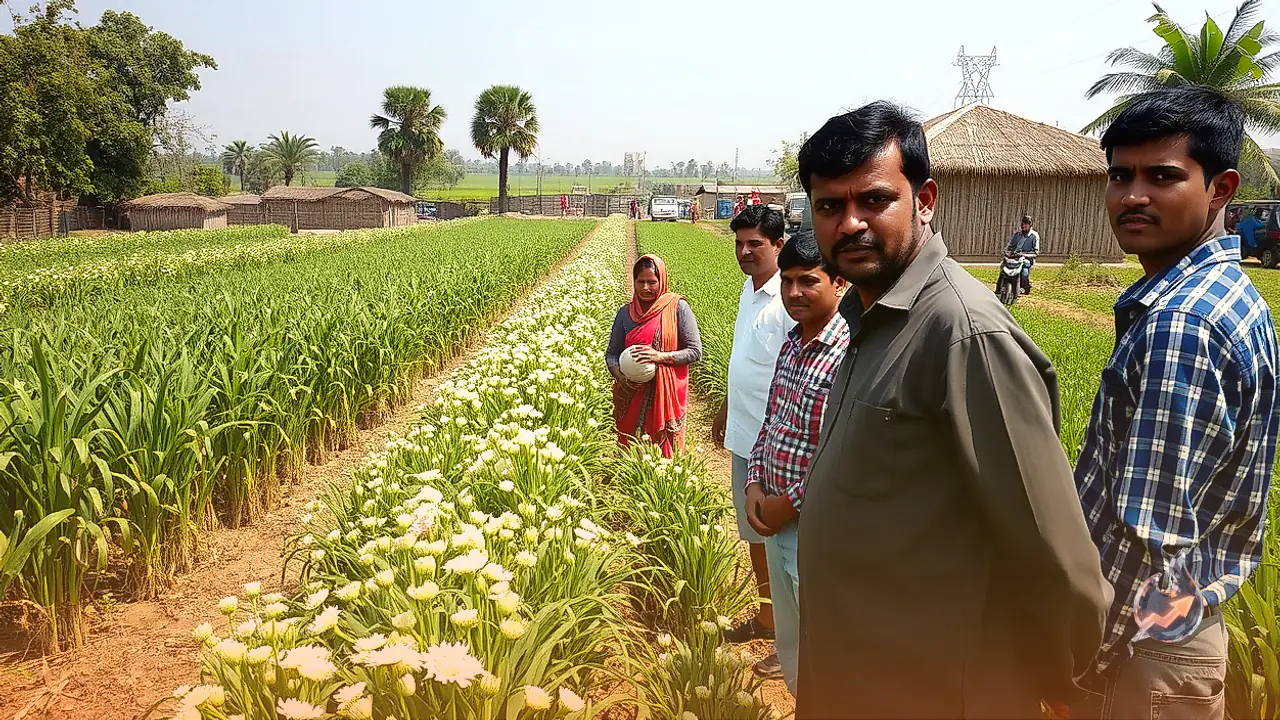
While this moisture brought temporary relief from ambient humidity, it triggered logistical challenges for rural farming communities engaged in the post-harvest processing of autumn crops. Farmers with harvested produce lying in open yards were forced to scramble for tarpaulins to shield their grain and fodder from sudden saturation.
Atmospheric Drivers and Approaching Western Disturbance
The ongoing atmospheric instability is primarily sustained by an active trough line stretching from south-western Rajasthan down toward the north-eastern Arabian Sea in the upper troposphere. The interaction between this trough and moisture-laden maritime winds has facilitated the development of cumulonimbus clouds across south-eastern Rajasthan.
Sharing updates on the evolving synoptic setup, the regional weather office wrote on X that cloudiness alongside localized thunder and light to moderate precipitation would continue to affect south-eastern zones through 19 and 20 October. Looking further ahead, a fresh western disturbance is anticipated to enter the region around 22 and 23 October. This incoming disturbance is projected to influence north-western Rajasthan, particularly Bikaner division, bringing thunder and light rain to localized pockets around 24 October.
Advisory for the Agricultural Community
This phase of the agricultural calendar is vital across Rajasthan as farmers are actively harvesting and threshing kharif staples like pearl millet, green gram, moth bean, soybean, and groundnut. Unscheduled precipitation accompanied by gusty winds poses a direct risk of moisture contamination, potentially spoiling grain lustre and lowering market value.
Agricultural authorities have advised growers across Hadoti and eastern territories to secure harvested produce within permanent warehouses or cover outdoor heaps with waterproof tarpaulins. Western farmers, particularly in Bikaner division, are likewise urged to finish threshing and protect their grain stocks in anticipation of the upcoming western disturbance forecast for 24 October.