




















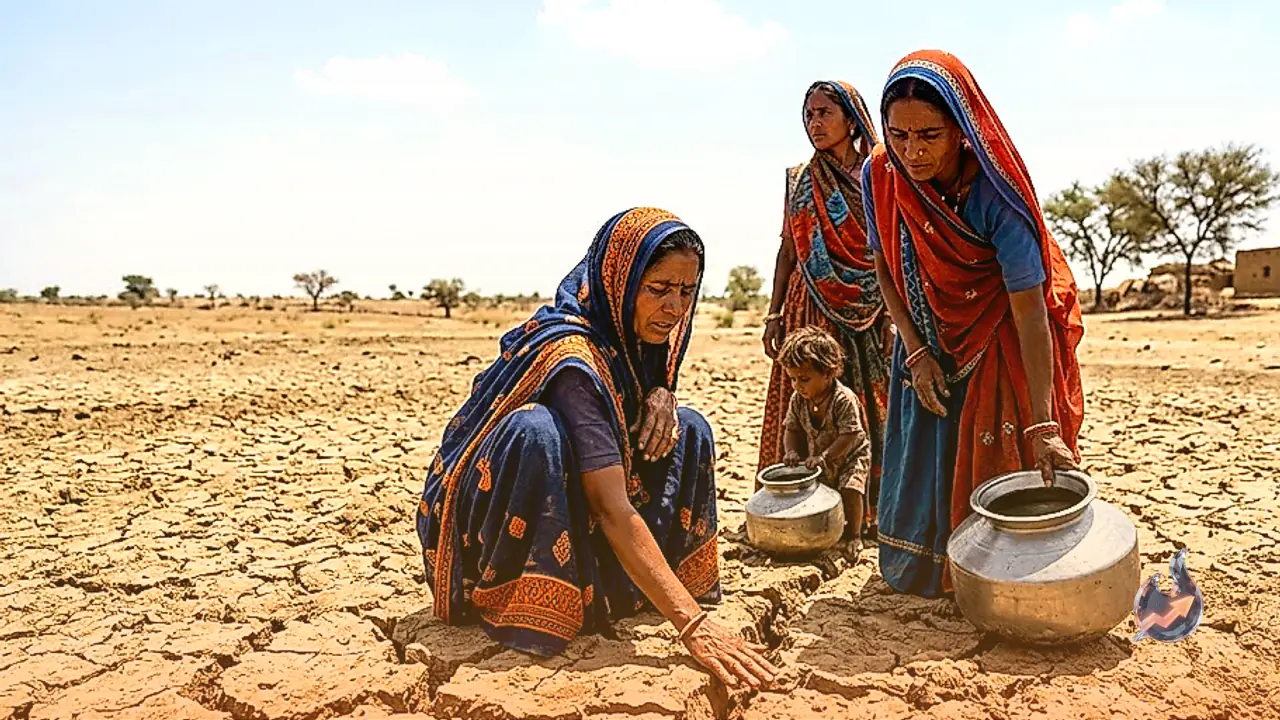

The monsoon season is currently moving through its most critical phase in Rajasthan, yet the skies have largely remained uncooperative. By the time the calendar reached July 20, the state had registered a troubling rainfall deficit of 28 percent compared to historical averages. While meteorological models predicted precipitation levels of 143.8 millimeters for this timeframe, rain gauges have only collected 103.9 millimeters. This essentially means that for every four drops of water expected to nourish the regional soil, one has entirely failed to materialize. This statistical shortfall represents much more than a mere meteorological anomaly; it serves as a stark warning sign for the local agricultural sector, drinking water supplies, reservoir storage, groundwater recharge rates, and the broader rural economy that depends entirely on this annual deluge. Although there are emerging indications that the monsoon might regain momentum over the eastern parts of the state, forecasters do not currently see any massive, unified weather system capable of instantly erasing this massive moisture debt across the entire region.
The Deepening Crisis in Southern and Western Districts
The most acute anxiety is concentrated in areas where water is traditionally treated as a precious commodity. The most severe precipitation shortages are currently localized within the southern and western territories of the state. In a surprising twist, the Mewar belt, which historically benefits from abundant showers during normal monsoon cycles, is enduring an intense dry spell this year. Simultaneously, the Marwar region and the adjacent western desert landscapes, which perpetually grapple with baseline water scarcity, are facing even more daunting circumstances. The situation is rapidly deteriorating in these zones, pushing local communities toward a potential crisis.
Pali Leads the Deficit Charts
When examining the most distressed districts, Pali stands out with the most alarming statistics, currently facing a massive 58 percent rainfall shortfall. Not far behind, Sirohi has recorded a 56 percent deficiency. The districts of Banswara, Jalore, and Jaisalmer are all tied with a staggering 55 percent lack of precipitation. The crisis continues through Hanumangarh, which is missing half of its expected rain at 50 percent, followed by Sawai Madhopur at 49 percent and Pratapgarh at 47 percent, placing all of them firmly in the severe category. Karauli and Barmer are currently tracking at a 44 percent deficit, while Jodhpur is down by 43 percent. If substantial downpours do not arrive in these specific districts before July concludes, the negative cascading effects on the vegetative growth of kharif crops, the health of grazing pastures for livestock, and the inflow into vital reservoirs will become unavoidable.
Unusual Dryness in Traditionally Wet Zones
The dual crisis striking both Mewar and Marwar highlights the erratic nature of this year's weather patterns. Southern districts like Pratapgarh, Banswara, Dungarpur, Udaipur, and Sirohi are lagging dramatically behind their standard seasonal benchmarks. This is a highly unusual development because this geographical pocket is universally recognized as one of the wettest environments within the state's borders. Conversely, in the arid stretches of Pali, Jalore, Barmer, and Jodhpur, the monsoon's absence is placing an unbearable strain on already fragile and limited aquatic resources, forcing residents to rely heavily on depleted reserves.
Capital City and Eastern Regions Await Relief
The state capital is not immune to this widespread climatic challenge. Jaipur has logged merely 121.9 millimeters of rainfall against an expected norm of 184.3 millimeters, translating to a substantial 34 percent deficit for the metropolitan area. The struggles of the eastern territories are further evidenced by deficits in Dausa (23 percent), Karauli (44 percent), and Sawai Madhopur (49 percent), proving that the eastern flank is far from comfortable. Nevertheless, a handful of areas have managed to maintain a semblance of equilibrium. Sikar and Tonk are hovering very close to their normal precipitation targets. Mild deficits are present in Chittorgarh at 6 percent and Bhilwara at 13 percent, while Ajmer, Sri Ganganagar, and Baran are short by roughly 21 percent. Dholpur rounds out this group with a 23 percent gap.
Surplus Districts Masking the True Average
Interestingly, the statewide average would look considerably worse if not for a few overperforming districts in the northeastern sector. Jhunjhunu has actually surpassed its typical quota by 16 percent. Similarly, Bikaner has seen a 13 percent surplus, and Churu has received 12 percent more rain than usual. Bharatpur is also sitting in a slightly better position than its historical baseline. Had these specific northern and eastern pockets not experienced this excess rainfall, Rajasthan's overall cumulative deficit would have plunged significantly deeper than the current 28 percent mark.
The Real-World Impact of Missing Rain
July and August are universally regarded as the foundational months for the monsoon cycle in this region. Reaching the third week of July with a 28 percent deficit acts as a massive red flag for the agricultural timeline. The stunted development of newly planted kharif crops is a primary concern. Furthermore, the rate at which small dams, village ponds, and anicuts capture runoff will remain sluggish, directly inhibiting groundwater percolation and recharge. This chain reaction means that rural communities could confront severe drinking water shortages much earlier than anticipated. Without the formation of robust atmospheric depressions in August, vast swaths of the state could transition into drought-like conditions.
Pinning Hopes on August and September
Despite the grim statistics, a substantial portion of the designated rainy season is still ahead. If August and September deliver a series of highly active and sustained weather systems, this accumulated deficit could be largely erased. However, if the upcoming weeks mirror the recent sluggishness, the entire seasonal outlook will be irreversibly compromised. According to meteorological assessments, precipitation activity is beginning to pick up in the eastern territories, and western sections are projected to see increased showers following July 22. Ultimately, mere normal rainfall will no longer suffice; the state now desperately requires multiple, heavy, and prolonged spells of rain to restore ecological and agricultural balance.