

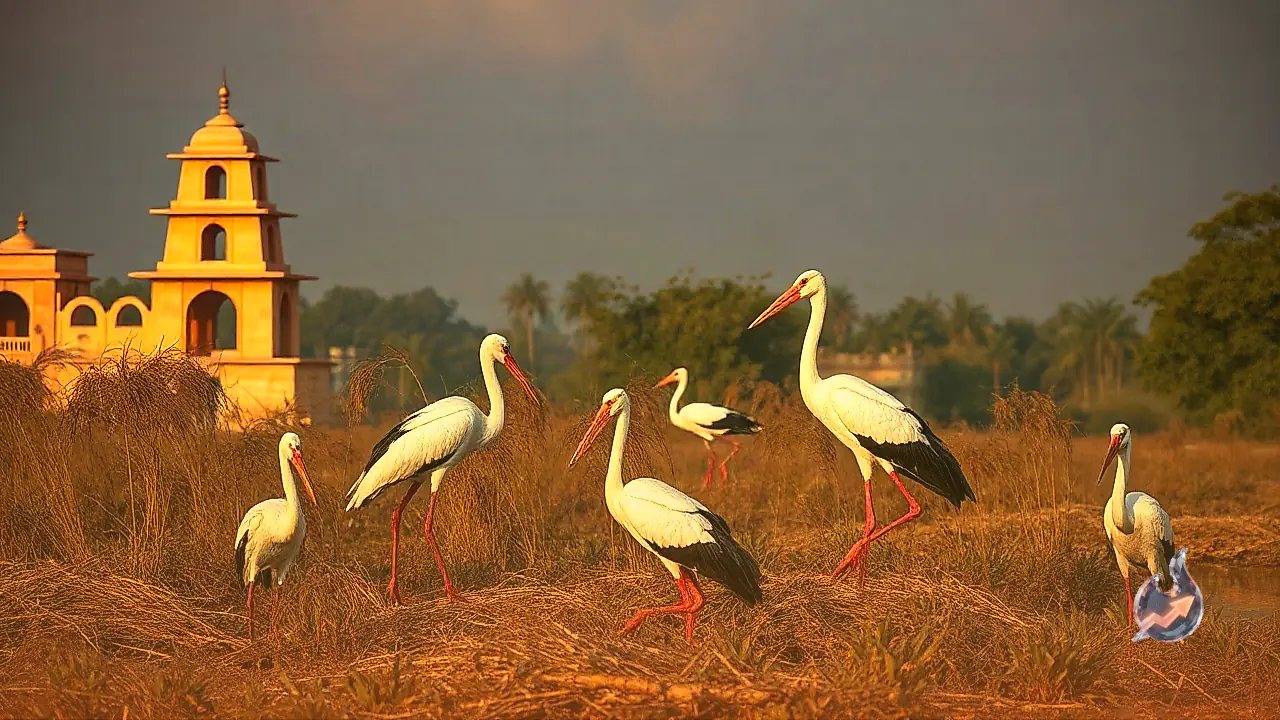





















A very encouraging update has emerged from the wildlife landscape of the Hadoti region regarding the conservation of migratory birds. The painted storks, which were once synonymous with Udpuriya village in Kota before losing their historical habitat due to shrinking natural resources and human interference, have successfully relocated within the same district. Driven out by widespread tree felling, degraded water quality, and shrinking aquatic life, these elegant birds have not abandoned the region entirely. Instead, they have chosen the ponds of Rajpura and Godliyaheri villages as their new breeding grounds and permanent refuge.
The history of Udpuriya and the forced departure
According to nature promoter AH Zaidi, painted storks first arrived in Kota's Udpuriya village nearly three decades ago. At that time, hundreds of birds would nest together on massive acacia trees situated right in the middle of the village pond, making the location one of the largest painted stork colonies in central India. However, rapid development and chronic neglect severely damaged this natural sanctuary over time. The trees in the middle of the water body were gradually destroyed, water standards deteriorated, and the availability of aquatic food dropped significantly. As a result, circumstances shifted dramatically around 2015, compelling the birds to abandon their long-standing habitat out of sheer necessity.
Rajpura and Godliyaheri emerge as fresh sanctuaries
Even after leaving Udpuriya, the flocks did not forsake the Hadoti landscape. In search of sustenance and safe nesting sites, the painted storks relocated to the water bodies of Rajpura and Godliyaheri, which are separated by a distance of roughly 5 kilometers. During the current season, stork activity has been particularly pronounced in the Godliyaheri area. The birds have built dozens of nests on local trees and successfully laid eggs there. Although the count of active nests in Rajpura has dipped slightly compared to the previous year, experts remain optimistic that bird numbers will increase significantly in the coming weeks. If environmental conditions remain favorable, the chirping of hatchlings is expected to resonate from the nests by the final week of September.
Potential for bird tourism and urgent need for conservation
Wildlife experts believe that the Rajpura and Godliyaheri zones hold immense potential for bird tourism. Visitors can easily observe various behaviors of painted storks, including nesting, breeding, and foraging, for at least six months of the year in these locations. Local nature enthusiasts and ornithologists have urged the administration to implement key protective measures. These include planting native trees extensively around the wetlands, developing watch towers to allow undisturbed birdwatching, and formulating dedicated policies to maintain water levels and cleanliness in the ponds. Painted storks are not merely visually striking creatures; they serve as vital biological indicators of a healthy ecosystem and vibrant water bodies. While the old habitat in Udpuriya was lost, Rajpura and Godliyaheri offer a renewed ray of hope, making it imperative for authorities and locals to ensure this new haven meets a better fate.