























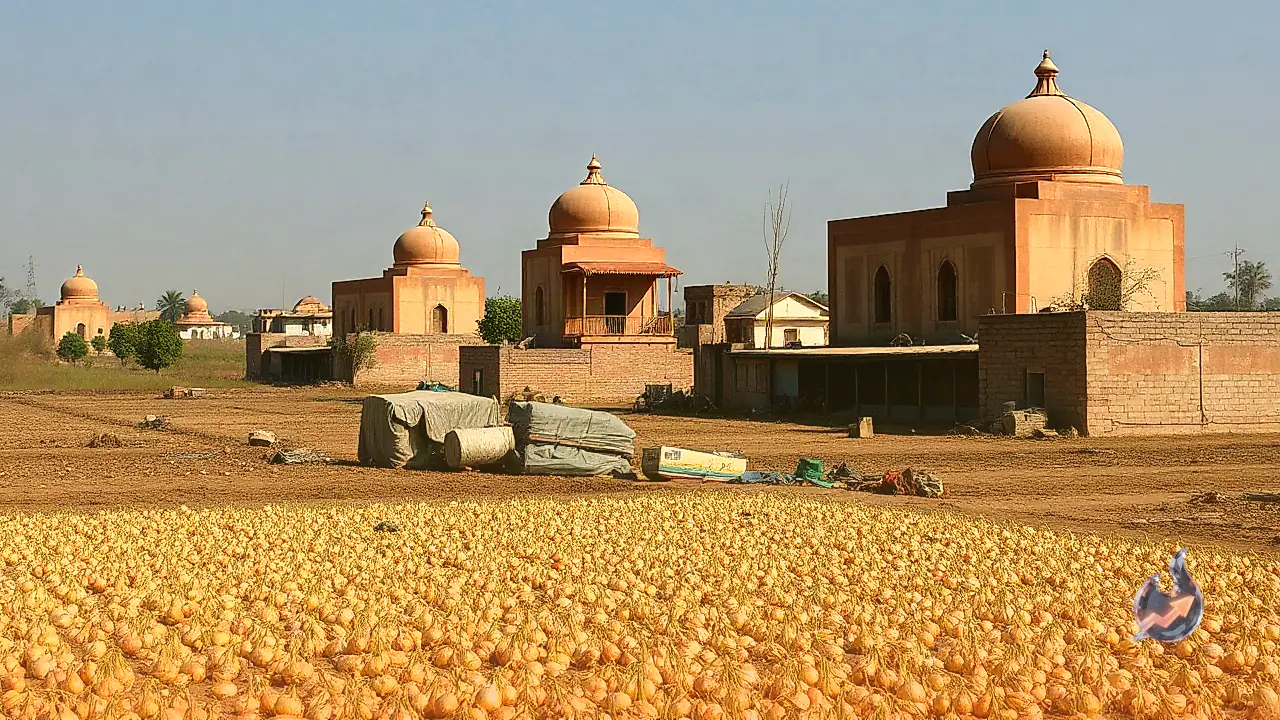

The eastern belt of Rajasthan, particularly the districts of Alwar and Khairthal-Tijara, is nationally acclaimed for its pungent and high-quality red onions. Although local agriculturalists suffered severe financial losses last season due to low wholesale market prices, their enthusiasm for onion farming remains exceptionally strong this year. Cultivators are embarking on a major sowing cycle, demonstrating a resilient outlook despite the dual challenges of escalating input costs and erratic weather conditions.
Sowing Estimations and Rising Bulblet Prices
In the Khairthal-Tijara district alone, the total area under onion cultivation is projected to exceed 14,000 hectares this season. Currently, over 70 percent of local farmers have already finished transplanting the onion bulblets (locally known as kan) into their fields, while the remaining farmers are working rapidly to complete the planting process. The biggest hurdle this season is the steep rise in the price of onion seeds and bulblets. In the Kishangarh Bas area, temporary seed merchants have set up shops, bringing in large truckloads of seeds to ensure farmers receive their supplies on time.
The cost of seeds has more than doubled compared to the previous year. Last season, onion bulblets were trading at around 3,000 to 3,500 rupees per quintal, but this year the prices have skyrocketed to between 6,500 and 7,000 rupees per quintal. This price surge has significantly inflated the initial investment required for the crop, yet the farming community remains committed to the season.
Farmers Turn Self-Reliant to Counter Expenses
To shield themselves from the financial strain of expensive commercial seeds, more than 50 percent of the farmers have adopted a self-sustaining strategy by producing their own onion bulblets directly on their farmlands. Under this self-reliant system, farmers grow their own seeds, preserve what they need for their own sowing, and sell the surplus to other regional farmers at a healthy profit. This approach has drastically reduced their dependence on expensive external seeds. Consequently, even if market prices dip during harvest, the direct financial impact on these farmers is heavily mitigated.
High Cultivation Cost and Weather Warnings
Local farmers, including Shivcharan Yadav, Hawa Singh, and Faraz Khan, shared insights into the economics of onion farming. According to them, cultivating one bigha of land requires approximately four to five quintals of onion bulblets. When factoring in the expenses for chemical fertilizers, pesticides, and manual labor, the total input cost escalates to between 50,000 and 60,000 rupees per bigha. Sowing operations are being expanded with the hope that better market rates this year will help offset last year's losses.
In addition to rising expenses, the weather has introduced critical risks. Persistent rainfall and elevated humidity levels have heightened the probability of crop diseases. Assistant Agriculture Officer Mahesh Kheria has warned farmers that the current atmospheric conditions make the crop highly vulnerable to Anthracnose (also known as twister blight) and bulb rot. To protect the investment, he advised farmers to prevent waterlogging and ensure robust drainage systems. Once the weather clears up, agricultural experts recommend applying appropriate fungicides to save the onion crop from decay.