



















While the 2027 Uttar Pradesh Assembly elections are still a considerable distance away, the state's political climate has reached a high pitch. Following an impressive performance in the recent Lok Sabha elections where the Samajwadi Party secured 37 seats, party leadership believed that its PDA formula, representing Backward Classes, Dalits, and Minorities, would successfully breach the ruling Bharatiya Janata Party's stronghold. However, a shifted strategy and narrative deployed by Chief Minister Yogi Adityanath have altered the dynamics, forcing the main opposition party to re-evaluate its tactical stance.
Countering the PDA Strategy with Broad Consolidation
To counteract the caste-based consolidation that emerged during the parliamentary polls, Chief Minister Yogi Adityanath introduced a campaign aimed at uniting the majority community under a broader cultural identity. Slogans such as 'Bantenge toh Katenge' and 'Ek Rahenge toh Safe Rahenge' were deployed to prevent fragmentation within the Hindu voter base and challenge the cohesion of the opposition's PDA coalition. This approach seeks to shift the electoral emphasis away from localized caste divisions toward a wider social alignment, creating significant pressure within opposition ranks.
Law Enforcement, Governance, and Cultural Development
The state government has countered the opposition's messaging by emphasizing strictly enforced law and order, anti-mafia operations, and a zero-tolerance policy that is framed around governance and public safety. By highlighting these administrative measures, the ruling party has revived its long-standing critique regarding past governance records of the opposition. Concurrently, following the inauguration of the Ram Temple in Ayodhya, the cultural development of Kashi and Mathura has been highlighted as core political priorities, posing an ideological challenge for competing political groups.
Strategic Pivot Towards Temples and Religious Leaders
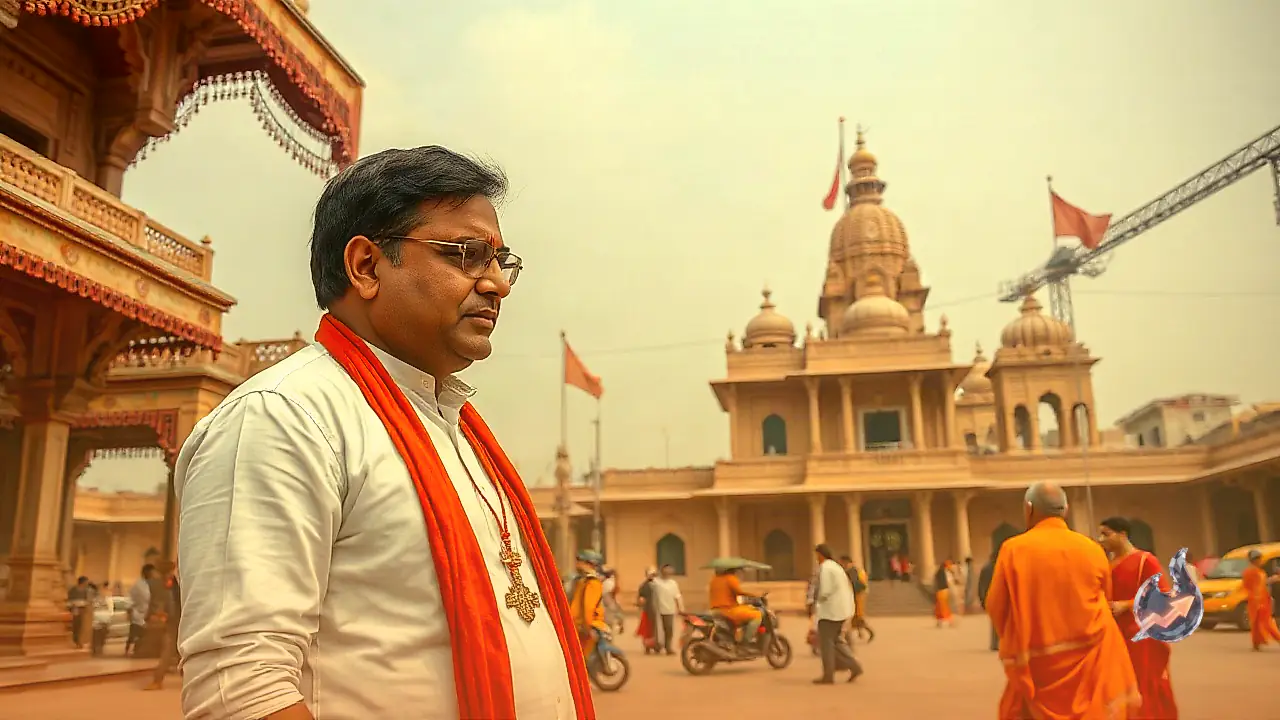
Recognizing the influence of the broader electorate in Uttar Pradesh, Samajwadi Party President Akhilesh Yadav has noticeably adjusted his approach. Previously critical of the ruling party's religious positioning, he has increasingly engaged in visits to key religious destinations across Prayagraj and Kashi, meeting prominent saints and seeking their blessings. This transition aims to alter public perceptions regarding the party's inclusivity and appeal to a broader segment of voters necessary for securing a favorable outcome in 2027.
Reduction in Direct Personal Criticisms
Another strategic adjustment is the reduction of direct personal attacks against Chief Minister Yogi Adityanath. Political analysts note that framing the discourse as a direct personal confrontation often consolidates the ruling party's core support base behind the Chief Minister. Furthermore, personal attacks frequently allow the ruling party to redirect discussions toward security or governance records. Consequently, the Samajwadi Party is steering its public messaging toward administrative issues such as unemployment, inflation, and public infrastructure, while maintaining caution due to coalition considerations within the INDIA alliance.
The Road to the 2027 Electoral Contest
Chief Minister Yogi Adityanath's assertive stance on governance and culture has effectively shaped the current political discourse in Uttar Pradesh, compelling opposition parties to respond within the framework set by the ruling party. Although the Samajwadi Party retains a substantial foundation through its coalition of voters, navigating the ruling party's narrative requires calibrated maneuvering. The upcoming electoral battle in 2027 will ultimately depend on whether opposition parties can maintain their core constituencies while expanding their appeal across broader voter demographics.