




















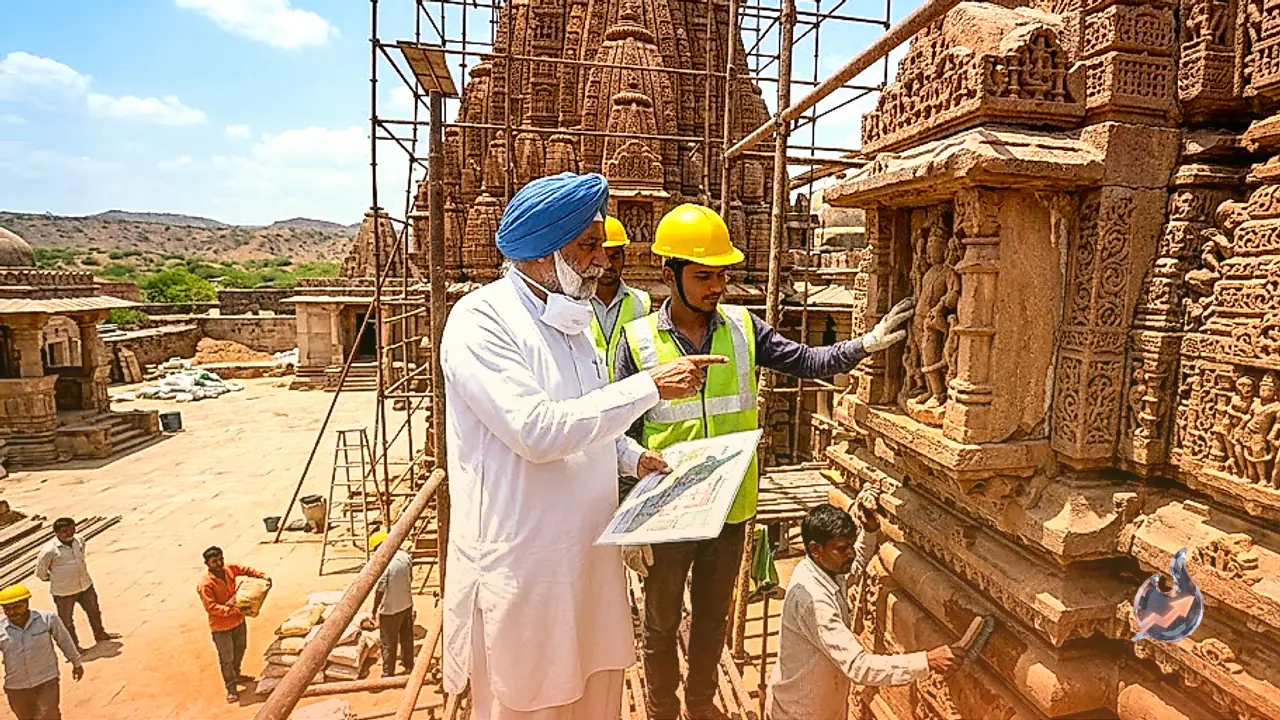

In a major push to preserve cultural heritage and elevate faith-based tourism, the Bhajanlal government in Rajasthan has unveiled an ambitious master plan targeting the transformation of more than 300 religious sites across the state. The strategic initiative focuses on structural conservation, aesthetic beautification, and expanding essential public facilities for pilgrims. Beyond enriching the spiritual experience for millions of visitors, this development program aims to position Rajasthan as a premier national hub for religious tourism while generating localized employment and stimulating regional economic growth across its districts.
₹100 Crore Sanctioned for Initial Phase Under Phased Timeline
The state administration is implementing the restoration plan through structured, multi-year phases to ensure seamless execution. Administrative and financial approvals totaling approximately ₹100 crore have already been sanctioned for 148 selected religious destinations. These initial funds are directed toward preserving heritage architecture, enhancing site aesthetics, building access pathways, and constructing clean drinking water and sanitation facilities. A tracking of the project timeline shows that 39 sites were designated for development during the 2024-25 fiscal year. The scope expanded significantly in 2025-26 with 278 additional sites announced for infrastructural support. Currently, state authorities are focusing on executing approvals for 16 major sites announced under the 2026-27 phase.
Comprehensive Revamp of Key Pilgrimage Hubs and Corridors
The redevelopment mandate encompasses iconic places of worship scattered throughout Rajasthan. Prominent destinations entering the development pipeline include the Kailadevi Temple and the Gogaji Temple at Gogamedi. Additionally, the Dattatreya Temple in Kumher, the Jamway Mata Temple in Jaipur, and the historic Ganga Temple in Bharatpur have been selected for comprehensive upgrades. A specialized focus is being placed on the Mathuradheesh Ji Temple in Kota, where plans are underway to construct a dedicated tourist corridor. Furthermore, Nasiyan Ji in Viratnagar and the Dau Madanmohan Temple in Bharatpur are being integrated into the infrastructure enhancement roster.
Upgraded Pilgrim Facilities from Trinetra Ganesh to Tanot Mata
Recognizing the heavy footfall at remote and hill shrines, the government is prioritizing pilgrim convenience and crowd management systems. Landmark sites receiving facility upgrades include the historic Trinetra Ganesh Temple located inside Ranthambore Fort, the high-altitude border shrine of Tanot Mata in Jaisalmer, and the renowned Ramdevra pilgrimage site. The scheme also extends to the Shakambhari Mata Temple situated near Sambhar Lake and the Markandeshwar Mahadev Temple in Pindwara. Concurrently, historic temples in the capital city of Jaipur are undergoing site revitalization to provide improved queuing areas, shaded walkways, and parking spaces.
Capitalizing on Record Tourist Footfall Across Rajasthan
This faith tourism initiative comes at a time when Rajasthan is witnessing unprecedented growth in tourism metrics. In 2023, the state welcomed 17 crore 90 lakh (179 million) domestic tourists alongside 17 lakh (1.7 million) international visitors. By 2025, these numbers escalated dramatically to 25 crore 25 lakh (252.5 million) domestic arrivals and 19 lakh 45 thousand (1.945 million) foreign travelers. Data for the current year shows that through June alone, 10 crore 85 lakh (108.5 million) domestic tourists and 8 lakh 45 thousand (845,000) international visitors traveled to the state. By upgrading sacred sites, the government seeks to leverage this footfall trend and establish religious circuits as key drivers of overall tourism growth.
Local Economic Revival and Small Business Opportunities
Beyond preserving sacred architecture, the initiative is designed to act as an economic catalyst for surrounding communities. Higher visitor volume directly benefits micro-enterprises, including local shopkeepers, handicraft artisans, hospitality providers, transport operators, and eatery owners. By upgrading civic amenities and accessibility around temple towns, the state government aims to build a sustainable ecosystem that turns religious tourism into a long-term engine for self-employment and regional economic prosperity.