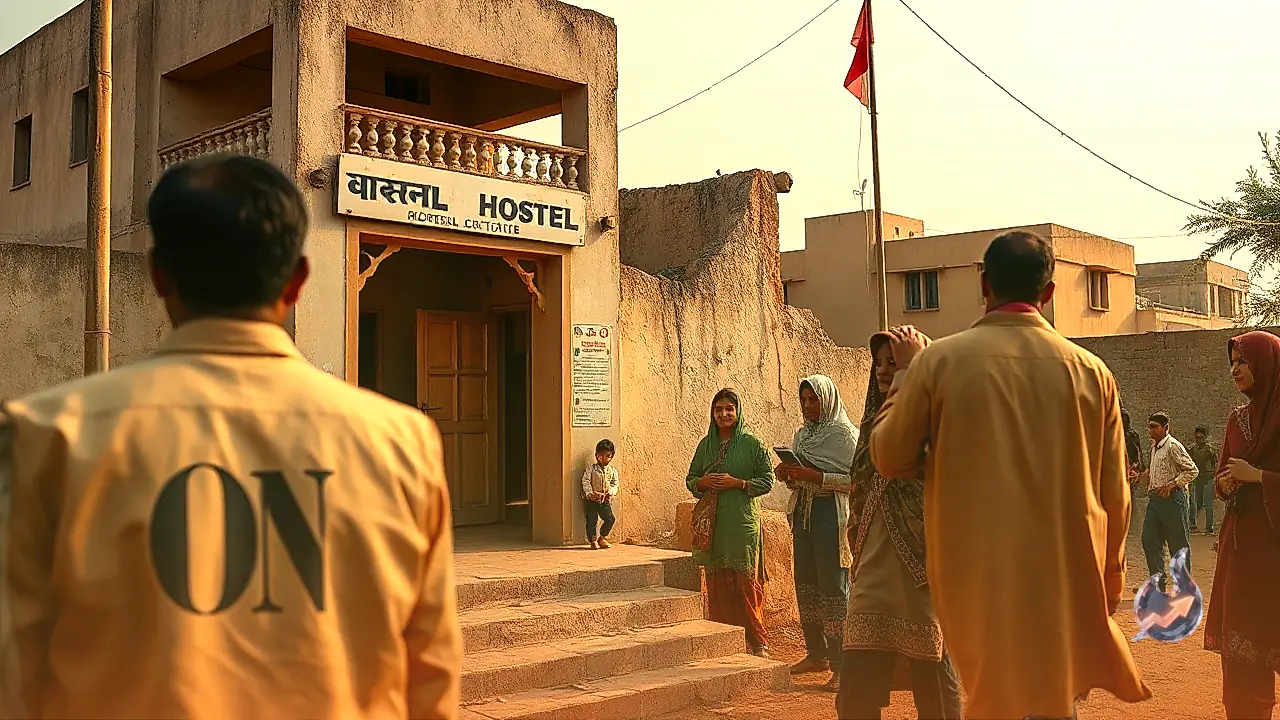
















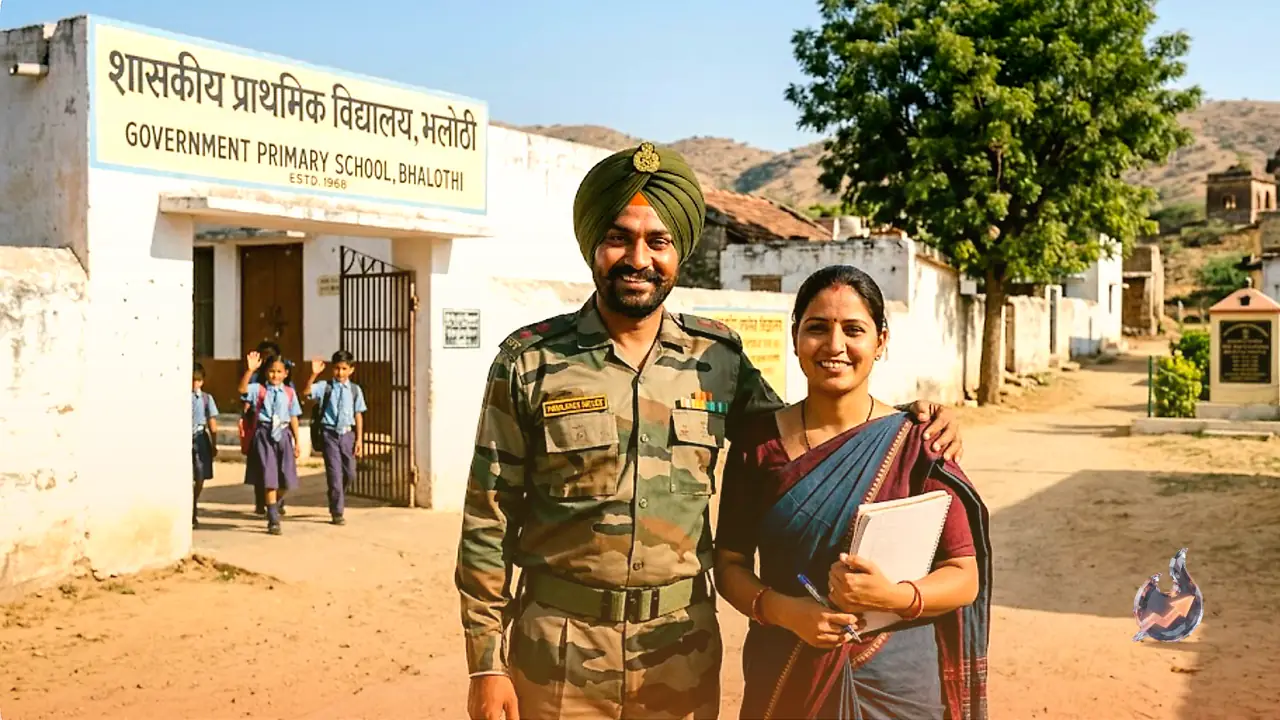

A village in Rajasthan's Jhunjhunu district has built a rare reputation for producing both soldiers and teachers in large numbers. Bhalothi has sent more than 700 men into the Indian Army over the years and has also produced close to 500 teachers, a combination that sets it apart from other villages in the state. Locals in the district often point to Bhalothi as proof that a single village can serve the nation on more than one front at the same time.
How the village got its name
According to administrator Santosh Devi, Bhalothi's story goes back centuries. Ghiyasuddin, the Delhi ruler of that era, is said to have donated 52 thousand bigha of land in the area. A man named Bhal settled the land and founded the village, and it eventually came to be known as Bhalothi after him. That land grant, made in the era of the Delhi Sultanate, is part of why residents describe Bhalothi's roots as running deeper than most villages in the region. Villagers still take pride in this history and treat it as part of their heritage.
The early push for education
Bhalothi was granted panchayat status in 1948, soon after independence. Four years later, in 1952, the village got its first school, which initially taught students only up to the fifth grade. That school was upgraded to teach up to the tenth grade in 1958. The presence of a functioning school this early gave families across the village the confidence to keep sending their children into the classroom generation after generation, a habit whose effects are still visible in the steady stream of teachers the village keeps producing, many of whom now work in schools across different parts of Rajasthan.
A tradition of serving in the army
Alongside education, the village has an equally strong tradition of serving in the armed forces. Around 700 men from Bhalothi have served, or continue to serve, in the Indian Army and various other security forces. This dual legacy is why the village is respectfully referred to as the land of soldiers and teachers. Generation after generation, young men from the village have grown up wanting to join the army. This willingness to serve has held steady across generations, and it is part of why people in the district speak of Bhalothi with particular respect.
Temples that anchor the village's faith
Bhalothi is known for more than its soldiers and teachers, it also carries a rich religious and cultural history. A temple dedicated to Gurgaon Wali Mata was built in the village in Samvat 1308, and devotion to the deity remains deep even today. According to local belief, women who bathe at the temple on Holi have their wish for children fulfilled, which draws women from far away to visit and make offerings. During Navratri in particular, the number of visitors coming from outside the village swells considerably, turning the temple into one of the busiest religious sites in the area for those few days.
The then-king of Khetri also built a grand Thakurji temple in the village. The temple's centuries-old architecture and its ashtadhatu idols continue to draw attention. The idols, cast in an alloy of eight metals known as ashtadhatu, are considered particularly valuable from a craftsmanship point of view, and the temple's upkeep over hundreds of years is itself seen as a mark of the village's cultural continuity. On Krishna Janmashtami, the idol of Thakurji is elaborately decorated and special events are organised, drawing devotees from distant places. In the year 2000, villagers came together to build another temple, dedicated to Johad Wale Bhole Baba, which has since become part of the village's religious identity.
Farming and animal husbandry still sustain the village
Despite all these achievements, most residents of Bhalothi continue to depend on farming and animal husbandry for their livelihood. A number of progressive farmers in the village have moved away from traditional methods and adopted modern, advanced farming techniques, giving Bhalothi a distinct identity in agriculture as well. These progressive farmers are often cited within the village as an example of how Bhalothi's residents keep adapting, whether it is in agriculture, education or service to the country. Between its soldiers, its teachers, its temples and its farms, Bhalothi has emerged as an example for the rest of Rajasthan.