




















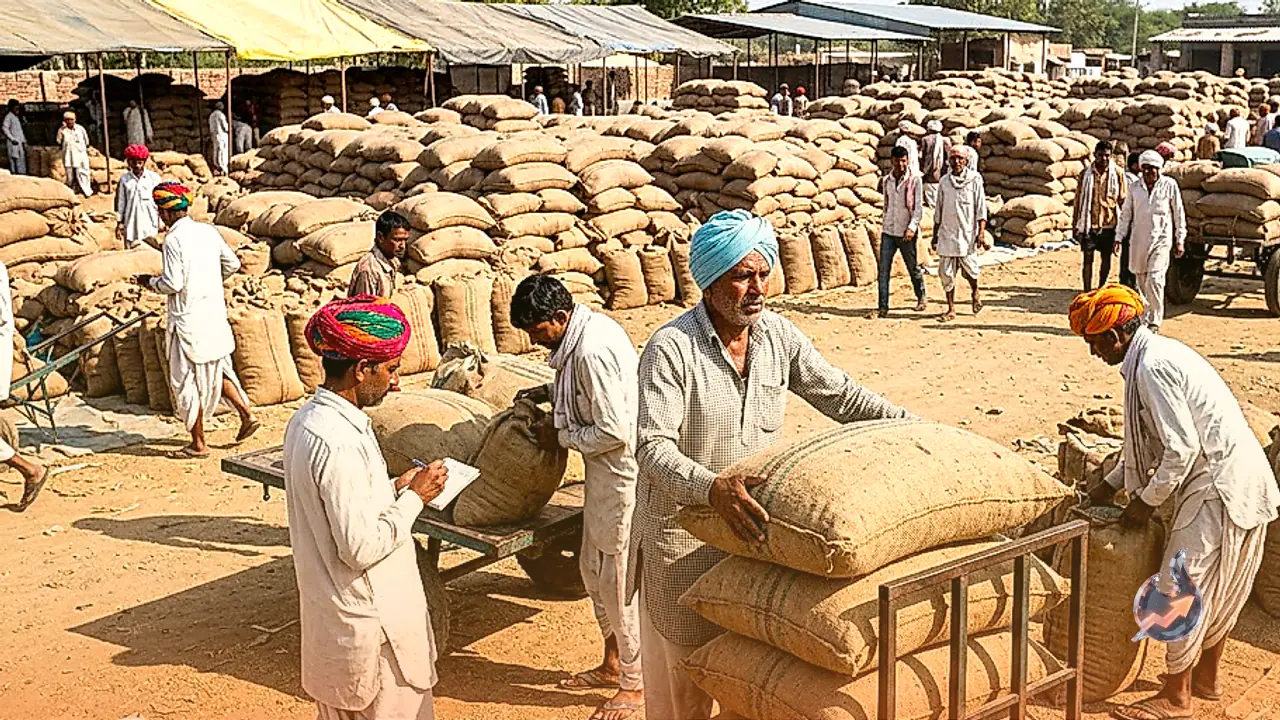

Agricultural trading at the Khairthal grain market in Rajasthan's Khairthal-Tijara district has surged following a heavy influx of pearl millet during the current Kharif harvesting period. Cultivators from dozens of surrounding rural belts are transporting their produce into the yard aboard loaded tractor-trolleys. This steady inflow has maintained robust momentum for nearly two weeks, with the market receiving an estimated 15,000 to 20,000 sacks of grain on a daily basis. The massive intake has energized local commerce, drawing substantial gatherings of commission agents, wholesale purchasers, and selling farmers throughout the complex.
Valuation Tied to Grain Moisture and Crop Grade
Local grain merchants note that settlement prices inside the Mandi are being determined primarily by the physical condition and moisture content of each lot. Consignments exhibiting higher moisture levels are changing hands at approximately 2,000 rupees per quintal. In contrast, well-dried, superior-grade grains command higher offers, ranging from 2,150 rupees to 2,200 rupees per quintal. Across general trade, the prevailing average price sits between 2,100 rupees and 2,200 rupees per quintal. Merchant Naresh Kumar pointed out that arrivals this season feature a noticeably higher proportion of premium-quality harvest. While this provides cultivators somewhat better open-market returns compared to the previous year, overall profitability remains constrained.
Expansion in Sown Area Drives Higher Volumes
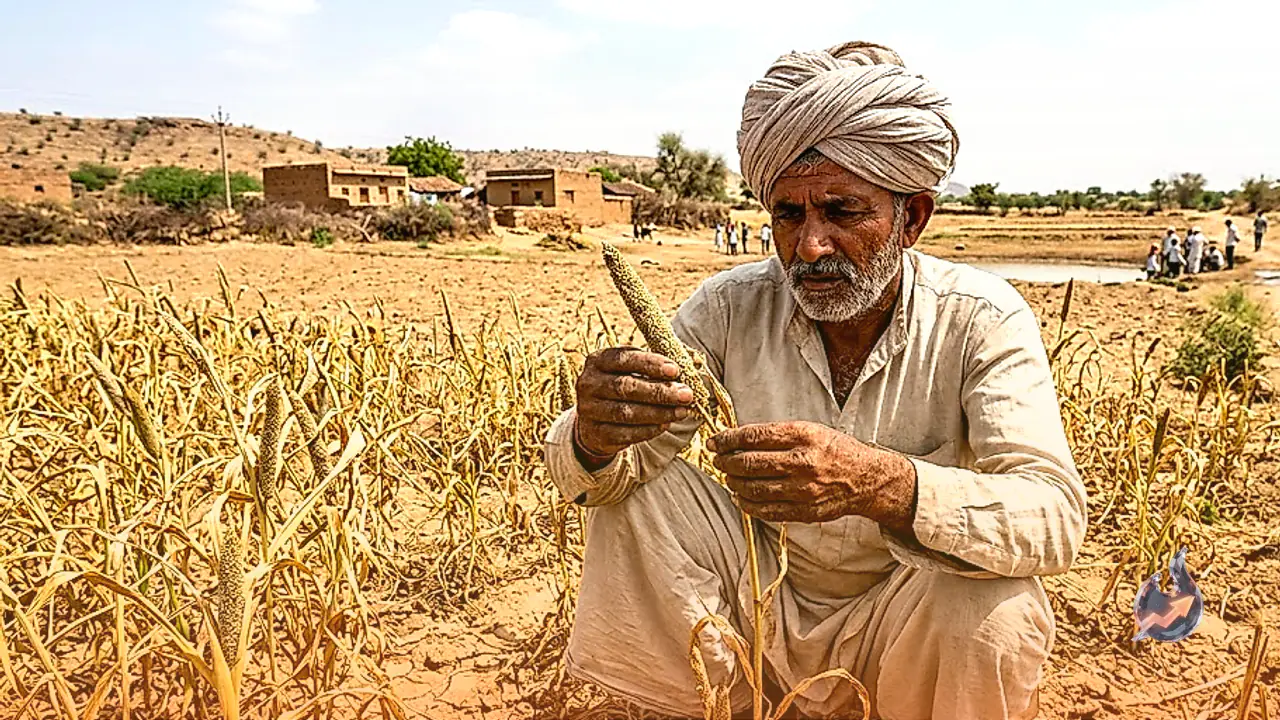
Official data compiled by the agriculture department confirms a marked expansion in pearl millet acreage across the agricultural belt. For the 2025-26 period, authorities had established a planting target of 80,000 hectares for the district, against which actual sowing covered 79,000 hectares. However, cultivation during the current operational season has expanded considerably, reaching around 83,900 hectares. Agricultural observers attribute the continuous surge in Mandi receipts directly to this broader acreage, projecting that harvest inflows could climb even higher over the coming weeks as threshing activities peak.
Demand for MSP Operations and Bhavantar Compensation
Despite steady market arrivals and modest price improvements, growers face considerable financial disadvantages due to the absence of institutional procurement. Highlighting this issue, Khairthal Trade Committee President Sarvesh Gupta observed that while Rajasthan ranks among the largest producers of pearl millet, administrative procurement at minimum support price levels has yet to commence. Pointing to neighboring Haryana, he explained that farmers across the border receive a support rate of 2,900 rupees per quintal alongside the protective umbrella of the Bhavantar Bharpayee compensation scheme. Meanwhile, producers in Rajasthan must offload their yield in open commercial channels at merely 2,000 to 2,150 rupees per quintal. Citing this stark divergence, the trade representative and local cultivators have formally appealed to the state administration to initiate official procurement immediately, safeguarding agricultural incomes.