




















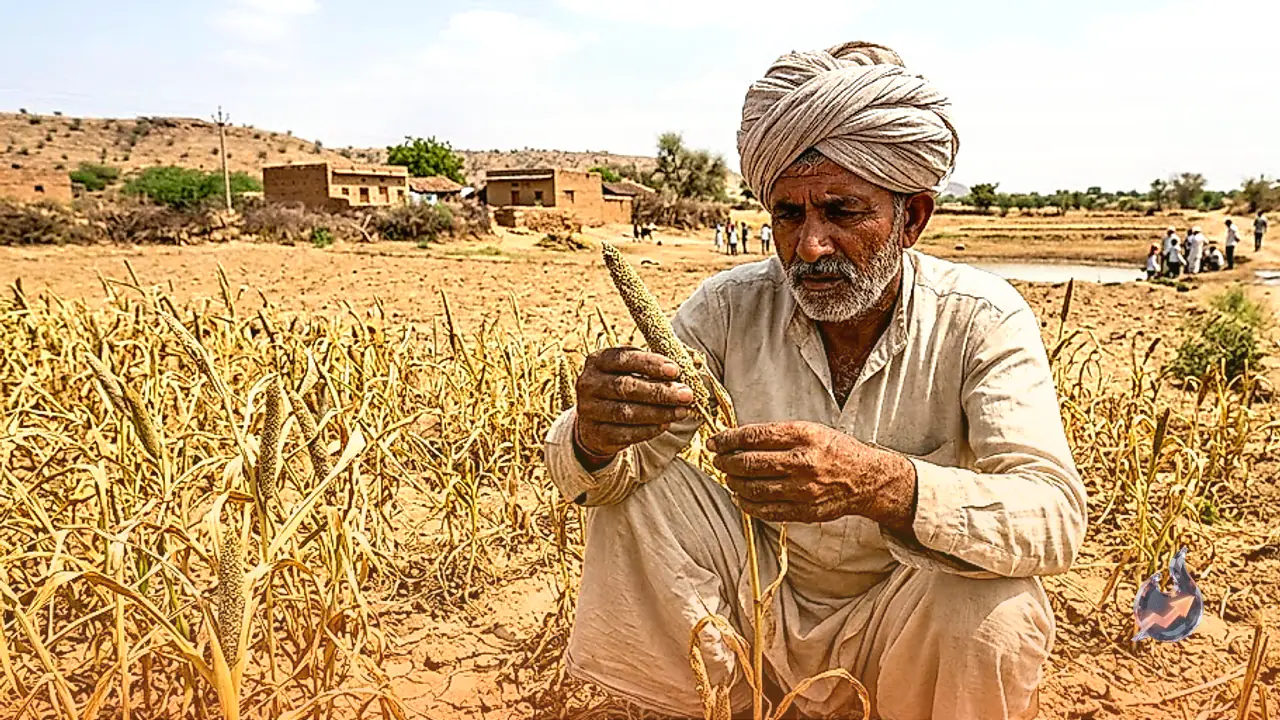

A severe deficit in seasonal monsoon showers has pushed the agrarian community of western Rajasthan toward acute hardship. Across rural stretches of Jodhpur and the broader Marwar territory, inadequate rainfall has left standing kharif crops withering in the fields. Farmers who have spent weeks watching dry skies now face parched expanses where green shoots ought to have flourished. The dramatic slump in expected agricultural output has triggered an emerging financial squeeze across rural households. Local cultivators stress that without immediate and generous downpours in the coming days, recovering even the upfront input expenditure invested in their soil will become virtually impossible.
Severe Strain on the Rural Economy
This prolonged dry spell has inflicted direct damage on the foundational village economy. Pabaram, a local farmer, along with several other villagers, explained that the kharif planting calendar had begun with ambitious hopes and heavy financial outlays. Family savings were poured into every stage of preparation, from tilling the ground and acquiring expensive seed varieties to applying fertilizers, completing the sowing, and carrying out extensive weeding work. After sustaining substantial costs on hired agricultural labor and mechanized equipment, the crops arrived at the crucial flowering and maturation stage, only to encounter completely dry conditions. In numerous fields, plants have dried out prematurely and turned brittle, while across other patches, plant growth has stalled entirely, guaranteeing a steep plunge in harvest yields.
Looming Shortages of Animal Feed and Drinking Water
The fallout from weak monsoon activity extends well beyond harvested acreages. It threatens to disrupt pastoral livelihoods and rural drinking water networks across the district. Because crops are drying up before full maturity, supplies of both green and dry fodder for livestock have dwindled to negligible levels. Pastoralists and villagers in Marwar rely heavily on animal husbandry as a vital income cushion, meaning that keeping herds fed and healthy has now turned into a daunting daily struggle. Furthermore, the absence of aquifer recharging has steadily lowered groundwater tables, creating conditions for severe drinking water shortages across rural habitations. If weather patterns do not improve swiftly, households may soon be forced to search far and wide for domestic water and livestock feed.
Demands for Official Crop Surveys and Drought Relief
Confronted with scorched fields and compounding debts, villagers and farmers across Jodhpur have appealed for swift intervention from the state government and the district administration. Community members are urging authorities to assemble dedicated field inspection teams to carry out an impartial assessment of crop losses and compile an expedited girdawari loss report. Timely and accurate documentation of the damaged fields remains essential for affected cultivators to secure compensation through the Pradhan Mantri Fasal Bima Yojana and state disaster relief funds. Furthermore, local residents have urged administrators to roll out comprehensive drought relief measures across vulnerable villages without delay to shield the rural economy from total collapse.