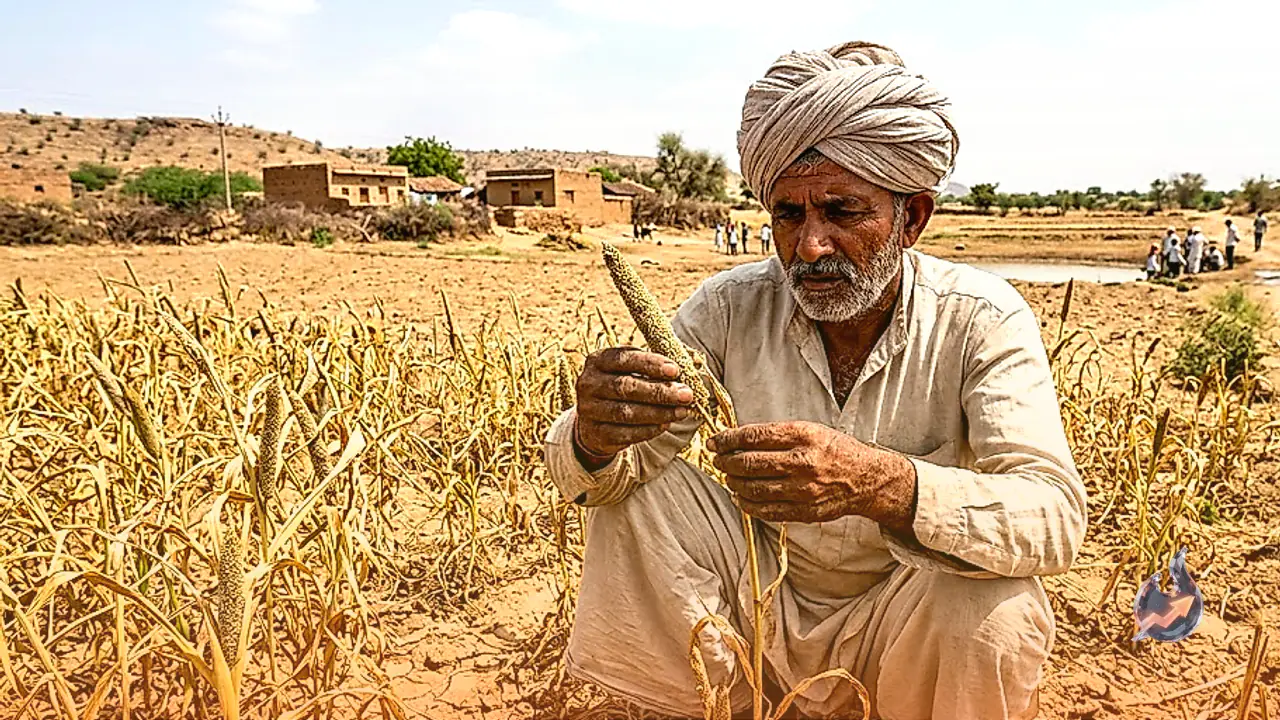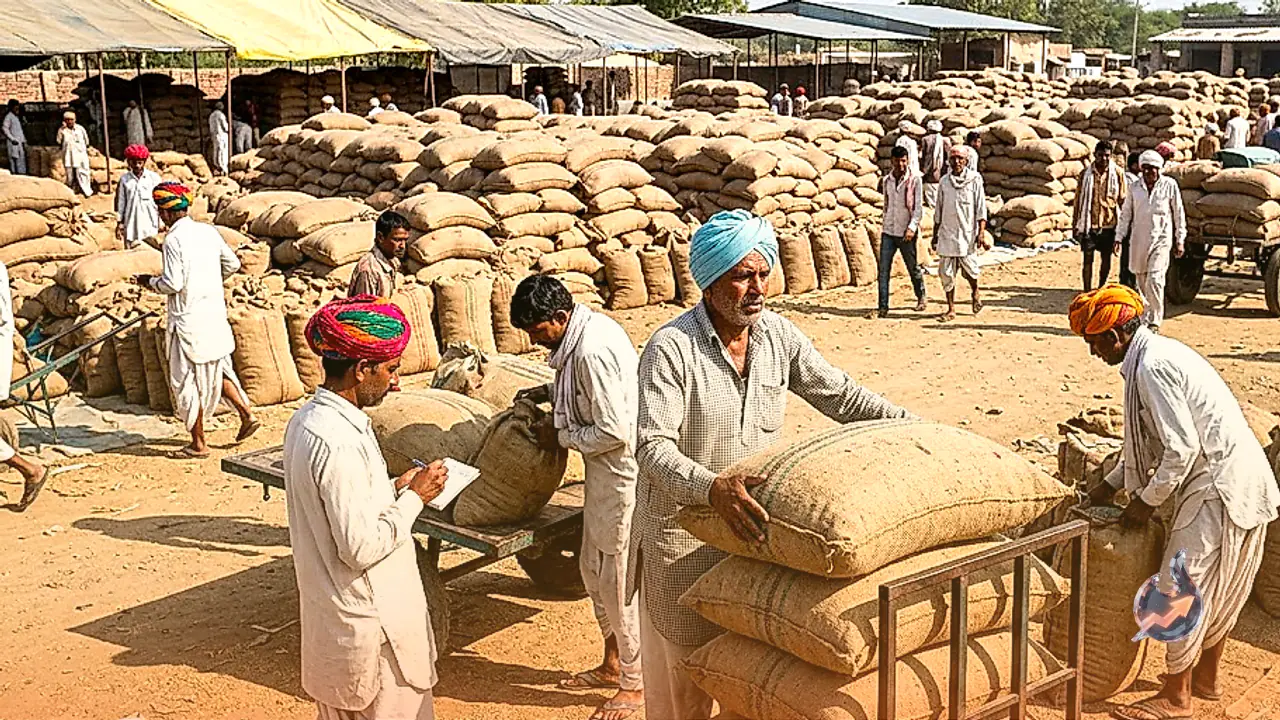





















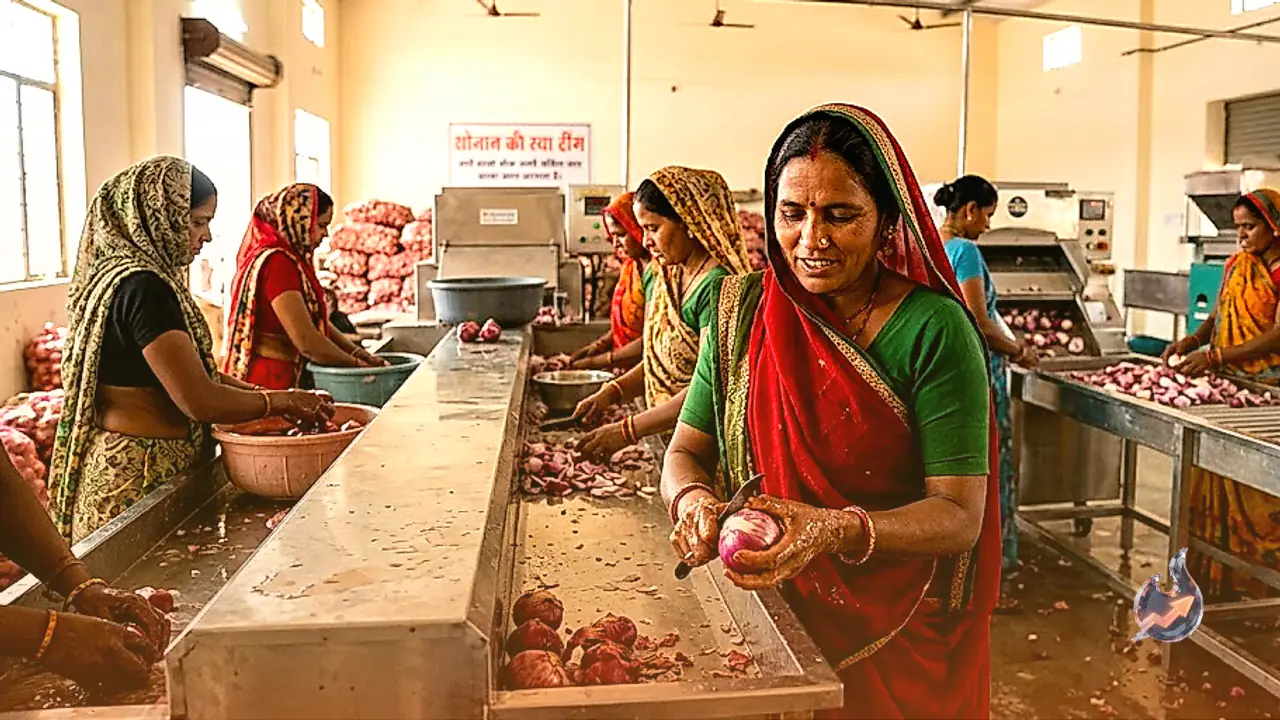

In a significant initiative to prevent post-harvest losses and raise farm incomes, an advanced onion processing unit is being established at Yalsar village in the Laxmangarh tehsil of Rajasthan's Sikar district. Backed by the state government under its One District One Product (ODOP) program, the enterprise carries a capital allocation of Rs 25 lakh and has formally secured administrative clearance. Relevant authorities have set a strict deadline to launch commercial operations at the site by December.
Expanding the ODOP Footprint Across Sikar and Alwar
The state intervention is not limited to Sikar alone, as a matching onion processing facility costing Rs 25 lakh is also being developed concurrently in Alwar district. The Yalsar plant will be managed and run directly by the rural women collectives under the banner of Rajeevika's Nai Umang CLF, Dudhwa. Handing managerial responsibilities to cluster-level federations integrates rural women directly into decentralized agro-processing chains, turning raw agrarian produce into commercially viable value-added inventory.
Dehydrated Flakes and Powder to Prevent Distress Sales
The facility is engineered to take raw bulbs straight from agricultural plots and convert them into two primary derivatives: onion powder and onion flakes. Onion flakes refer to cleaned, sliced, and dehydrated pieces of onion that find massive culinary and industrial demand across spice manufacturing, packaged seasoning, and commercial hospitality. Historically, one of the toughest challenges confronting local cultivators has been severe supply gluts during peak harvest cycles, when surging mandi arrivals crash wholesale rates below cultivation costs. Because perishable crops cannot be stored indefinitely without rotting, dehydration and pulverization offer a durable buffer, allowing farmers to circumvent distress dumping when open market prices collapse.
Training 500 Women Farmers and Curtailing Intermediaries
During the inaugural stage, the Yalsar unit will mobilize 500 women cultivators drawn from five neighboring villages across Laxmangarh: Yalsar, Choorimiyan, Bidodi Bari, Bidasar, and Paldi. Starting from the first week of October, structured training modules will instruct these women in advanced cultivation methods, standardized grading, and the technical operation of processing machinery. The project relies on direct procurement mechanisms through self-help groups, enabling cultivators to sell their produce locally without paying commissions to middlemen and market intermediaries.
Processing Capacity of 300 kg Daily and Scalability Plans
Operational blueprints developed by Rajeevika fix the starting throughput of the Yalsar installation at 3 quintals, or 300 kilograms, of raw onions per day. Incoming produce will undergo careful manual and mechanical sorting based on bulb quality and size, followed by drying, grinding, and moisture-proof packaging. If the operating model proves economically robust over its trial period, planners intend to expand daily processing capacities substantially and replicate the facility across other prominent onion belts in Rajasthan.
Packaging, Branding and Inter-State Market Linkages
Rajeevika will oversee the entire end-to-end packaging, brand positioning, and commercial sales distribution for the finished flakes and powder. Market outreach plans include supplying departmental outlets within Rajasthan as well as channeling products to major commercial trading hubs and retail networks across other Indian states. By moving beyond traditional local mandis, the rural enterprise aims to capture higher profit margins that typically accrue to external food processing corporations.
Scale of Onion Cultivation in Sikar District
Sikar stands as a powerhouse of onion farming in northern Rajasthan, dedicating nearly 25,000 hectares of land to the crop each season and yielding an aggregate output of approximately 6.75 lakh tonnes. An estimated 30,000 agricultural households depend directly on onion harvests for their livelihood, traditionally relying on the Sikar and Rasidpura agricultural produce market committees (mandis) to clear their stock. Sandeep Poonia, District Project Manager at Rajeevika, confirmed that administrative authorizations have cleared all hurdles, keeping the unit on track to begin processing operations by December.