





















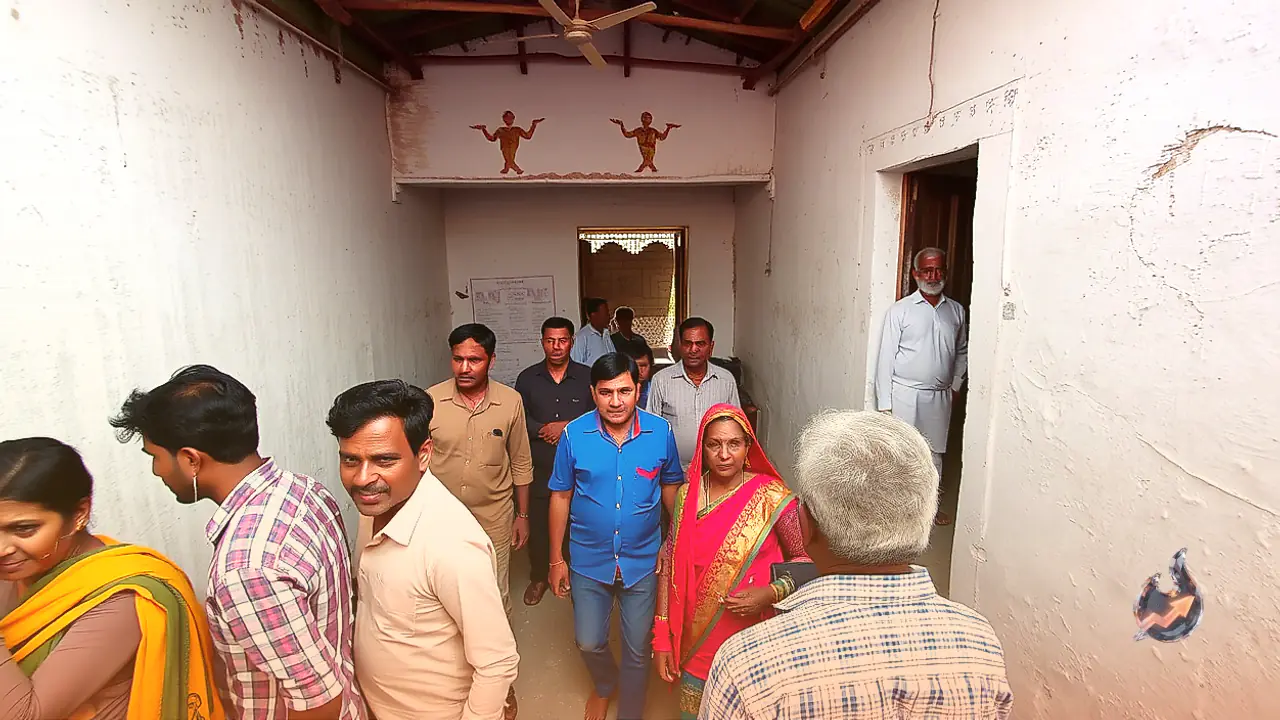

With the festive season underway, preparations for home makeovers have gained substantial momentum across local markets. While branded paints and premium distemper dominate commercial advertisements, an age-old tradition continues to hold its ground in Karauli, Rajasthan. Known locally as desi kali, this indigenous lime wash remains a staple for homeowners seeking a bright, clean look without straining their household finances. Decades into the era of modern synthetic emulsions, the steady reliance on this traditional method demonstrates its enduring practical appeal.
Affordable Whitewash Delivering Classic Brightness
Repainting an entire home using standard commercial paints can demand a considerable financial investment. In contrast, local lime wash serves as an accessible, cost-effective substitute that refreshes wall surfaces on a very modest budget. Residents note that applying this substance gives the structure an appealing, crisp white appearance with a subtle bluish brightness. Because of these distinct aesthetic qualities, numerous households continue to prioritize it during seasonal renovation rituals. In Karauli, users frequently blend the lime mixture with a hint of blue tint and Fevicol adhesive to enhance adherence. The ultimate durability and reflective finish, however, largely depend on the condition of the wall surface, the consistency of the prepared paste, and the precision of the application technique.
Enduring Appeal Across Rural Homes and Historic Mansions
The footprint of this conventional wash extends well beyond modern urban neighborhoods. Across rural settlements, families rely extensively on it to coat mud houses, thatched huts, and perimeter boundary structures. It remains especially prominent in older residences and heritage havelis, where architectural styles align naturally with mineral-based finishes. Homeowners appreciate the practical balance of minimal expenditure and dependable cleanliness that this longstanding craft provides. Beyond aesthetics, the local population values its natural pest-repellent qualities, noting a visible drop in insect activity following a fresh coat.
Color merchant Goverdhan Gupta explains that the inherent chemical composition of lime wash actively curbs the menace of mosquitoes, flies, and other household pests. Because of this natural protective shield, rural occupants and caretakers of ancestral properties consistently treat it as their most reliable home maintenance product.
Steady Market Demand Ahead of the Festival
The growing availability of modern paints has not dampened market interest in traditional alternatives within the region. Local color trader Raju Bansal observes that customer demand surges reliably as the festival approaches every single year. A substantial portion of the local demographic continues to purchase lime wash annually, led primarily by owners of vintage structures and historic havelis. Bansal notes that while finishing a room with a bucket of standard distemper can easily cost up to 1,000 rupees, completing the equivalent work with lime wash requires only about 250 rupees. This dramatic price advantage ensures that the classic finish remains a viable, highly preferred option for budget-conscious families.