



















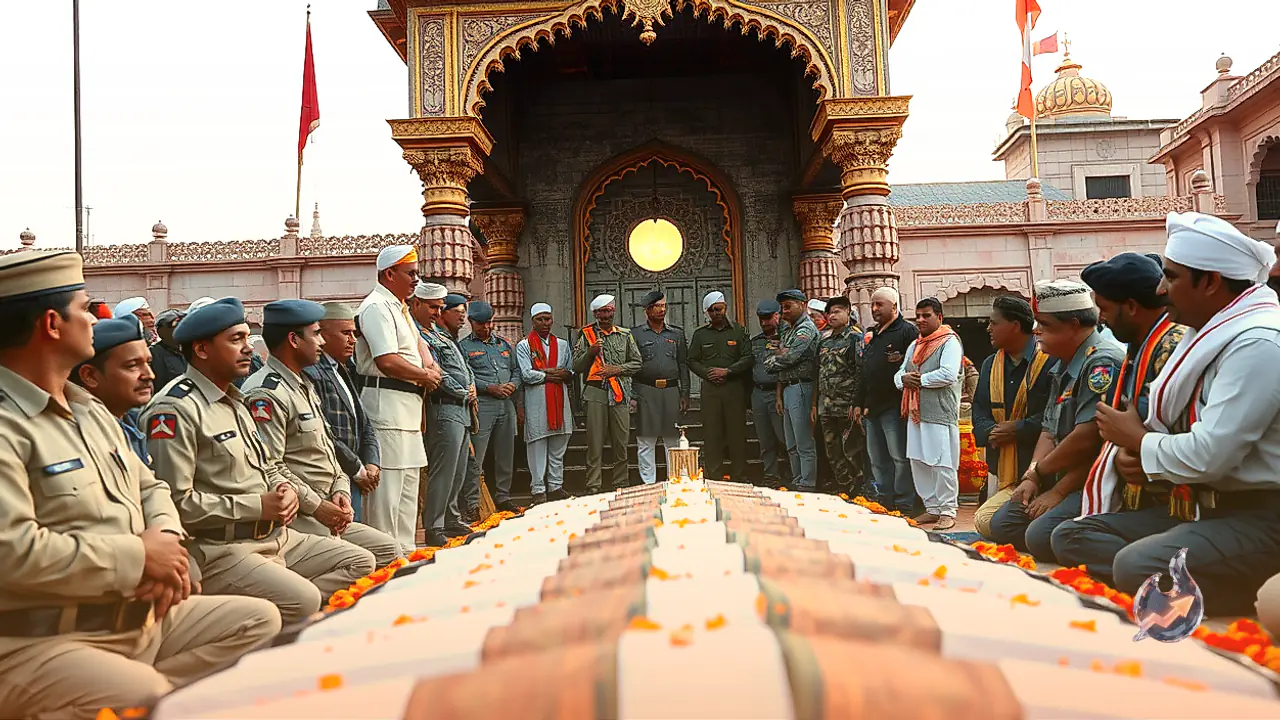

While the fortnight of Pitru Paksha traditionally sees individuals dedicating prayers and religious offerings solely to their ancestral lineage, an exceptional civic and spiritual ceremony was conducted in Bikaner, Rajasthan. Inside the premises of the local Sun Temple, a collective of Vedic priests gathered to offer Tarpan for the armed forces personnel who sacrificed their lives protecting the nation, alongside citizens who met an untimely end.
Collective Sacred Rites Led at the Sun Temple
The memorial spiritual gathering was conducted under the leadership of Mammu Maharaj at the Sun Temple. City priests sat together to carry out the rigorous liturgical rites, chanting sacred mantras while invoking peace for the departed souls. The participants reverently remembered the supreme sacrifices made by brave soldiers on the borders and prayed for their spiritual liberation and eternal salvation.
The Chaturdashi Tradition and Universal Tribute
Explaining the scriptural foundation of the ritual, astrologer Rajendra Kumar Vyas stated that the Chaturdashi date during Pitru Paksha is traditionally designated for performing Tarpan for souls that experienced premature or sudden demise. Guided by this principle, the ceremony specially remembers defense personnel who laid down their lives in the line of duty. Vyas emphasized that this offering transcends all barriers of caste, creed, and religion. Every soldier who gave their life for the country, regardless of faith or community background, is honored with sanctified water and sesame seeds.
Beyond military personnel, the ritual also dedicated Tarpan to departed ascetics, renowned literary figures, poets, astrologers, and notable thinkers. According to Rajendra Kumar Vyas, this noble annual gathering has been maintained regularly at the Sun Temple for approximately seven years. Each year during the Pitru Paksha fortnight, priests assemble collectively to express spiritual reverence for these exceptional departed souls.
Blending Vedic Heritage with National Gratitude
Tarpan stands as an integral component of Hindu spiritual customs, wherein water and sesame seeds are offered to gratify departed ancestors and seek their spiritual tranquility. By expanding this customary familial obligation into a tribute for fallen national heroes, the gathering in Bikaner conveyed a profound social message. It reaffirmed that soldiers who make the ultimate sacrifice for the country's security deserve remembrance, respect, and spiritual homage from the entire society during sacred ancestral observances.