


















Intense political manoeuvring has gripped the eastern region of Rajasthan as the countdown begins for local body and Panchayati Raj governance elections in Dausa. The post of Dausa Zila Pramukh has remained an unbreached stronghold for the opposition Congress party for approximately 24 years. However, this electoral cycle presents entirely fresh calculations following the official reservation of the top district council post for a woman candidate representing the Scheduled Caste category. Buoyed by its past performance in urban municipality polls across the state, the ruling Bharatiya Janata Party is investing extensive ground resources to capture the board, while the long-time incumbents are battling hard to preserve their unbroken record.
Early Saffron Beginnings and the Initial Transfers of Power
The administrative roots of Dausa as an independent district date back to April 10, 1991, prior to which it functioned purely as a single panchayat samiti operating under Jaipur district administration. With the formation of the district came an independent district council framework, leading to its inaugural elections in 1995. That inaugural contest witnessed a clear victory for the Bharatiya Janata Party, placing Kirodi Lal Meena at the helm as the first Zila Pramukh. His tenure at the local council was cut short in 1998 when he contested and won a seat in the Rajasthan Legislative Assembly representing Bamanwas, leading to his resignation. In the subsequent transition, the party elevated its serving deputy Satish Kumar to assume the leadership role.
Two Decades of Continuous Opposition Dominance
A second general election saw another saffron victory under Jiyalal Banshiwal, yet internal instability soon surfaced when a no-confidence motion unseated him within two years. Congress deputy Vinod Sharma briefly held temporary charge before fresh voting in 2002 elevated Mahendra Sankhla to the chair, inaugurating a remarkable era of uninterrupted control. The subsequent elections in 2005 brought Kaveri Devi Meena to the post, followed by Ajit Singh Mahuwa in 2010, Geeta Khatana in 2015, and Hiralal Saini in 2021. For nearly a quarter of a century, every successive term has seen the same party maintain its hold, transforming this local body into one of its most dependable electoral bastions in the state.
Reworked Contours Following the SC Woman Reservation
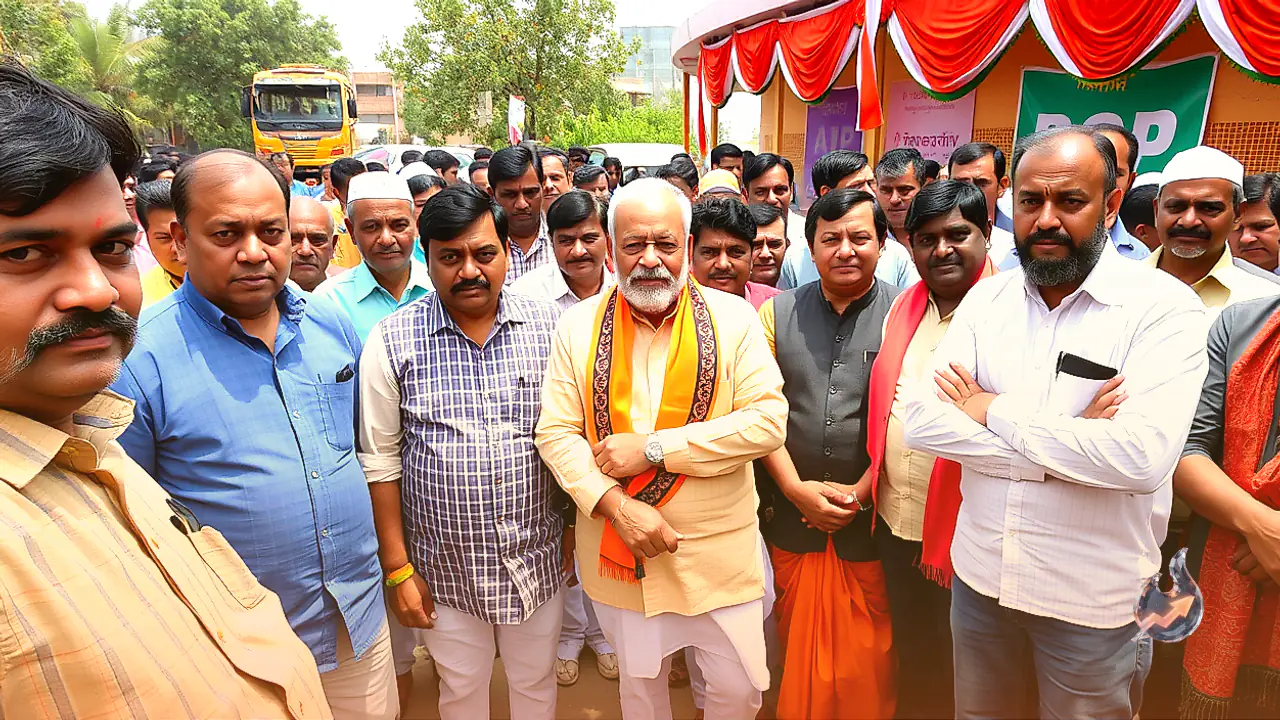
Governing across 37 council wards, the Dausa district body now requires both mainstream political camps to adapt rapidly to the newly notified reservation category. Identifying an ideal Scheduled Caste woman candidate has triggered intense negotiations among factional heads seeking to satisfy grassroots loyalties alongside strict caste dynamics. Within the Congress camp, deliberations are being actively steered by prominent leaders such as former minister Mamta Bhupesh, Nandlal Banshiwal, DC Bairwa, Kiran Doriya, and Sultan Bairwa. Their organizational backing and consensus are expected to prove decisive in shortlisting the final contenders for the high-stakes position.
A Prestige Battle for Regional Titans
Beyond local ward arithmetic, the election has emerged as a high-profile showdown between two influential heavyweights in state politics. Dausa has long represented a critical sphere of political influence for Congress stalwart Sachin Pilot, while simultaneously serving as the native birthplace and ideological stronghold of cabinet minister Kirodi Lal Meena. To defend its territory, the opposition coalition is rallying around Pilot alongside seasoned local figures including Member of Parliament Murari Lal Meena, Prasadi Lal Meena, Mamta Bhupesh, Gajraj Khatana, and Omprakash Shukla. Countering this lineup, the ruling party is leaning heavily on the extensive personal network of Kirodi Lal Meena complemented by its contingent of four sitting legislators across the district.
Reorganization Expands Administrative Units from 11 to 14
The territorial scope of this panchayat contest has broadened significantly following a formal delimitation exercise that raised the number of panchayat samitis in Dausa from 11 to 14. Historically, rural governance in the district was divided across Dausa, Lavan, Nangal Rajavatan, Ramgarh Pachwara, Lalsot, Sikrai, Sikandra, Bandikui, Baswa, Baijupada, and Mahuwa. The recent restructuring officially created three brand-new administrative tiers: Mandawar, Manoharpur Khedla, and Shivsinghpura. Each of these three new blocks will hold elections for its samiti chief for the very first time, forcing strategic managers on both sides to spread organizational resources across a far wider playing field.
Claims of Clean Sweep and Counter-Accusations
Projecting full confidence ahead of polling, Dausa MP Murari Lal Meena underlined past municipal election trends, pointing out that his party previously captured eight out of 11 civic bodies. Citing this past precedent, he asserted that voters would deliver clean sweeps across all 14 newly delimited panchayat samitis. While alleging that their opponents might resort to questionable tactics to secure one or two boards, he maintained that public sentiment firmly backed his party. Whether the long-standing 24-year fortress remains impregnable or whether changed reservation dynamics deliver a breakthrough for the challengers will determine the trajectory of rural leadership across eastern Rajasthan.