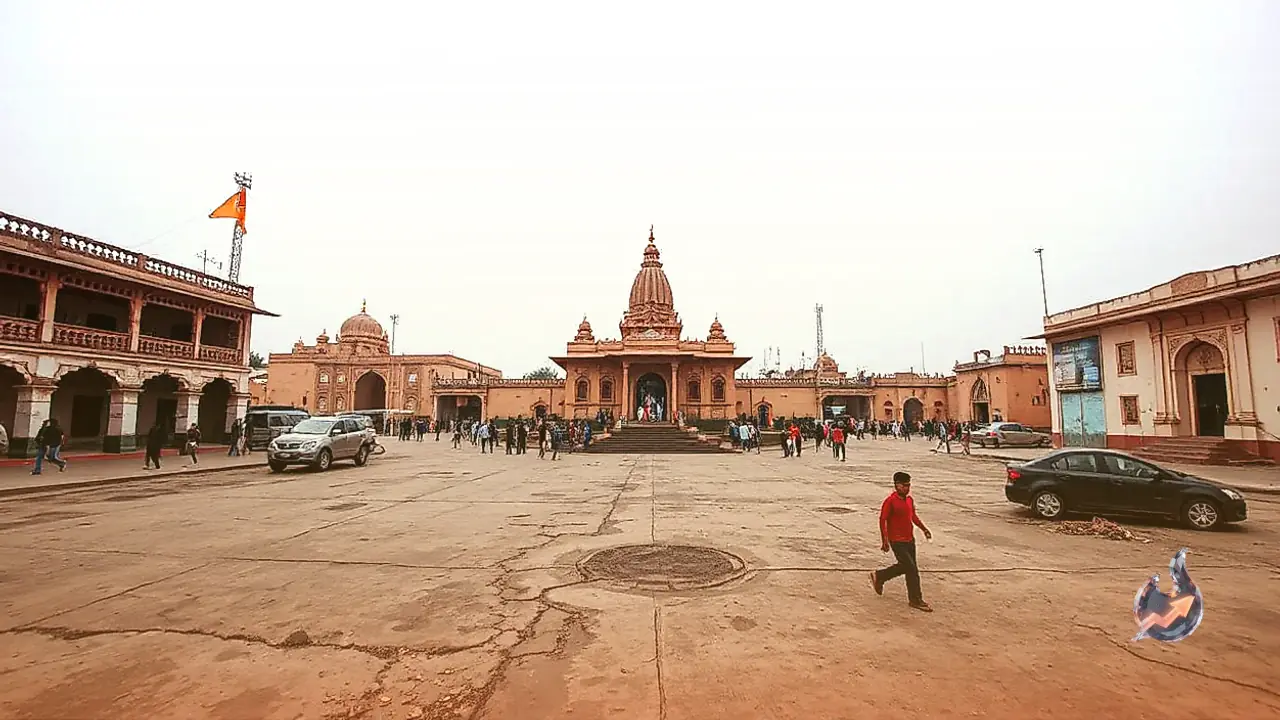















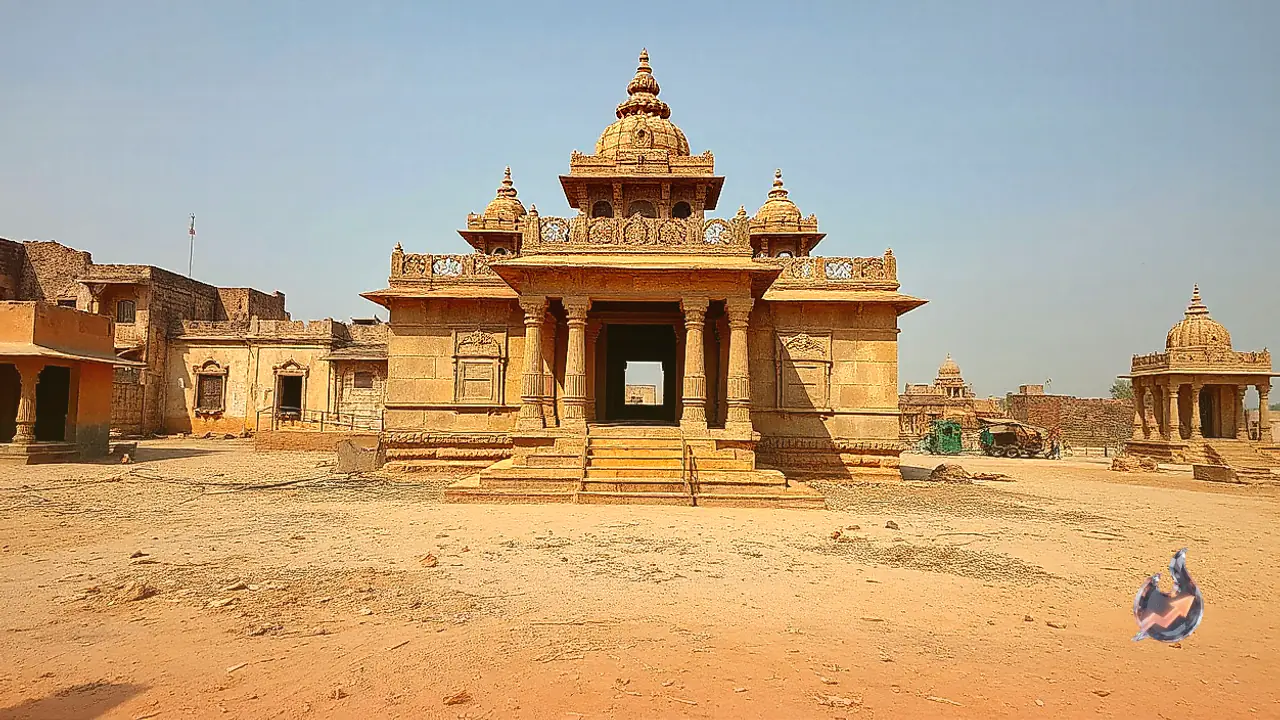

Across Rajasthan's historic Shekhawati belt, the earth of Jhunjhunu district has yielded extraordinary remnants of ancient spiritual traditions. Farmers ploughing their agricultural fields have struck stone and uncovered sacred carvings, while residential construction workers digging foundations have brought long-buried sculptures back to light. Today, these scattered discoveries from across different villages and towns reside under a single roof at the Jain Shwetambar Kharataragachha temple in Jhunjhunu. Housing everything from a nearly 976-year-old life-size sculpture of Bhagwan Mahavira to 800-year-old red stone carvings, the shrine serves as a repository of historical craftsmanship and faith.
A 976-Year-Old Life-Size Mahavira Idol Unearthed From a Residence
The centerpiece of the temple collection is a seven-foot-tall life-size idol depicting Bhagwan Mahavira Swami. Engraved upon the sculpture is the date Vikram Samvat 1105, which establishes its antiquity at approximately 976 years. The artwork features a five-foot central figure of Bhagwan Mahavira surrounded by detailed depictions of parigraha. Historical accounts note that this magnificent piece was discovered during excavation work at the home of a shravak located near the Bad Ka Balaji temple. The meticulous stonework and delicate chiseling reflect the sophisticated artistic standards of that medieval era.
Three 800-Year-Old Red Stone Carvings Moved From a Pausal
The temple sanctuary also preserves a triad of distinctive red stone idols believed to be roughly 800 years old. Bhagwan Parshvanatha presides in the center as the principal deity (moolnayak). Flanking him are Bhagwan Rishabhanatha on the right and Bhagwan Mahavira Swami on the left. Long before the present shrine was erected, these sacred figures were kept inside a pausal in the Shrimalon Ka Mohalla neighborhood. Monks and traveling Jain ascetics regularly lodged at this rest house during their journeys. When the permanent temple complex was established, the three idols were transferred and consecrated inside the modern sanctum.
Relics and an 1887 Coin Recovered Beneath the Altar
A conservation project carried out in 2004 revealed fascinating artifacts regarding the temple's structural history. According to Sushil Jain, joint secretary of the Jain Shwetambar Kharataragachha Sangh, the shrine underwent major renovation work that year, requiring the idols to be temporarily moved so the pedestals could be reconstructed. During excavations beneath the altar of Bhagwan Parshvanatha, workers uncovered an authentic coin bearing the year 1887, accompanied by a traditional urn (kalash), whole rice grains, clarified butter (ghee), sugar, and ceremonial items. These materials had been sealed inside the platform during the consecration ritual when the temple's second storey was constructed approximately 137 years ago.
Idols Recovered From Agricultural Lands in Narhad and Nangal
Farmlands in surrounding tehsils have likewise yielded buried religious treasures. Another temple idol, representing Bhagwan Shantinatha, carries the inscription Vikram Samvat 1031. Alongside it, six rare ashtadhatu (eight-metal alloy) idols are preserved, including representations of Bhagwan Parshvanatha, Shantinatha, and a third deity recovered directly from the soil in Narhad near Chirawa. Meanwhile, an idol of Bhagwan Mallinatha emerged unexpectedly from an agricultural plot in Nangal village within Udaipurwati tehsil. A farmer's plough struck the underground stone, unearthing the sculpture alongside a sandalwood grinding stone and two carved pillars. Notably, the fingertips of the freshly dug idol still bore unmistakable traces of sandalwood and saffron paste.
Preserving Shekhawati's Forgotten Sculptural Heritage
By gathering these varied discoveries from distant corners of the district, the Kharataragachha temple safeguards a tangible record of local civilization. Several figures trace their origins back to the 9th and 10th centuries, with concrete dates preserved through Vikram Samvat epigraphs. Together, they demonstrate that ancient Shekhawati maintained flourishing traditions of temple architecture, stone sculpting, and Jain spiritual culture spanning many centuries.