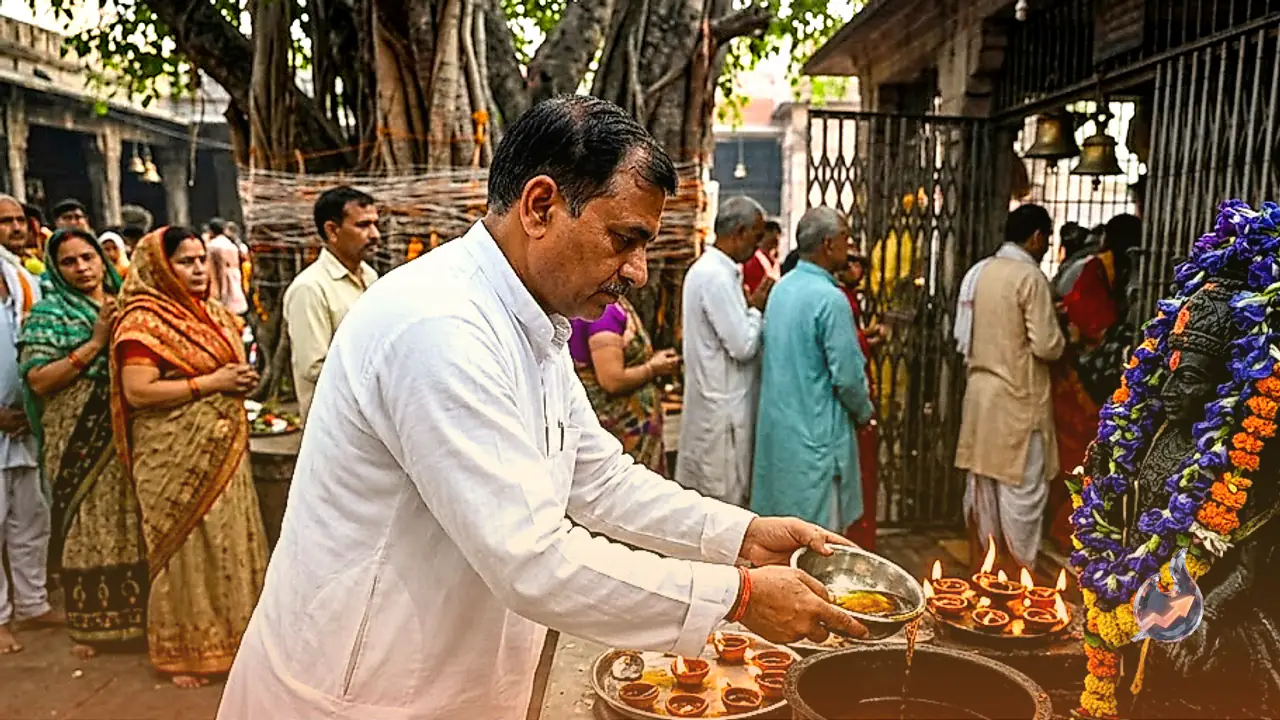
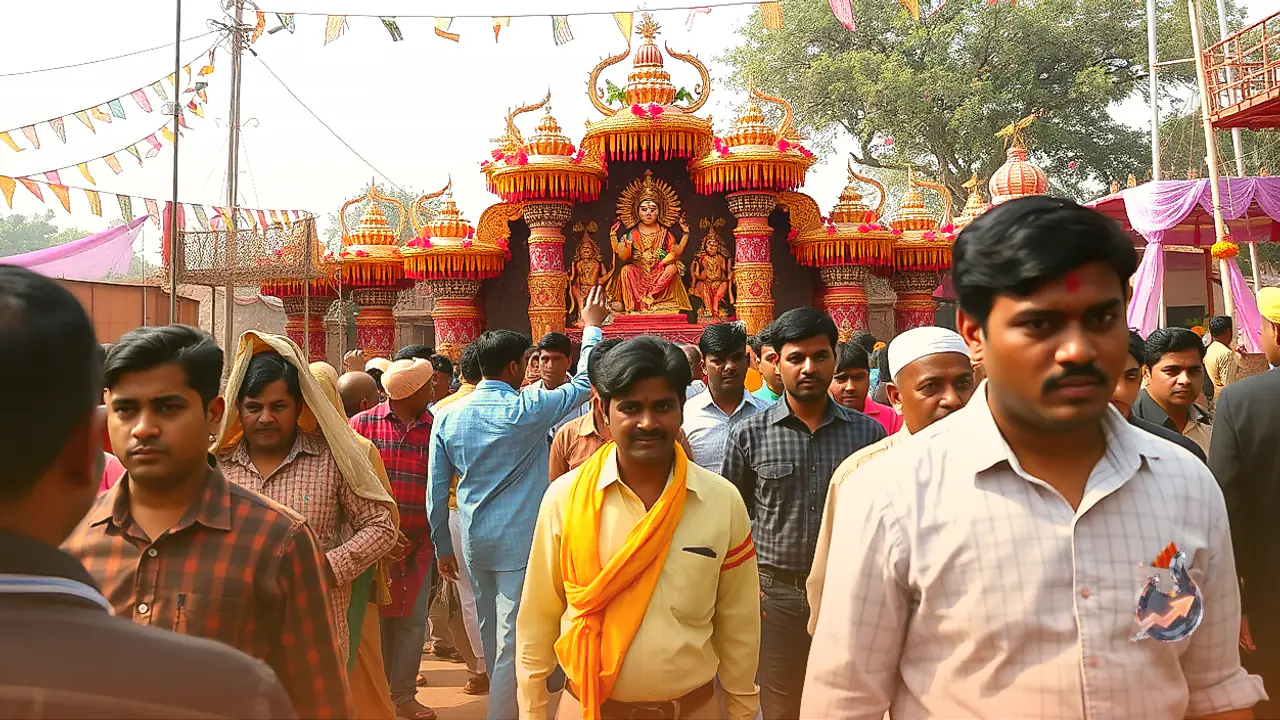


















Nestled in the Shekhawati region of Rajasthan, the Dhanavta area near Udaipurwati town in Sikar district houses an intriguing pilgrimage site known as the Khaneshwar Mahadev Temple. The shrine is famous across the region for a natural phenomenon caused by centuries of ritual worship. Over generations, the continuous pouring of water during ritual ablutions (jalabhishekar) has worn down the apex of the sacred Shivling, creating a distinct depression measuring approximately two inches deep. In orthodox Hindu temple traditions, any idol or Shivling that becomes chipped, cracked, or worn is customarily removed from the sanctum sanctorum and immersed in water. However, Khaneshwar Mahadev stands out as a rare exception where this physical alteration is preserved rather than discarded. In fact, this two-inch hollow cavity forms the very identity of the shrine and gives the temple its name, Khaneshwar Mahadev.
An Ancient Origin Predating Town Settlement
The historical lineage of the Khaneshwar Mahadev Temple is deeply rooted in local heritage. According to Mahant Shankar Das Maharaj, the existence of this holy site predates the physical settlement and expansion of Udaipurwati town itself. Long before modern residential neighborhoods and bustling market streets developed, the surrounding territory was covered in dense, untamed forests. During that remote era, ascetics and devotees journeyed into the wilderness to offer prayers to Lord Shiva. Although no formal stone inscriptions or ancient shilalekhs remain at the site to document its precise founding date, generations of oral testimony and unshakeable community devotion have preserved its historical importance.
Centuries of Water Carving Stone
Upon entering the inner sanctum of the temple, the striking contour of the Shivling immediately draws the attention of visitors. Water offered during daily worship gathers at a single point on top of the stone structure. Devotees believe that this two-inch deep depression was not formed overnight or across a few decades, but is the result of continuous water offerings flowing over hard stone across several centuries. For pilgrims, the deep indentation is regarded as a tangible symbol representing countless years of collective faith and unrelenting devotion to Lord Shiva.
Transformation from a Tiny Shrine to a Multi-Crore Complex
The physical structure of Khaneshwar Mahadev has undergone a dramatic transformation over the decades. According to local residents, the original temple was remarkably small, offering barely enough space for two people to sit side by side and perform worship. As time passed and the flow of devotees increased, community members and local philanthropists (bhamashahs) joined hands to restore and expand the sanctuary. Through contributions amounting to crores of rupees, a magnificent new temple complex was constructed. As part of this major redevelopment, a massive statue of Lord Adidev Shiva was installed within the complex premises, creating a impressive landmark for visiting devotees.
Iconography of the Pre-Marriage Ascetic Shiva
Another distinctive feature that sets Khaneshwar Mahadev apart from conventional Shiva temples is its unique iconographic layout. Inside the shrine, the Shivling is accompanied primarily by Nandi Maharaj. Mahant Shankar Das Maharaj explains that the site is traditionally connected to the meditative, pre-marriage phase of Lord Shiva, when he engaged in severe penance and solitude. Because this shrine honors his ascetic state prior to marriage, statues of Lord Ganesha and Lord Kartikeya were originally absent from the sanctuary. However, in more recent years, an idol of Lord Ganesha was installed within the complex to accommodate evolving worship practices.
The Legend of Raja Todarmal and the Philosopher Stone
Rich local folklore further enhances the mystical reputation of the shrine. Prominent among these legends is the tale of Raja Todarmal, who is remembered in local traditions as an ardent devotee of Lord Shiva. According to popular belief, Raja Todarmal performed intense austerities at this very location. Pleased by his unwavering dedication, Lord Mahadev granted him the boon of Parasmani (the divine philosopher's stone) within this region. Today, Khaneshwar Mahadev stands as a captivating blend of living faith, architectural evolution, and enduring regional folklore in Rajasthan.