





















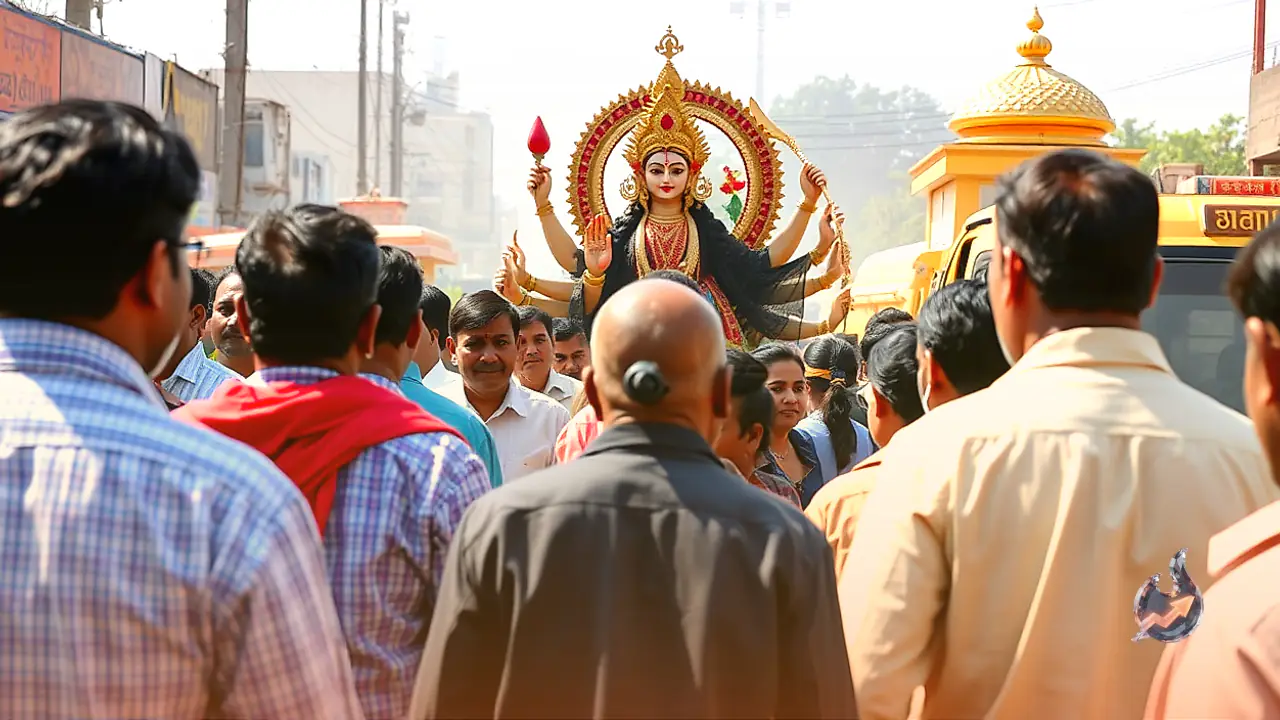

In sacred traditions, the fierce representations of the divine feminine often evoke deep reverence and awe. Devotees frequently conflate Goddess Kali and Mata Kalratri because both possess dark complexions and destructive power aimed at annihilating evil. Despite sharing an association with the supreme primordial energy, sacred texts emphasize that these two deities represent distinct manifestations. Their iconography, mounts, weapons, garlands, and ritual methods exhibit notable divergences that set them apart in spiritual practice.
Theological Hierarchy: Mahavidya Versus Navdurga
The foundational distinction lies in the traditions to which each goddess belongs. Goddess Kali is revered as the foremost among the ten Mahavidyas, embodying ultimate cosmic dissolution and the mastery over time. Mata Kalratri, on the other hand, is the seventh manifestation of Goddess Durga within the Navdurga framework. Her adoration takes center stage on the seventh day of the Navratri festival, known as Saptami. While Kali represents the primordial power that dissolves all creation, Kalratri represents the protective force that emerged specifically during cosmic battles against demonic entities.
Facial Features and Physical Form
A closer look at classical iconography reveals clear contrasts in their physical depictions. Goddess Kali is depicted with an intensely terrifying countenance, most visibly recognized by her protruding tongue dripping with vitality, framed by wildly unbound hair. In contrast, Mata Kalratri does not have an extended tongue. Her depiction features three radiant, cosmic eyes that are circular like the universe. Although her hair is similarly dishevelled, her expression balances intense ferocity with maternal reassurance for the faithful.
Weapons, Mudras, and Symbolic Garlands
The weapons and gestures held by each deity emphasize their unique spiritual functions. Mata Kalratri possesses four arms. Her upper left hand wields an iron cleaver or sword, while her lower left hand holds a formidable thunderbolt. Her two right hands are held in the reassuring Abhaya and Varada mudras, bestowing protection and boons upon those who seek refuge in her. Goddess Kali typically holds a severed head, a skull cup used for collecting blood, and a sharp scimitar. Their adornments also differ fundamentally: Kali wears a garland of severed heads signifying the destruction of ego, whereas Kalratri is adorned with a necklace that glints brilliantly like celestial lightning.
Contrasting Mounts and Spiritual Vehicles
The mounts associated with both goddesses carry distinct symbolic meanings. Mata Kalratri rides a donkey, a vehicle rare among Vedic deities, representing resilience, humility, and the subjugation of stubborn ignorance. Conversely, Goddess Kali is traditionally associated with cremation grounds, often visualized standing upon a preta or on the tranquil chest of Lord Shiva. This starkly separates their spiritual domains and cosmic duties.
Ritual Worship and Blessings
The paths of worship dedicated to these two deities diverge significantly. Kali worship is deeply intertwined with esoteric traditions, tantric rituals, and midnight rites aimed at stripping away human delusions to achieve spiritual liberation. Mata Kalratri is worshipped predominantly by householders during regular Navratri observances through standard chanting, offerings, and fasting. Devotees pray to Kalratri to banish nocturnal terrors, heal persistent illnesses, and neutralize planetary afflictions. Despite their frightening exterior forms, both goddesses are regarded as exceptionally benevolent towards earnest worshippers.