















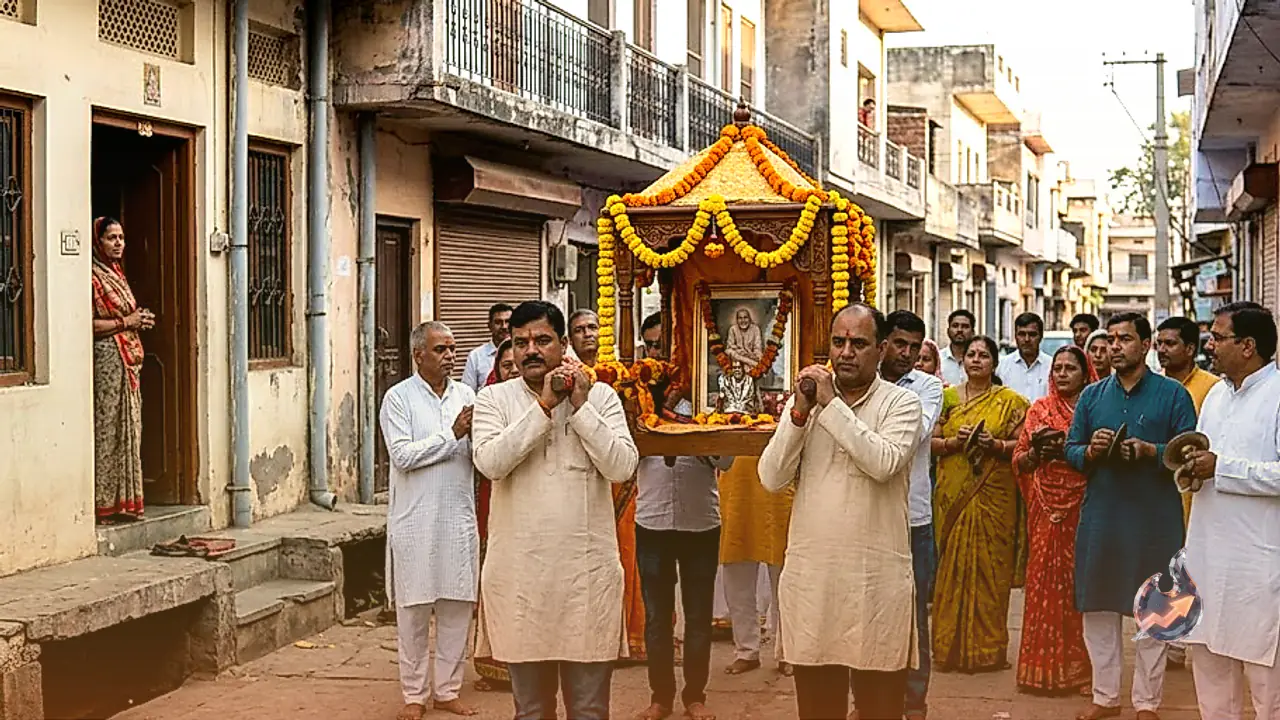
The city of Kota in Rajasthan is preparing to observe a notable departure from tradition during this year's Guru Purnima festivities. The grand silver Sai Baba Palki procession, which has been organized continuously for the past 16 years without interruption, will not take place in its traditional large-scale format. The annual rally, which historically drew massive crowds as it traversed through major commercial centers and markets across the city, will instead be held in a strictly condensed form. Organizers made the collective decision after assessing evolving social dynamics and a decrease in community participation.
A 16-Year-Old Tradition Inspired by Shirdi
The roots of the silver Sai Baba Palki tradition in Kota trace back exactly 16 years. At that time, local devotees convened to establish an annual procession modeled directly after the iconic celebrations at the world-renowned Shirdi pilgrimage site in Maharashtra. The initiative received overwhelming backing from the regional community from its very inception.
Reflecting on the initial event, committee members recalled that the inaugural yatra was launched using a silver palki brought from the Jain temple located in Vigyan Nagar. Driven by the extraordinary enthusiasm and financial support of the public, the temple committee subsequently commissioned the construction of a permanent, custom-crafted silver palki. This magnificent palanquin served as the sacred vessel carrying the idol of Sai Baba through the city streets each year.
Over the past decade and a half, the procession became synonymous with cultural grandeur. Previous editions featured 51 traditional dhol-nagada drum ensembles, intricately decorated chariots, folk dandiya dance troupes, and a procession spanning several kilometers. Local merchants and community groups across Kota's primary market streets regularly arranged elaborate receptions to welcome the rally.
Why Organizers Chose to Scale Down the Event
Explaining the underlying factors behind modifying this 16-year tradition, Hiralal Rohida, head of the Sai Mandir Samiti and chief organizer, shared critical insights into the decision. He emphasized that the primary mandate of establishing the yatra was to foster mutual harmony, social unity, and brotherhood across all sections of society in Kota.
According to Hiralal Rohida, changing societal patterns have led to a visible shift in public engagement. He noted that when community-wide participation and active civic bonding wane, managing an event of such massive proportions with the same level of splendor becomes increasingly complex. Following extensive consultations with committee members and devotees, a consensus was reached to shorten the route rather than compromise on the execution of the event. Expressing the rationale behind the decision, Hiralal Rohida stated, "When social participation and mutual brotherhood decline, managing such a massive event with the same grandeur becomes difficult."
Planned Schedule for This Year's Guru Purnima Rituals
While Kota's main thoroughfares will not host the customary 51 drum groups or kilometer-long crowds this year, organizers stressed that spiritual reverence and ritualistic integrity will remain uncompromised. The temple committee has arranged all customary religious ceremonies to mark Guru Purnima in full accordance with tradition.
Instead of taking a full city tour, the silver palki procession will be confined strictly to the local Chowkiya area. Following the restricted palanquin movement, a grand 'Sai Bhandara' (community feast) will be held where devotees can receive prasadam. The mandir committee has invited community members to gather at the local Chowkiya region to participate in the religious ceremonies and feast.