















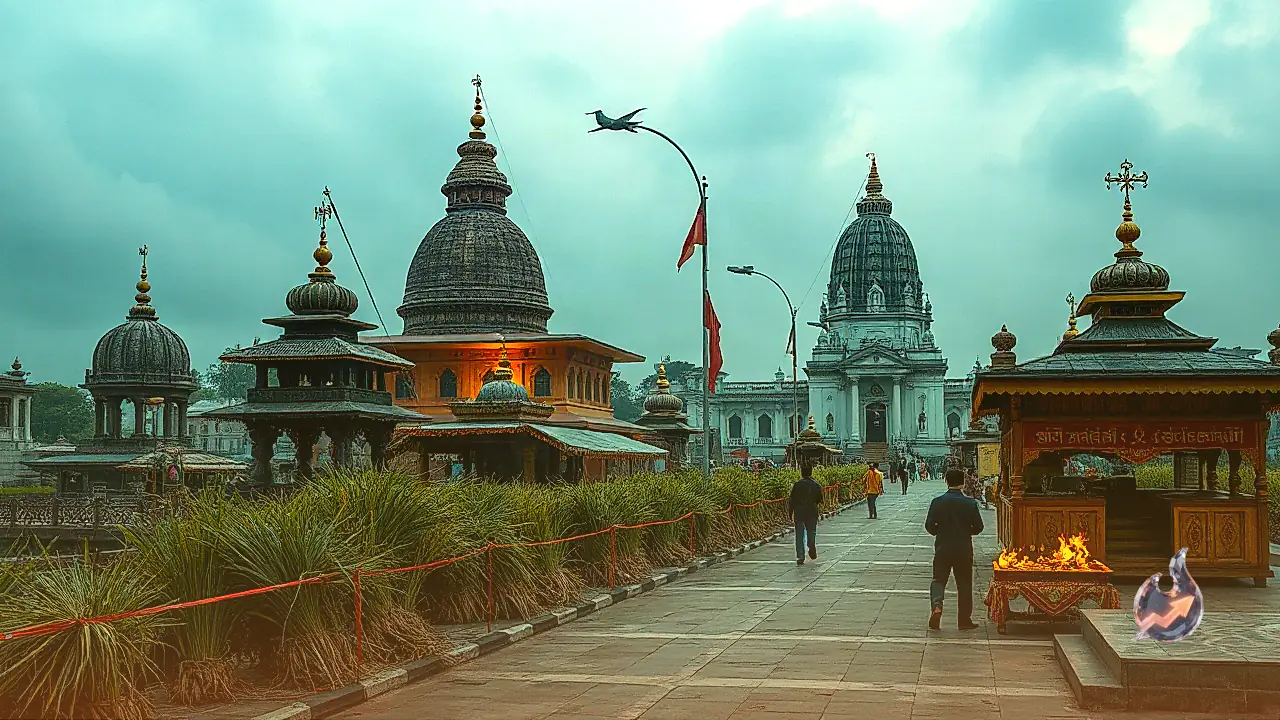

Bhadrapada Amavasya holds immense spiritual significance in Sanatan tradition, observed prominently as Kushotpatan Amavasya or Kushi Amavasya across Mithilanchal and other regions. Falling right before the commencement of Pitru Paksha, this sacred day is dedicated to harvesting and preserving the holy grass known as Kusha. Priests as well as household devotees collect this sacred herb today to secure a supply for all religious rites throughout the upcoming year.
Essential Role of Kusha in Annual Rituals
According to traditional Hindu beliefs, no divine worship, ancestral rituals (Pitru Tarpan), Vedic sacrifices (Yajna), or religious ceremonies are considered complete without the inclusion of Kusha grass. Consequently, the grass collected on this specific day remains spiritually pure and potent for an entire year. It is extensively utilized for crafting holy rings (Pavitri) and handling ritual offerings during Shradh ceremonies. Dr. Kunal Kumar Jha, Proctor at Kameshwar Singh Darbhanga Sanskrit University in Darbhanga, emphasizes that Kusha gathered on Kushotpatan Amavasya retains its sacredness indefinitely, provided scriptural directions are strictly observed during collection.
Auspicious Timing and Precise Collection Rules
The period around sunrise is regarded as the most auspicious time for gathering Kusha grass. For the year 2026, Kushi Amavasya falls on 11 September 2026. Experts specify that the ideal auspicious window (Shubh Muhurat) for uprooting the grass extends from sunrise until 8:45 AM. Practitioners must perform a purificatory bath prior to the ritual and seat themselves facing either East or North at the site where Kusha grows. Scriptures mandate that Kusha should never be cut or pinched using fingernails; instead, it must be carefully pulled out from the root using the right hand.
Sacred Mantra and Its Spiritual Translation
To seek permission from Mother Earth and invoke divine blessings, reciting a designated Vedic mantra while uprooting the grass is imperative. The traditional chant prescribed for this procedure is: "Kushagre Vasate Rudrah Kushamadhye Tu Keshavah, Kushamule Vasate Brahma Kushame Dehi Medini." This mantra translates to acknowledging that Lord Shiva (Rudra) resides at the tip of the Kusha grass, Lord Vishnu (Keshava) in the middle segment, and Lord Brahma at the root. Devotees recite this prayer to request Prithvi Devi (Mother Earth) to grant them the sacred grass, ensuring its enduring purity for annual worship.