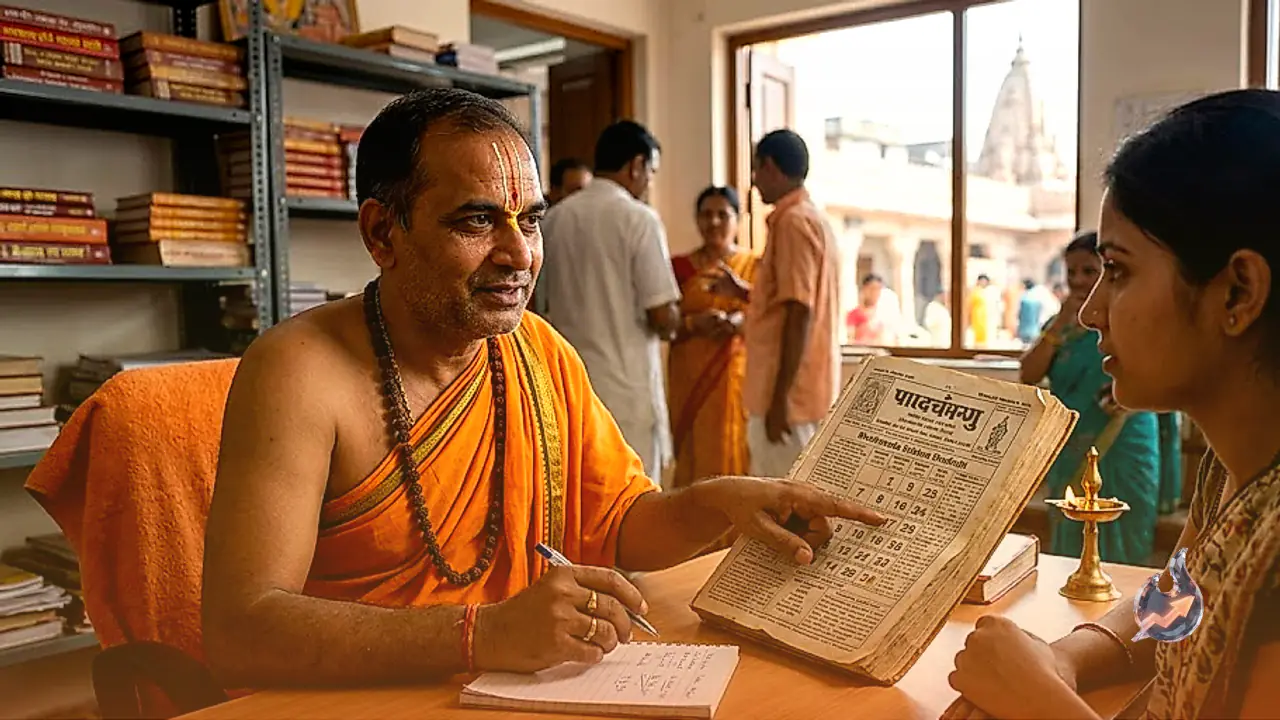























Just before Sawan begins across the country, Devshayani Ekadashi arrives each year and puts a four month pause on weddings, housewarmings and other auspicious events. In 2026, this Ekadashi falls on Saturday, July 25, and Chaturmas is considered to begin from that date. According to religious belief, Lord Vishnu goes into yoganidra, a state of divine slumber, in the Kshirsagar on this day, which is why no auspicious ceremonies are held for the following four months. Ujjain based astrologer Anand Bhardwaj explains that this practice is rooted in both a mythological story and a deep spiritual significance.
The period runs from July 25 to around November 19 or 20
As per the Vedic Panchang, Chaturmas begins with Devshayani Ekadashi during the Ashadh Shukla Paksha and ends with Devuthani Ekadashi during the Kartik Shukla Paksha. In 2026, the Devshayani Ekadashi fast will be observed on July 25, marking the start of Lord Vishnu's yoganidra. Chaturmas concludes on Devuthani Ekadashi, which falls on November 20, 2026, this year. Based on this, the roughly four month period from July 25 to November 19, 2026, is counted as Chaturmas, during which no new auspicious work is meant to be started.
Why weddings and mundan ceremonies are put off
Religious belief holds that from Devshayani Ekadashi, Lord Vishnu enters yoganidra in the Kshirsagar, and for these four months, the responsibility of running creation passes to Lord Shiva. This is why the tradition of postponing weddings, housewarming ceremonies, mundan and yagyopaveet rituals during this period has continued for centuries. Instead, devotees focus during these four months on worship, chanting, penance, fasting, charity and devotion to God. As soon as Lord Vishnu's yoganidra ends and he awakens on Devuthani Ekadashi, the cycle of auspicious and ceremonial functions resumes.
Planetary positions add another layer of significance
According to Anand Bhardwaj, the importance of Chaturmas is not limited to religious stories alone, it is also directly linked to planetary positions. Throughout this period, Venus, which governs happiness, prosperity and married life, and Jupiter, the guru of the gods who governs knowledge, righteousness and auspicious outcomes, both remain in a combust state. Astrological belief holds that with the influence of these two benefic planets weakened, this period is not considered favourable for weddings, housewarming ceremonies, mundan and other auspicious functions. This is why the tradition holds that such ceremonies should resume only once Chaturmas is over.