

















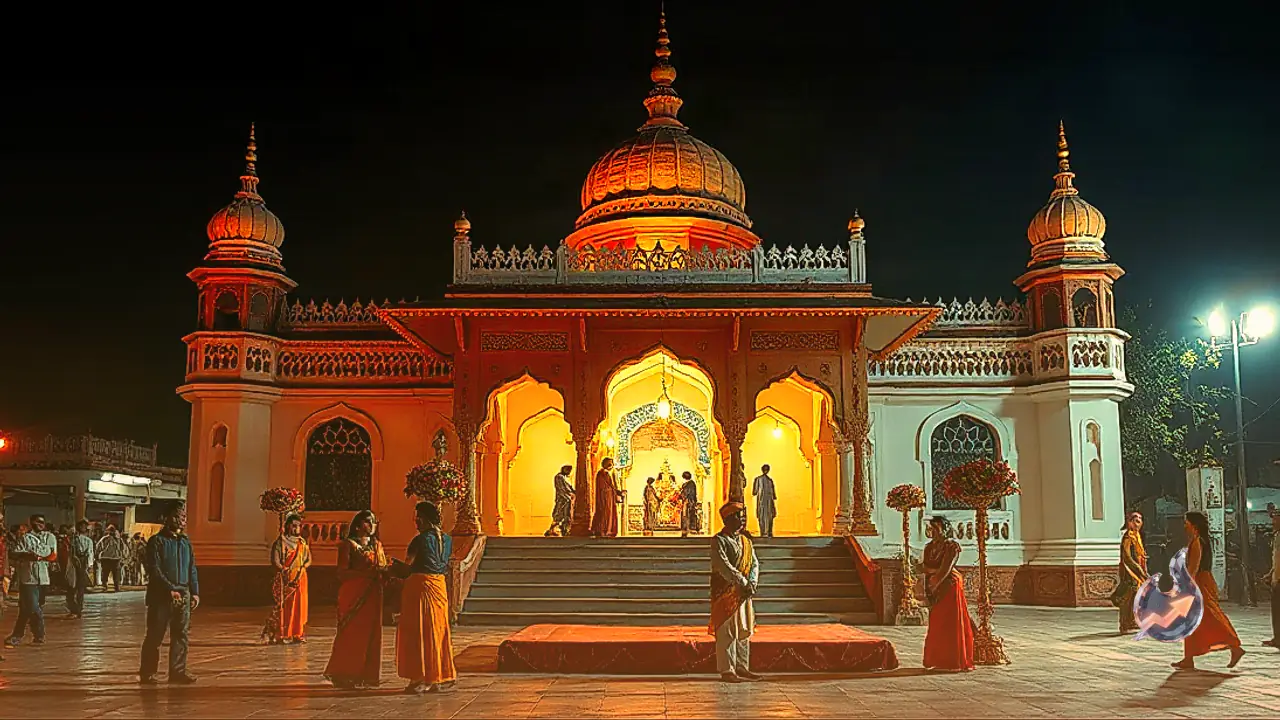
At the historic Muslim Nagore Dargah in Tamil Nadu’s Nagapattinam district, a Hindu couple’s wedding unfolded as a striking example of interfaith respect. The shehnai played while Hindu wedding rites were performed, and Muslim elders blessed the couple with open hearts. What distinguished the gathering was not display but affection, acceptance and an unusually warm atmosphere. The scene also answered online groups that try to spread religious hostility with a living example of coexistence in India.
Hindu rites performed with full community support
Social media feeds routinely carry confrontational reel formats that can turn even small differences into divisions. Against that background, the Nagapattinam wedding offered a rare sense of reassurance. Inside the sacred Nagore Dargah complex, the couple followed Hindu customs and traditions throughout the ceremony. The joyous setting showed that distinct religious identities could share the same space with dignity and mutual respect.
Relatives of the bride and groom attended, as did Muslim elders associated with the dargah and members of the Nagore Dargah committee. The elders and committee members did not remain distant observers. They joined the occasion, wished the newlyweds well at the start of their married life and shared in the family’s happiness. The arrangement did not recast the wedding in another religious format. Hindu rites remained central, while people connected with the dargah participated in their own manner.
Photographs captured warmth and mutual regard
In the images that later circulated widely, the newlyweds sat on the floor in traditional clothing. Each wore a garland made from fresh flowers, and both were absorbed in important wedding rituals. Directly opposite them sat Muslim elders dressed in white kurtas and pajamas, with Islamic caps on their heads. Their composed presence conveyed both respect for the ceremony and genuine affection for the couple.
Women and older relatives from the families were also visible around the couple, along with young children. Puja trays had been placed on the floor, while flower petals were scattered nearby. The combination of puja items, petals and the elders’ clothing became the visual center of the response from viewers. Together, these details gave the photographs a deeply personal quality. They suggested that religion can create a space for people to meet and honour one another, rather than serving only as a boundary between communities.
Committee says such events have a long history at the site
The Nagore Dargah committee clarified in an official statement that the wedding was not a one-day coincidence. According to the committee, interfaith and social events have been held at the sacred complex for a long time. On the same day, children from three other Hindu families also underwent ear-piercing ceremonies there. The couple’s wedding was therefore part of an established local pattern of participation across religious and social lines.
The committee said that, in the present climate, it is especially important to bring such examples before the wider world. It framed the message as “This Is Who We Are,” linking the occasion to India’s identity and culture. The intended lesson for the next generation was that communities have a shared history of coexistence that deserves to be remembered.
Images spread rapidly and drew public praise
As soon as photographs and video from the ceremony were shared on social media platforms, they spread rapidly. Internet users praised the couple, their families and the Muslim elders who blessed them. Many saw the moment as a welcome pause from polarized discussion, one built on love and acceptance rather than confrontation.
Nagapattinam’s wider tradition of communal harmony
Nagapattinam has represented communal harmony for centuries. People of different faiths gather at landmarks ranging from Velankanni Church to Nagore Dargah. The wedding brought that wider tradition into focus once again.
It also carried a clear social message. As long as unity and affection remain strong among people, forces that try to divide society have little room to operate. That is why the ceremony became more than a private family celebration. It turned into a public reminder of how religious spaces and local communities can uphold togetherness.