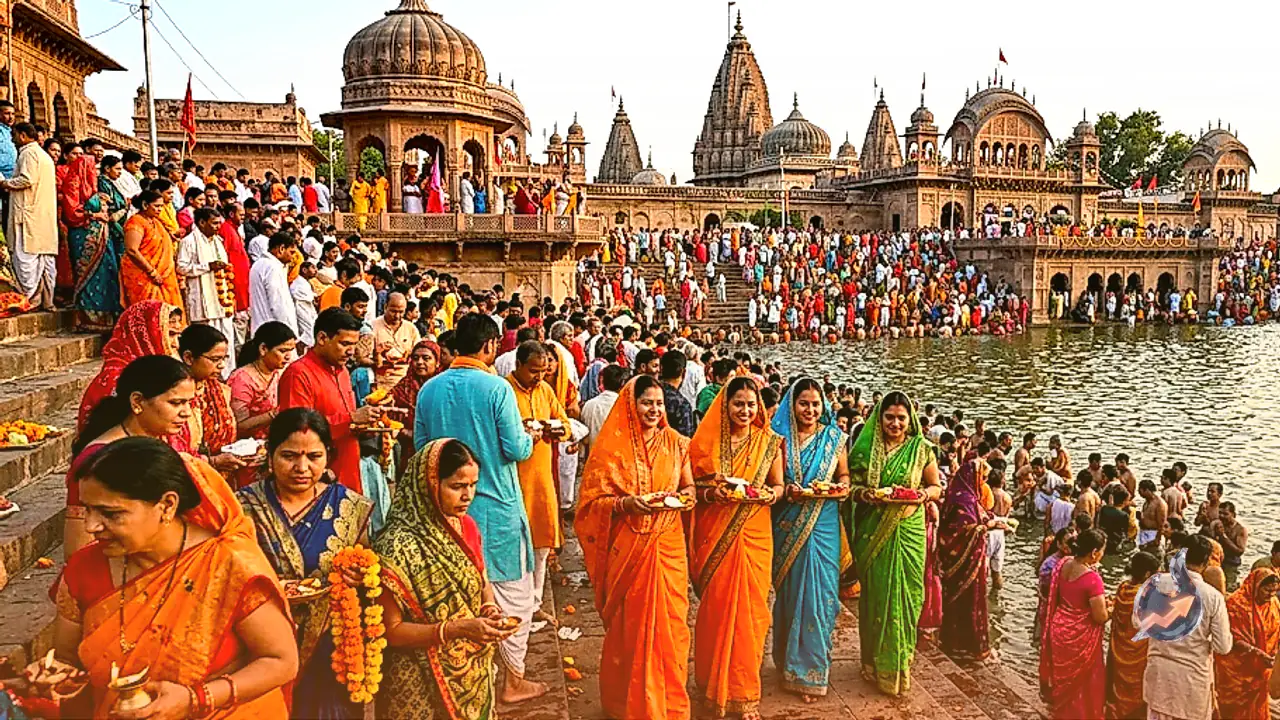




















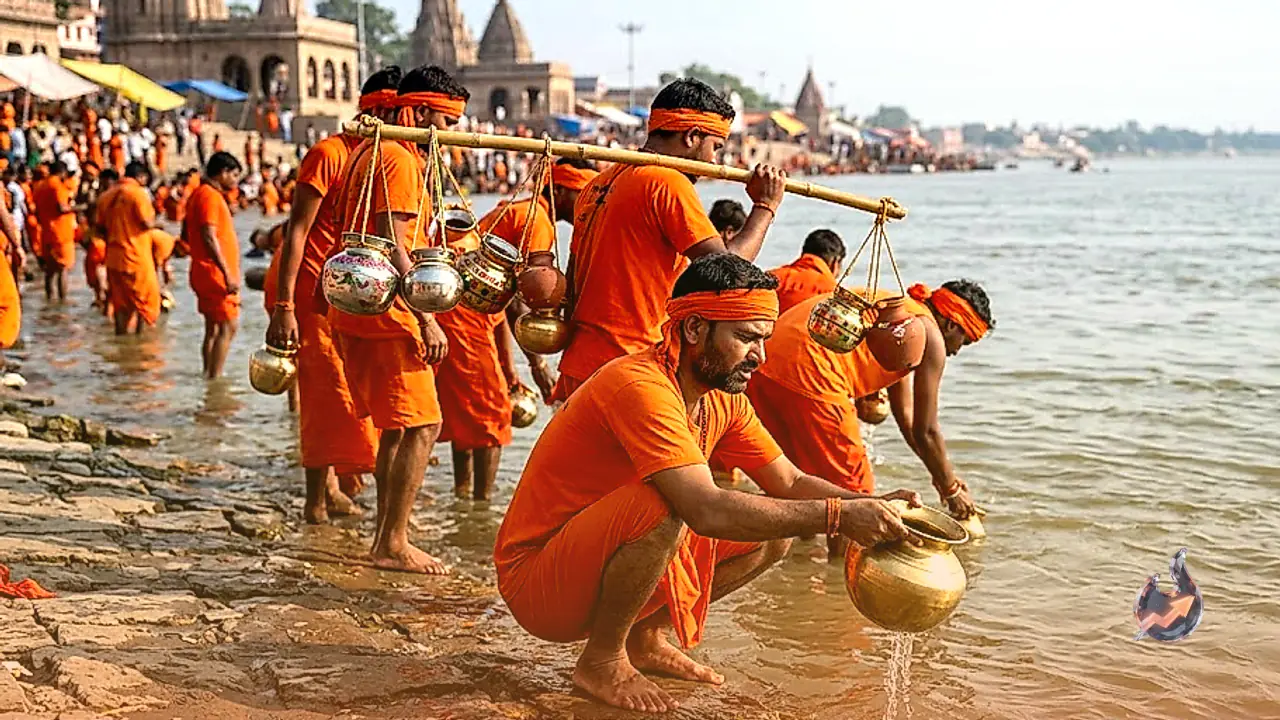

With the arrival of the holy month of Sawan, a profound wave of devotion for Lord Shiva envelops the atmosphere. Devotees from all over embark on spiritual journeys to offer their special prayers and perform sacred rituals for their revered deity. During this period, the world-famous Shravani Mela is organized in Sultanganj, located in the Bhagalpur district. The immense scale of this religious gathering can be gauged by the sheer number of Kanwariyas who arrive from distant places. Their primary objective is to collect holy water from the River Ganga at Sultanganj and begin their arduous trek to Baba Baidyanath Dham. Have you ever wondered why devotees specifically insist on drawing water only from Sultanganj for this demanding journey? There are deep-rooted geographical and spiritual reasons behind this centuries-old tradition that make this specific location incredibly special for Shiva worshippers.
The Grueling 105-Kilometer Pilgrimage
As soon as Sawan commences, the entire town of Sultanganj is awash in the vibrant saffron colors worn by the Kanwariyas. The devotees first take a purifying dip in the holy river and meticulously fill their Kanwars with the sacred water. From this point, they begin a grueling 105-kilometer journey on foot to Deoghar, where Baba Baidyanath Dham is situated. While the vast majority of these pilgrims complete the entire marathon distance barefoot as a test of their faith, some occasionally opt to use vehicles. The constant, rhythmic chanting of prayers keeps their spirits high throughout the exhausting route. According to Premanand Maharaj, the head of the Ajgaibinath Math, there are several distinct ancient beliefs that explain why the water must strictly be sourced from this exact spot before heading to Deoghar.
The Spiritual Power Of The North-Flowing Ganga
The primary reason the Ganga water from Sultanganj is considered uniquely auspicious lies in a rare geographical phenomenon. From Sultanganj to Kahalgaon, the course of the River Ganga naturally turns and flows towards the North, earning it the revered title of Uttarvahini Ganga, or North-flowing Ganga. In religious texts, the Northern direction is widely regarded as the heartland and the divine dwelling place of Lord Shiva. Because he resides in the North, tradition dictates that water should ideally be offered to his northern aspect first. Water that flows northward is considered exceptionally dear to him. Across the entirety of India, there are only two sacred places where the Ganga naturally flows towards the North: one is Sultanganj, and the other is Kashi Vishwanath. This geographical rarity elevates the spiritual value of Sultanganj's water, making it the most highly sought-after offering for the Shivalinga at Baidyanath Dham.
An Ancient Tradition Started By Lord Ram
Beyond the river's unique directional flow, the significance of Sultanganj is also deeply anchored in mythology dating back to the Treta Yuga. A widely held secondary belief states that Lord Ram himself initiated this Kanwar tradition. According to legend, Lord Ram collected the holy water of the Ganga from this exact spot in Sultanganj and carried it all the way to Baba Baidyanath Dham to perform the Jalabhishek, or water offering, of Lord Shiva. Millions of Kanwariyas today are essentially retracing his divine footsteps, preserving an ancient ritual that has continued unbroken for millennia. They believe that following this precise path grants them the ultimate blessings of the deity.
Drawing Devotees From Nepal And Bhutan
The magnetic pull of the Shravani Mela and the Sultanganj Kanwar Yatra transcends national borders. It is not merely a regional festival limited to Bihar or neighboring Indian states. The profound spiritual reputation of this pilgrimage draws immense crowds from across the entire country, as well as international devotees from neighboring Nepal and Bhutan. Unified by their faith, these pilgrims gather at the Sultanganj banks to collect the water. They then march together towards Baba Baidyanath Dham, passionately singing, dancing, and celebrating their devotion along the entire 105-kilometer stretch. This vibrant display of multicultural unity and relentless faith has remained a spectacular constant over the years, bringing the streets alive every Sawan.