






















Gaya in Bihar holds an extraordinary place in sacred traditions as a premier destination for ancestral rites, Shradh, and Pind Daan. Each year during the solemn period of Pitru Paksha, devotees from various regions travel to this holy ground seeking spiritual liberation and eternal peace for their ancestors. This year, the observed period of Pitru Paksha begins on Sunday, September 27, and concludes with Sarva Pitru Amavasya on October 10. Central to Gaya's enduring sanctity is an ancient lore involving Goddess Sita, who stepped forward to perform the funeral offerings for her father-in-law, King Dasharatha, using the earth around her.
Arrival of the Exiles at the Sacred River Bank
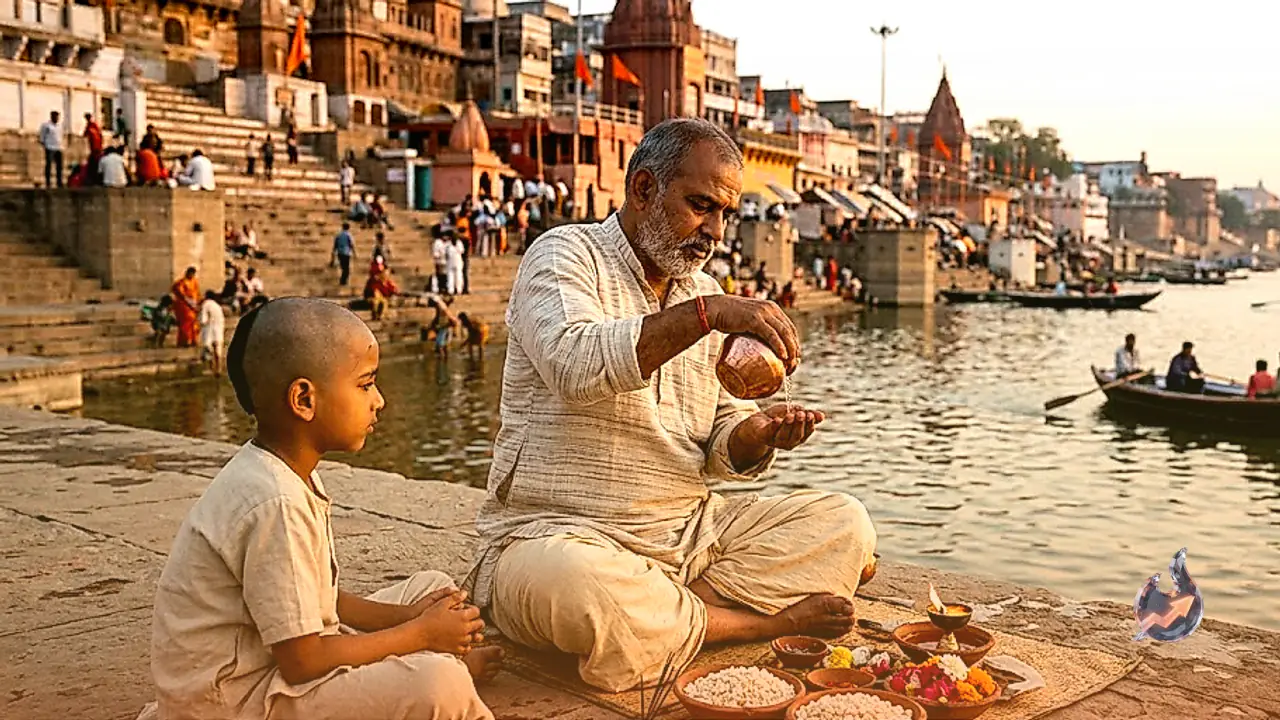
According to age-old scriptures, this sequence of events unfolded during the forest exile of Lord Rama, Goddess Sita, and Lakshmana. It was while traversing through the wilderness that news of King Dasharatha's demise reached the trio. The sudden loss deeply sorrowed Lord Rama. Recognizing their sacred filial obligations to facilitate the departed monarch's soul toward peace, Lord Rama and Lakshmana traveled to Gaya. Upon arriving at the banks of the Falgu River, they began laying the groundwork for the necessary rites.
A Departing Spirit Appeals as Time Runs Out
To procure the essential ritual ingredients, including fruits and specific ceremonial items, Lord Rama and Lakshmana temporarily departed for the nearby woods. While they were away searching, the auspicious planetary window designated for completing the ritual began to slip away. Traditional lore recounts that King Dasharatha's departed spirit suddenly manifested before Goddess Sita, earnestly beseeching her to conduct the offering immediately. Sita initially hesitated, explaining that scriptural norms generally entrust such obligations to sons, and Lord Rama was absent at that moment. Dasharatha's spirit reasoned that as a daughter-in-law, she was a true extension of the family, assuring her that an offering tendered through her hands would be fully accepted in the celestial realm.
Crafting the Offerings from Falgu's Riverbed Sand
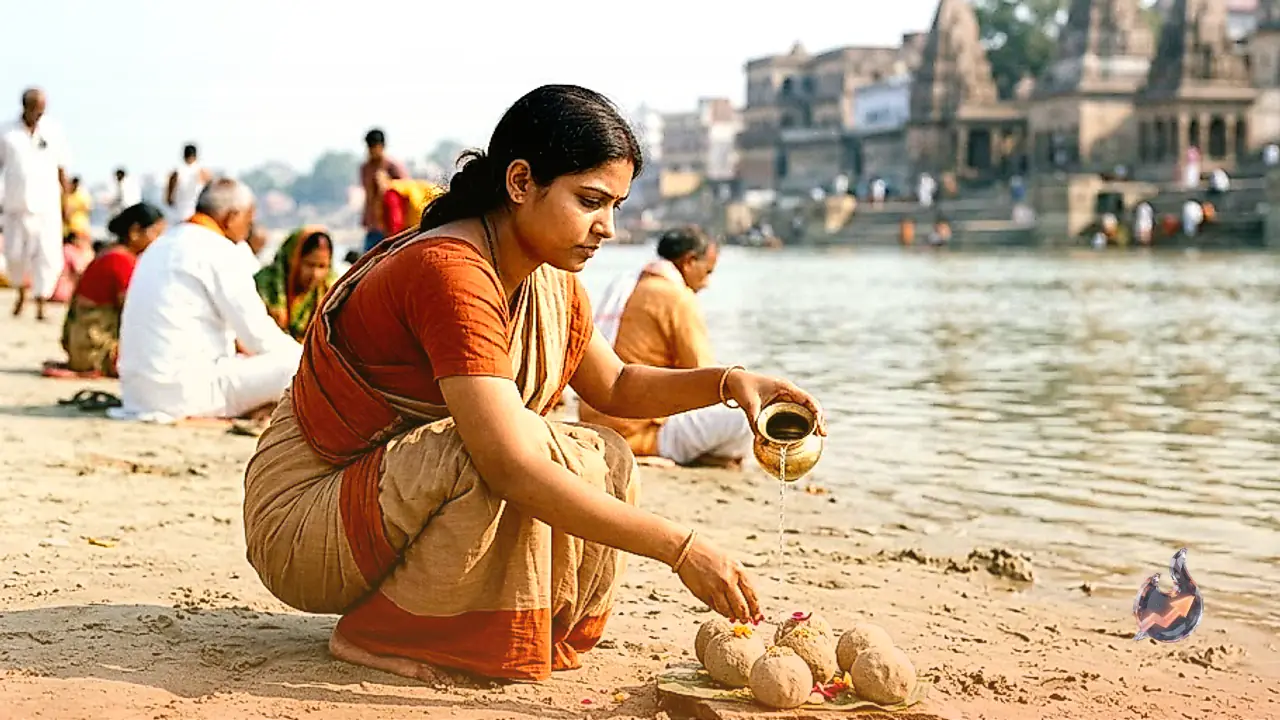
Confronted with an expiring auspicious moment and no sign of Rama's immediate return with standard provisions, Goddess Sita chose adaptability over procedural delay. Looking around the banks of the Falgu River, she observed vast expanses of clean sand. With complete devotion, Sita gathered the sand particles, fashioned them into ceremonial balls, and offered them in dedication to King Dasharatha. This unique deed established the profound significance that riverbed sand continues to hold during Shradh offerings conducted at Gaya to this day.
Six Witnesses Chosen and Rama's Inquiry
Aware that such an extraordinary action would require verification, Goddess Sita invoked six surrounding witnesses to observe the ceremony. These observers included the Falgu River itself, a cow, a Brahmin, a crow, the sacred Tulsi plant, and the majestic Akshayavat banyan tree. When Lord Rama and Lakshmana subsequently returned carrying the ritual goods, Sita informed them that Dasharatha's Pind Daan had already taken place. Lord Rama was taken aback by the disclosure and asked for definitive proof that the rite had indeed been consummated in their absence. Goddess Sita turned to her designated witnesses, requesting that each verify the factual chain of events.
The Weight of Falsehood and the Banyan's Integrity
Legend tells that when questioned, five of the observers concealed the truth, failing to support Sita's account before Lord Rama. Only the steadfast Akshayavat tree stood firm, speaking the complete truth about Sita's sand offerings and Dasharatha's acceptance. Deeply hurt and angered by the deceit of the other five, Goddess Sita pronounced distinctive curses upon them for their betrayal. Among these, the Falgu River received a curse that stripped away its surface water, causing it to appear dry and desolate to the casual observer.
The Hidden Waters of Gaya's Sacred Stream
To this day, pilgrims visiting the Falgu River observe this unusual natural occurrence: while the riverbed seems like an arid stretch of fine sand on the surface, digging mere inches into the silt uncovers running water beneath. This subterranean flow remains a living testament to the ancient tale of Sita's devotion and truth, preserving Gaya's reputation as a timeless sanctum for honoring departed generations.