






















During the 16th-century Bhakti movement in India, Goswami Tulsidas and Mirabai stood as two of the most revered saint-poets, each inspiring generations of devotees. While Tulsidas popularized the devotion of Lord Ram among the masses through his monumental work Ramcharitmanas, Mirabai expressed her unyielding love, longing, and total surrender to Lord Krishna through her soulful verses. Though their primary deities differed, a famous historical episode links their spiritual journeys when Mirabai, facing intense societal and familial opposition to her devotion, sought spiritual guidance from Tulsidas.
Seeking Spiritual Guidance Amid Family Opposition
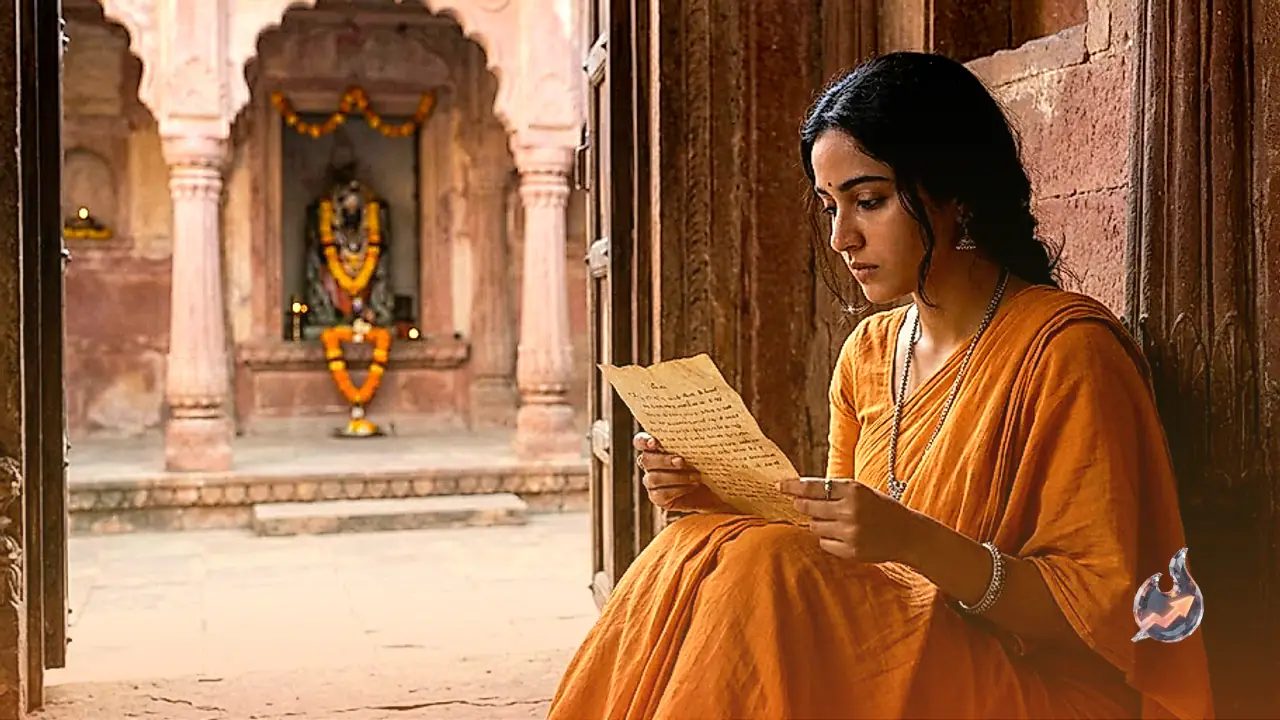
In the historical traditions connected to Nagaur and Mewar, Mirabai experienced severe obstacles from her own royal family members as she pursued her devotion to Lord Krishna. Seeking spiritual counsel and initiation, she penned a letter to Goswami Tulsidas to clarify her path. She entrusted this letter to a Brahmin messenger named Sukhpal from Mewar, who traveled to deliver the message directly to Tulsidas. In her letter, Mirabai inquired about the spiritual duty of a devotee when close relatives and family bonds become hurdles in the pursuit of divine love.
Historical Evidence in Mool Gosain Charit
This significant correspondence is detailed in Mool Gosain Charit, a biographical text composed by Mahatma Beni Madhav Das. Written in couplets, this work is estimated to have been composed around Samvat 1620, corresponding to approximately 1563 AD. According to this text, the Vipra or Brahmin named Sukhpal brought Mirabai's letter to Tulsidas. Upon reading her heartfelt query, Tulsidas composed a poetic reply emphasizing that devotion to the Almighty must take precedence over all earthly bonds, and sent Sukhpal back with the response.
The Poetic Reply and the Verses of Vinaya Patrika
Rather than writing a conventional letter, Tulsidas responded to Mirabai through music and poetry. His response, set to Raag Sorath and famously recorded in his work Vinaya Patrika, articulated a foundational principle of devotional philosophy. Tulsidas conveyed that only those relationships that support one's devotion to God are truly beneficial. He advised that regardless of how dear or close a relative might be, if that person stands as an obstacle to divine worship, one must distance oneself from them without hesitation.
Classical Examples of Devotion Over Earthly Ties
To reinforce his guidance, Tulsidas cited several iconic figures from sacred tradition who prioritized divine love over worldly obligations. He highlighted how Prahlad renounced his father Hiranyakashipu, Vibhishan abandoned his brother Ravana, Bharat defied the wishes of his mother Kaikeyi to stay loyal to Ram, King Bali disobeyed his guru Sukracharya, and the Gopis of Braj cast aside worldly ties for Lord Krishna. Through these powerful examples, Tulsidas reassured Mirabai that true devotion transcends familial expectations, emphasizing that the highest companionship is that which strengthens one's love at the feet of the Lord.