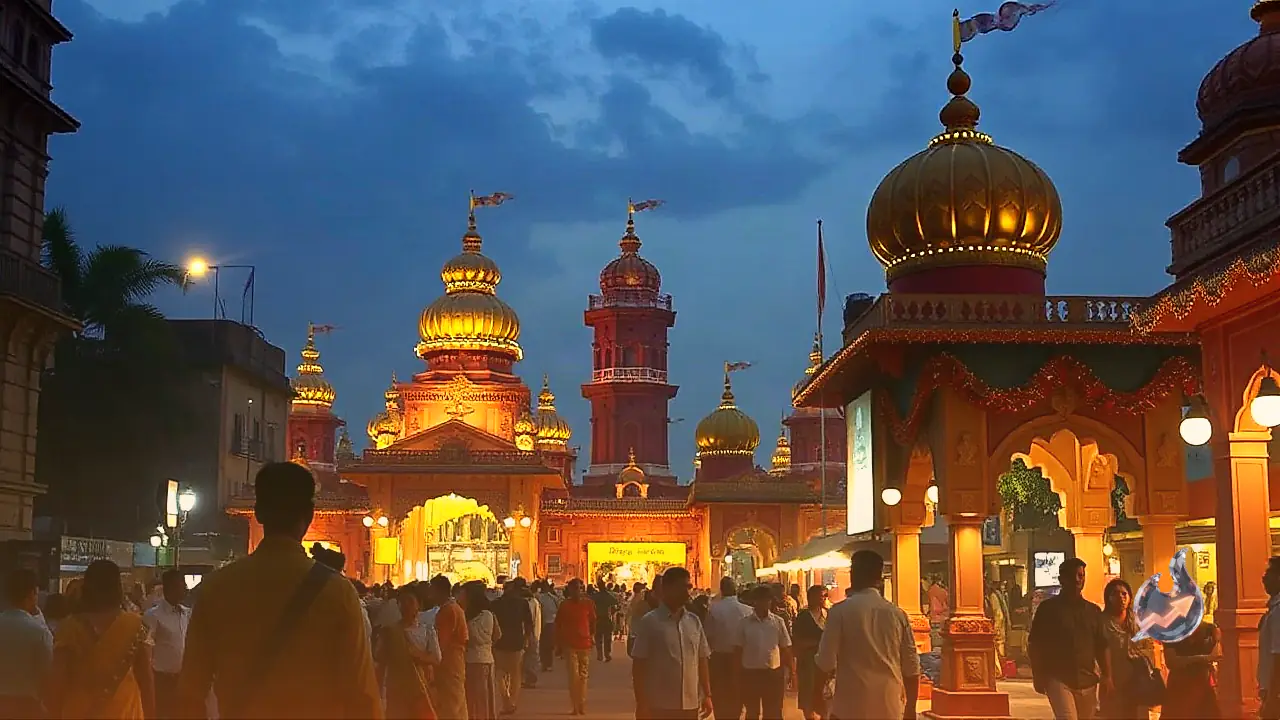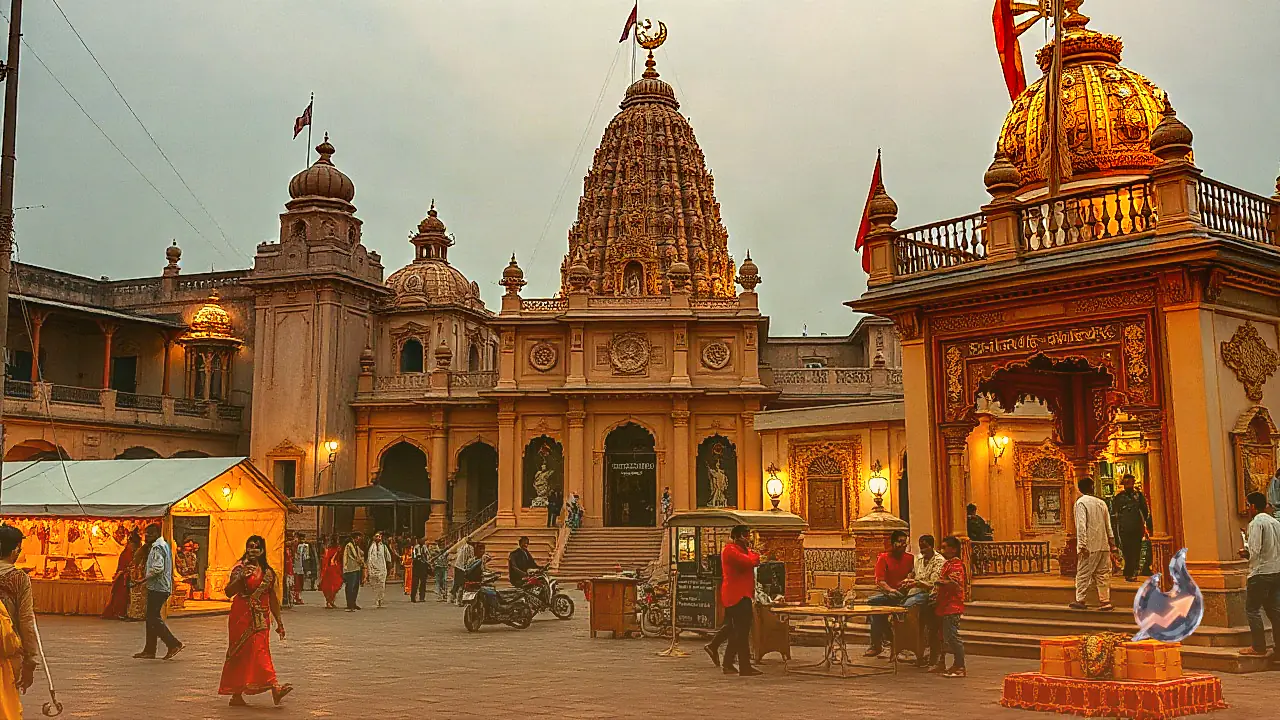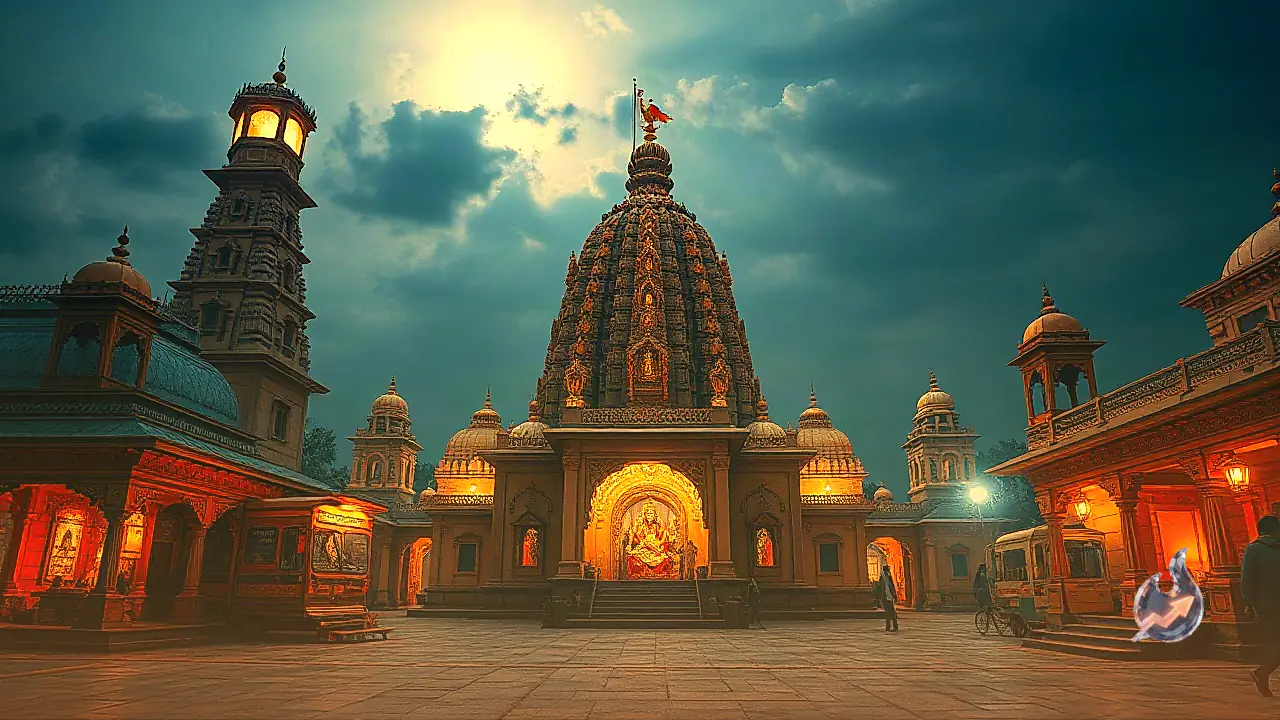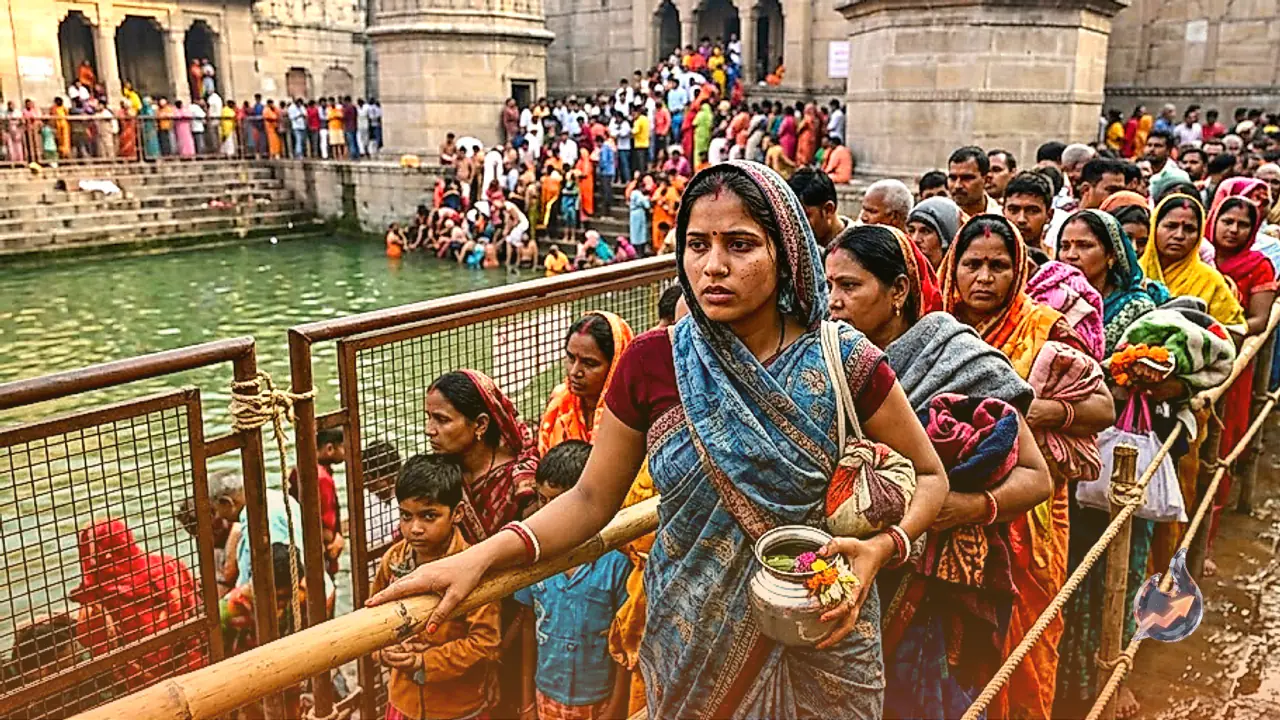






















The sacred month of Sawan holds immense spiritual significance for devotees of Lord Shiva across India. Characterized by rigorous fasting and intense devotion, this year's Sawan features four holy Mondays dedicated to special prayers. During this auspicious period, hundreds of thousands of pilgrims travel from all parts of the country to the historic city of Ujjain in Madhya Pradesh to offer prayers at the world famous Shree Mahakaleshwar Jyotirlinga. Among the many rituals performed at this revered shrine, the early morning Bhasma Aarti stands out globally for its unique traditions, ritualistic grandeur, and profound spiritual impact. While crowds gather daily to witness this extraordinary ceremony, many devotees and seekers often wonder why Lord Shiva is worshiped with ash, when this ancient tradition truly began, and whether human cremation ashes are still used to adorn the deity in modern times.
Master of Time and Death: The Deep Philosophy of Bhasma Shringar
According to ancient scriptural traditions and Hindu mythology, Lord Shiva is worshiped as Mahakal because he reigns supreme over 'Kal' meaning both time and death. He is celebrated as the Master of Masters of Time, signifying that the cyclical nature of time and the boundaries of mortality are fully under his command. This formidable, ascetic aspect of Shiva serves as an eternal reminder to all living beings that death is the ultimate reality for every creature born on Earth. Regardless of the wealth, status, power, or material possessions an individual accumulates during their lifetime, the physical body must inevitably return to dust and ash. Worshiping Mahakal at Ujjain continuously instills an awareness of life's transience, helping individuals dissolve ego, greed, and worldly attachment while encouraging detachment, self-reflection, and the pursuit of spiritual liberation.
Slaying of Demon Dushan and the Mythological Origin of Bhasma Aarti
The Shiva Purana details the legendary origin of the Mahakaleshwar Jyotirlinga in ancient Avantika, modern day Ujjain. The narrative recounts how a tyrannical demon named Dushan performed intense penance to secure a boon of invincibility from Lord Brahma. Blinded by pride, Dushan attacked the holy city of Ujjain, aiming to destroy Vedic learning, sacred rituals, and the pious Brahmins residing there. Distressed by Dushan's reign of terror, the Vedic scholars of Ujjain sought refuge in Lord Shiva, offering fervent prayers for protection. Moved by their sincere devotion, Lord Shiva vowed to defend his devotees.
Manifesting in his terrifying and colossal Mahakal form, Lord Shiva confronted the demon and warned him to leave Ujjain immediately. Unyielding in his arrogance, Dushan launched an attack on Shiva's followers. In response, Lord Shiva opened his third eye in anger, unleashing a blinding flame that reduced Dushan and his demonic army to ashes in an instant. Shiva then smeared the demon's ashes across his body and seated himself in deep meditation amidst the cremation grounds. Deeply moved by the unwavering faith of the Brahmins, Lord Shiva permanently established himself at the site as a Jyotirlinga. This miraculous event marked the historic beginning of the daily Bhasma Aarti tradition at the Mahakaleshwar Temple.
Formless Shiv to Manifest Mahadev: The Symbolism of Ashes and Liberation
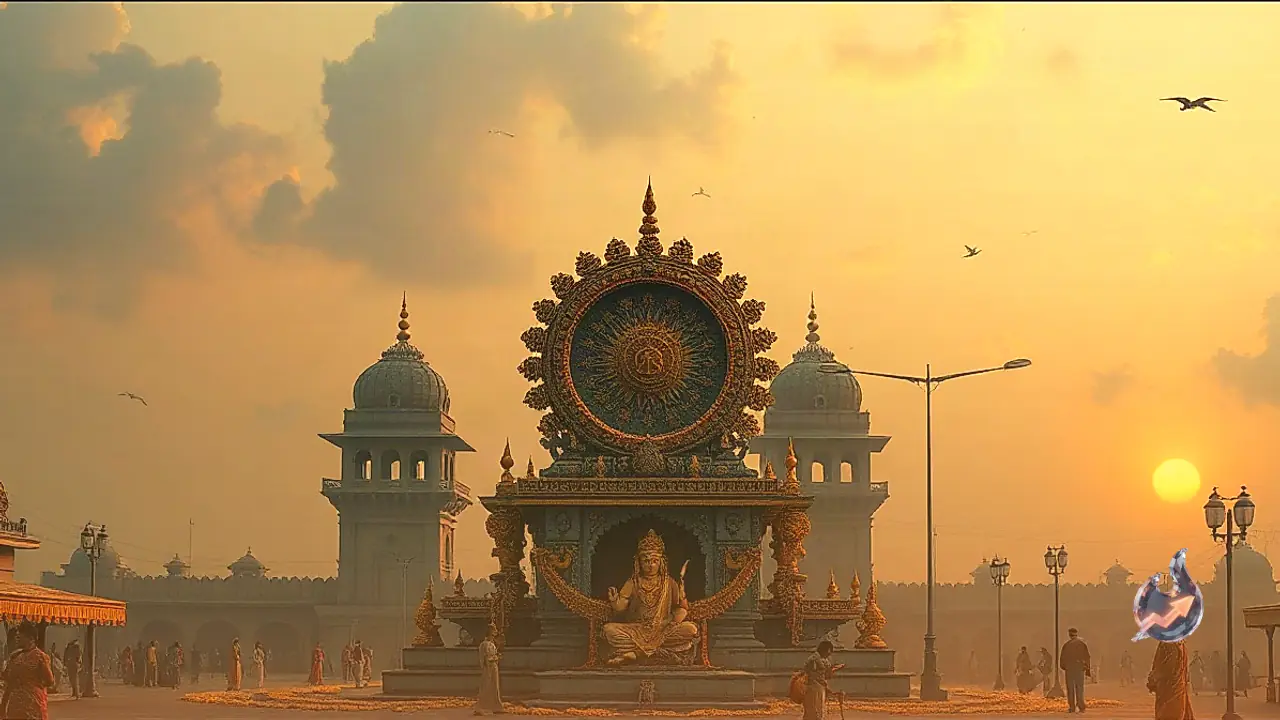
The environment inside the Mahakaleshwar Temple offers visitors a direct confrontation with the fundamental truths of existence. The divine presence of the Mahakal Shivling is believed to immediately detach the human mind from mundane worldly anxieties, immersing seekers in a state of deep tranquility and supreme freedom. From a theological perspective, the application of sacred ash transforms the formless Shiv into the manifest Mahadev. While Shiv and Mahadev represent aspects of the same supreme consciousness, wearing the garb of ash allows the formless divine to take on a tangible form. Once the ash is removed following the ritual, the deity returns to the formless, infinite state of Shiv.
This spiritual concept mirrors the human condition. As long as a soul inhabits a physical body, an individual possesses an identity, name, and form. However, once the soul departs, the lifeless body becomes mere ashes or a corpse. Scriptural philosophy views the corpse as a transition point leading back to the infinite Shiv. Shiv represents both everything and nothingness, existing simultaneously as absolute zero and infinite consciousness. Attaining Moksha or liberation signifies merging completely into the essence of Shiv, a state devoid of time and material constraints. Thus, the Bhasma Aarti symbolically shapes the manifest Mahadev through ash, highlighting ash as the final truth of human life.
The Importance of Dawn Brahma Muhurta and the South-Facing Shivling
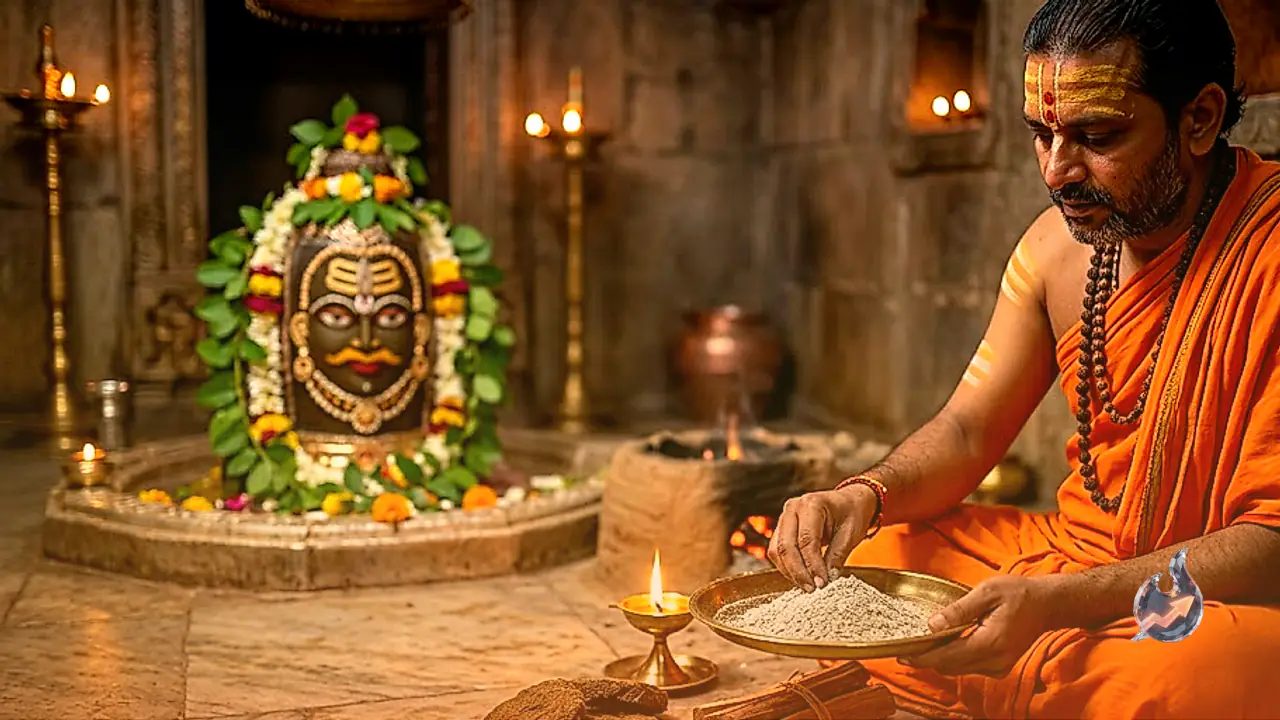
The precise timing and procedural structure of the Bhasma Aarti carry deep spiritual significance. The ceremony takes place daily during Brahma Muhurta, approximately ninety minutes before sunrise. Prior to the offering of ash, Lord Mahakal undergoes a grand ceremonial bath using water, milk, and Panchamrit, followed by elaborate decoration with bhang, dry fruits, and sacred paste. As Vedic mantras resound alongside the beating of drums, cymbals, and the blowing of conch shells, sacred ash is reverently applied to the Shivling. Brahma Muhurta is considered the most spiritually potent hour of the day because the ambient surroundings are calm and free from daytime distractions such as work, commerce, and digital activity. This tranquil state enables devotees to tune into subtle divine energies. Furthermore, Mahakaleshwar is unique among the twelve sacred Jyotirlingas in India as it is the only 'Dakshinmukhi Shivling', meaning it faces south. In Hindu tradition, south is regarded as the direction of death and Lord Yama. It is during this early dawn hour that Shiva faces south to embody Mahadev, the compassionate master of mortality.
Modern Ritual Practice: How Sacred Ash Is Prepared from Kapila Cow Dung and Holy Woods
A common point of curiosity among pilgrims is whether human cremation ashes are still used in the Mahakaleshwar Temple today. Modern temple practices strictly avoid the use of human ashes. Instead, temple priests prepare the sacred ash through a highly refined and purificatory scriptural process. Dung cakes harvested specifically from Kapila cows (sacred indigenous cows) are burned together with holy woods including Shami, Palash, Peepal, Banyan, Amaltas, and Ber inside a ritual sacrificial fire. The resulting clean, fragrant ash is carefully sifted through fine cloth to create the sacred Bhasma used in the daily Aarti. This modern framework honors ancient traditions while maintaining high standards of cleanliness, hygiene, and respectful temple governance.
An Eternal Message of Detachment, Truth, and Self-Reflection
The practice of Bhasma Aarti carries centuries of spiritual heritage. Historically, ancient ascetics decorated Lord Shiva with fresh cremation ashes to emphasize his identity as an inhabitant of cremation grounds and an embodiment of absolute detachment. Religious scholars emphasize that the Bhasma Aarti is far more than a routine religious ritual; it is a profound philosophical sermon delivered to humanity daily. It urges individuals to rise above narrow ego, material greed, and fleeting worldly pleasures, guiding them toward truth, righteousness, and inner spiritual welfare. The ash-clad form of Mahakal stands as an immortal reminder that regardless of power, wealth, or social standing, death remains the singular inescapable truth of life, and recognizing that truth is the beginning of true wisdom.