






















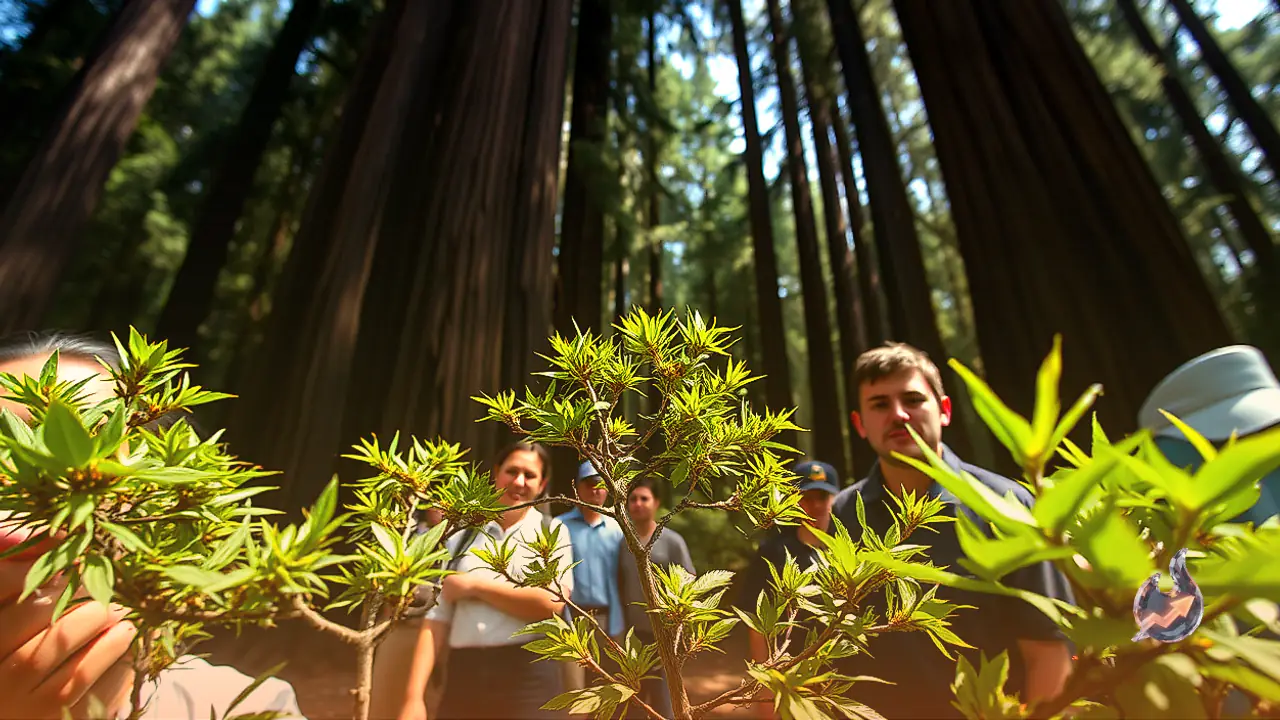

High above the forest floor, hundreds of feet in the air, thrives an intricate canopy world that operates almost completely separated from the ground below. In these towering arboreal networks, creatures like the wandering salamander spend their entire life cycle without ever descending to earth, finding everything they need in the upper canopy. The marbled murrelet, a secretive seabird, managed to keep its nesting locations hidden from human knowledge until 1974, when a tree-trimmer working 150 feet up accidentally uncovered a nest hidden among the branches. Occasionally, seeds from a Sitka spruce, an oak, or even another redwood lodge into moisture-rich soil and fern mats on these massive boughs, growing into an independent tree perched securely within the crown of a titan.
For thousands of years, coast redwoods have served as resilient structural pillars for this extraordinary ecosystem, possessing the rare resilience to endure wildfires that completely destroy other timber species. Beyond their ecological significance, these ancient giants inspire awe in visitors and generate millions of dollars annually for California's tourism sector. However, rising global temperatures have begun to challenge their renowned endurance, revealing a vulnerability hidden inside their leaves.
Slowing Down Respiration and Sustenance Under Heatwaves
Rigorous bi-monthly measurements gathered across two full years by researchers from the University of California, Davis demonstrate that coast redwood foliage significantly curtails photosynthesis whenever ambient temperatures spike to extreme levels. In practical terms, these trees suppress their carbon intake and metabolic production because their cooling mechanisms cannot keep pace with surging heat. As climate disruption continues pushing average and peak temperatures upward, this physiological bottleneck raises grave concerns about the longevity of these majestic trees and the varied wildlife communities sheltering along their trunks and branches.
Understanding this internal strain requires looking directly into leaf architecture. Trees regulate gas and moisture exchange through microscopic leaf apertures called stomata, which perform two fundamental operations: absorbing carbon dioxide from the atmosphere and discharging water vapor. When stomata remain wide open, the tree breathes in carbon dioxide to power photosynthesis, while simultaneously losing water through transpiration. Conversely, when a tree shuts its stomata, it conserves moisture at the cost of halting carbon dioxide intake, effectively shutting off its ability to synthesize food and fuel.
Leaves Absorb Radiance Like Asphalt While Transpiration Falters
Lily Klinek, a PhD candidate at UC Davis and lead author of the investigation, explained that because leaves are physical structures that absorb sunlight, they heat up rapidly, much like asphalt exposed to full sun. She pointed out that leaf surfaces often warm up substantially faster than the surrounding ambient air. Under ordinary circumstances, leaves regulate their internal heat by opening their stomata to transpire moisture, functioning much like human perspiration. When water evaporates from human skin, it cools the body, and the same principle applies to plant foliage. However, trees can only maintain this evaporative cooling if they have adequate moisture reserves to spare.
Klinek and her research colleagues conducted their field measurements on coast redwoods in Mendocino County, located near the southern boundary of the species' natural distribution. Deploying specialized field instruments, the team tracked whether individual leaves continued active photosynthesis under variable weather conditions. During severe heat waves, coast redwoods reach an insurmountable threshold where evaporative cooling cannot keep pace, prompting them to keep their stomata firmly shut. While sealing their pores prevents lethal desiccation, it halts carbon intake entirely, preventing the trees from feeding or accumulating energy reserves required for seasonal growth.
The Looming Hazard of Carbon Starvation Across Regenerating Forests
While leaf pore regulation might seem like an isolated detail of plant biology, it poses a severe threat of creating a destructive spiral across redwood woodlands. If trees fail to secure enough carbon during prolonged heat spells, they lack the resources needed to produce new foliage in subsequent seasons. Fewer leaves reduce overall photosynthetic capacity, driving the trees further into nutritional deficit, a cascading decline that can eventually culminate in widespread tree mortality. While researchers have documented this phenomenon in tropical species, this project represents the first scientific confirmation of coast redwoods experiencing this specific heat stress.
Chris Still, a forest ecologist based at Oregon State University who was not directly involved in the research, noted that this condition is commonly described as carbon starvation, pointing out that growing new foliage demands significant biological investment from a plant. The vast majority of redwood stands currently found in California and the Pacific Northwest are second-growth forests established over the last two centuries. Consequently, these younger stands behave like growing adolescents, requiring substantial carbon dioxide uptake to sustain their rapid upward growth and structural development.
Disrupted Carbon Sinks and Degrading Canopy Habitats
Due to their enormous mass and extraordinary lifespans, redwoods sequester more carbon dioxide per acre than any other forest habitat on Earth. Anthony Ambrose, a plant physiological ecologist and co-founder of the Ancient Forest Society, pointed out that this disruption creates a harmful feedback loop in the broader climate system by reducing carbon sequestration while also stunting the physical growth of the trees themselves. Even if the trees endure elevated heat, diminished growth will reduce the canopy space available for fern and soil mats, shrinking critical nesting territory for arboreal wildlife and limiting overall height.
Beyond atmospheric heat, redwoods face the loss of their primary protective shield: coastal fog. Klinek explained that coast redwoods share a symbiotic relationship with maritime fog native to Northern California and the Pacific Northwest. Reaching hundreds of feet toward the sky, redwood canopies intercept moisture-rich fog directly from low-hanging clouds. This fog shields the foliage from harsh radiation and maintains a cool microclimate, keeping redwood forests noticeably colder than nearby open terrain. However, warmer ocean waters and lower humidity have made fog occurrences irregular, depriving trees of their natural buffer against escalating heat.
Compound Environmental Stress from Drier Skies and Vanishing Fog
Todd Dawson, a plant ecophysiologist from the University of California Berkeley who did not participate in the study, characterized this crisis as a compounding blow. Trees face severe moisture deficits alongside acute thermal strain. He emphasized that coast redwoods evolved to thrive within a narrow climatic corridor spanning 8 to 27 degrees Celsius (approximately 46 to 80 degrees Fahrenheit). California is now subjected to extended intervals of unprecedented high temperatures, while the coastal fog that traditionally acted as a natural air conditioner has dropped by 30 to 40 percent.
These sharp temperature spikes threaten canopy biodiversity. Ambrose cautioned that persistent summer heat could rapidly dry out moisture-retaining soil mats and epiphytic ferns resting on upper branches. If those mats dehydrate, specialized salamanders and nesting seabirds will lose their arboreal refuges, setting off cascading ecological collapses throughout the forest hierarchy.
On a more resilient note, Klinek reported that monitored foliage appeared to withstand temporary heatwaves without losing long-term photosynthetic potential once temperatures cooled. Over the two-year observation period, leaves did not permanently acclimate to high heat, but their biological machinery resumed normal function when the heat dissipated. While this physiological resilience offers a degree of optimism, it does not diminish the urgent need to understand climate pressures and mitigate global heating trends.
Klinek emphasized that current autumn and winter transitions provide necessary cool intervals for trees to recuperate. However, should climate trends intensify over the next five to ten years with more frequent and severe heatwaves, scientists cannot confirm whether redwoods will retain their ability to recover. For now, canopy creatures continue to inhabit these ancient giants, but human society remains inextricably linked to their fate. Coast redwoods have the biological potential to live for well over a thousand years, provided environmental conditions allow them to survive.