























Decades of living in the shadow of urban oil extraction are finally meeting a tangible policy response in California. State lawmakers have approved groundbreaking legislation designed to redirect penalty fines collected from polluting drill sites directly into the pockets of long-suffering neighbors. The move represents an emerging push toward environmental reparations, testing whether public policy can deliver meaningful financial redress to communities that bore the physical, medical, and generational costs of nearby fossil fuel production.
The Longstanding Toll of Urban Oil Extraction
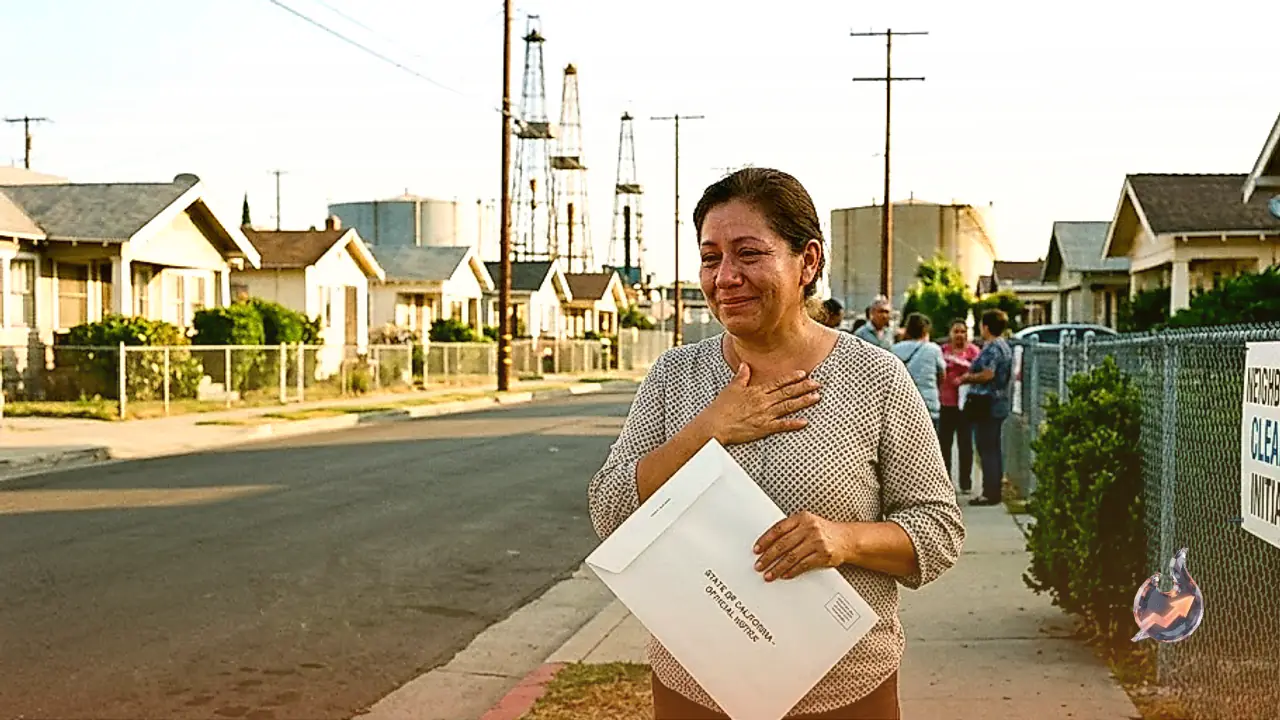
For more than a century across Los Angeles and the broader nation, Black households have been disproportionately concentrated near active drilling infrastructure. The mechanical pumpjacks that pull crude petroleum from deep subterranean reserves release pollutants that scientific studies link directly to severe respiratory conditions, elevated cancer risks, birth complications, and developmental setbacks in children. Many residents only recognized in adulthood that family battles with asthma and chronic illnesses were directly intertwined with growing up alongside the largest urban oil field in the United States.
California Assembly Bill 1661 seeks to translate that prolonged community distress into concrete restitution. The measure allocates 5 million dollars accumulated through fines levied on underperforming and polluting wells across the Inglewood Oil Field into direct financial assistance for 1,000 nearby households dealing with documented respiratory or reproductive harm. Dense urban neighborhoods and suburbs with significant Black populations, including Inglewood, Ladera Heights, and Baldwin Hills, immediately border the drilling boundaries.
Cash Relief and the Concept of Environmental Reparations
Authored by Assemblymember Isaac G. Bryan, the bill is anticipated to reach the desk of Governor Gavin Newsom and receive his signature by October. The initial framework earmarks funds sufficient to provide direct grants of up to $5,000 per qualifying household. These disbursements will be channeled through the community repair and reinvestment fund, explicitly designated to uplift neighborhoods situated closest to the extraction perimeter.
For families that spent generations next to refineries, transit corridors, landfills, and drilling rigs, this fund represents a critical precedent that extends well beyond a single oil basin. Decades of sustained industrial pollution shortened life expectancies, drained household budgets through unrelenting medical treatments, and suppressed local property values. Isaac G. Bryan and allied organizers view this initiative as environmental reparations, offering a replicable blueprint that forces industrial polluters to finance recovery for the populations harmed by their activities.
Grassroots Advocacy and the Push for Corporate Accountability
Tianna Shaw-Wakeman, who directs environmental justice programs at Black Women for Wellness in Los Angeles, views the statute as a scalable national organizing model. Emphasizing the power of sustained local engagement, Shaw-Wakeman noted that grassroots organizing has created long-term change in local communities, demonstrating that the strategy can be replicated across the country.
Bryan, who serves as the first Black lawmaker to lead the Natural Resources Committee within the California Assembly, highlighted the acute health burdens long borne by his constituents. Speaking on the historical imbalance, Bryan noted that the operating company essentially engaged in relentless extraction without putting investments back into the locality or displaying genuine regard for the wider public. He emphasized that the community is owed this repair, which has been overdue for generations.
The financial assistance measure expands upon Bryan’s prior legislative achievement, Assembly Bill 2716, signed into statute by Newsom in 2024. That earlier law mandates the definitive shutdown of the Inglewood Oil Field by 2030 and instituted severe penalties for marginal, low-producing wells. Wells with sluggish yields are known to leak methane along with other dangerous airborne and waterborne toxins. Regulators imposed an ongoing fee of $10,000 per month for every low-producing well maintained by operators, depositing the penalties into a dedicated repair fund restricted to community investments within a 2.5-mile perimeter around the field.
Tax Protections and Broader Community Reinvestment
Beyond emergency direct cash aid, Bryan indicated that the penalty reserve will eventually finance vital neighborhood improvements, such as affordable housing developments, public green spaces, parks, and recreational facilities. The immediate cash distribution serves as a targeted pilot to assess whether direct funding offers the most flexible and practical relief for households under financial strain. Putting disposable resources straight into community hands remains a swift method to counter steep costs of living.
To safeguard the value of this relief, California legislators concurrently passed companion legislation exempting reparation payments from state taxes. Assemblymember Tina McKinnor, who sponsored the tax shield bill, stated that California is actively preparing for the implementation of reparations programs, emphasizing the need to ensure recipients receive the complete financial benefit of these restorative efforts without state deductions. A coalition of 36 grassroots and community organizations stepped forward to support the environmental relief measure, and no organized group registered public opposition during legislative deliberations.
Implementation Hurdles and the Threat of Displacement
Despite its historic nature, the legislation does not bring an immediate halt to oil production, nor does it resolve all ongoing drilling disputes throughout Los Angeles County. Geographic eligibility remains restricted to residents situated within 2.5 miles of the field who can demonstrate respiratory or reproductive health impacts. A central administrative challenge rests on how Los Angeles County formats the intake process, determines acceptable proof, and manages distribution if applicant numbers outstrip the initial 1,000-household ceiling, given that tens of thousands live nearby.
County administrators are actively evaluating whether disbursements will roll out as single lump-sum payments or through scheduled monthly distributions. Shaw-Wakeman and coalition partners have urged officials to construct a streamlined intake that bypasses onerous bureaucratic demands. Specifically, advocates recommend relying on self-attestation rather than forcing low-income families to obtain costly, difficult-to-access medical records for chronic conditions that may never have been formally diagnosed in a clinic.
The cash distribution also arrives against a backdrop of post-drilling land use debates. Advocates point out that merely capping wells is insufficient; extraction companies must be compelled to remediate poisoned soil and plug decommissioned rigs properly. Furthermore, past closures across Los Angeles coincided with rapid surges in real estate costs and residential rents, triggering fears of gentrification. As Shaw-Wakeman warned, dangerous industrial activity cannot simply be swapped for gentrification that pushes out legacy Black residents, stressing that substantial work remains to eliminate the daily ongoing harms facing neighborhood families.