






















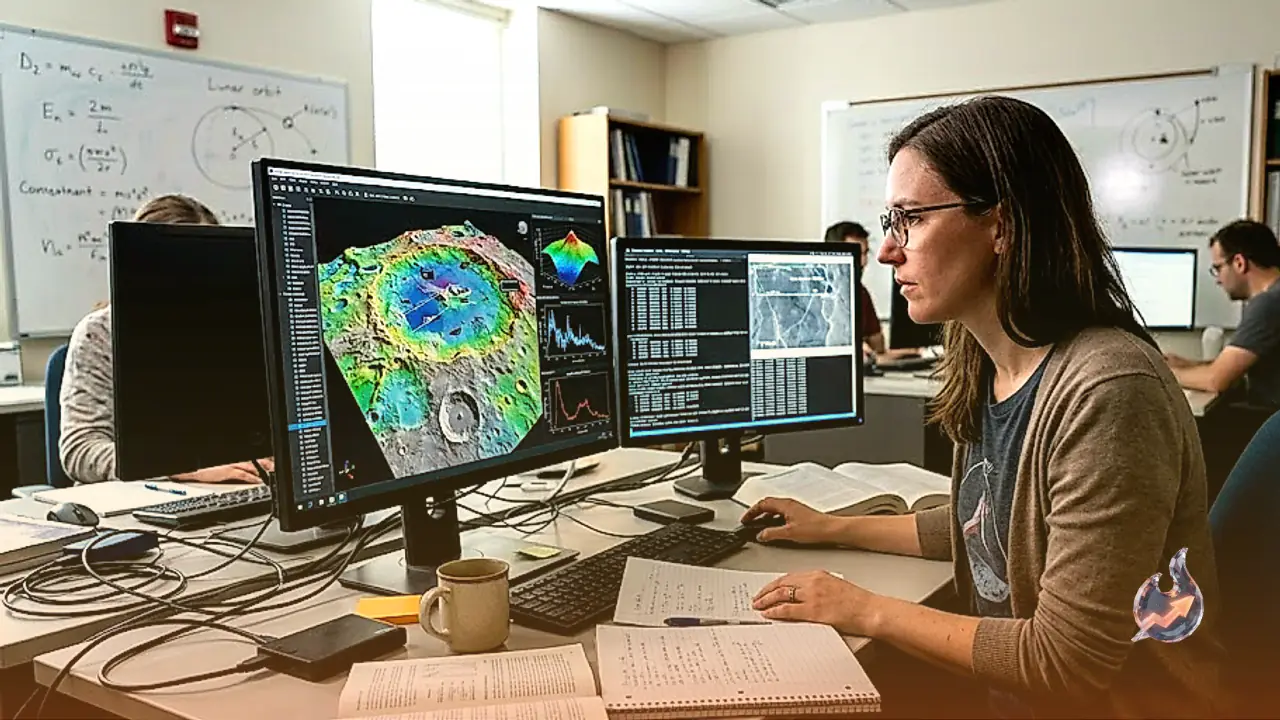

For the first time in more than half a century, a comprehensive planetary science dataset gathered beyond Earth directly by astronauts has been opened to the global community. Marking the closest scientific parallel to the historic Apollo lunar exploration era, this extensive release contains nearly one terabyte of information gathered during a crewed mission approaching the moon. Alongside the primary data repositories, three foundational reference documents have also been published, outlining early scientific conclusions, lunar operations, and instructions for working with the newly released records.
Crucial Resources for the Scientific Community
Although captured by the astronaut crew while travelling past the moon, the extensive repository is designed primarily for researchers on Earth who will spend years analyzing the measurements. The information provides crucial insight for planetary geologists studying surface formations, telecommunications and remote sensing engineers evaluating signal dynamics, heliophysicists observing solar interactions, and specialists tracking space debris. These interconnected datasets will help refine existing models of the lunar environment and its physical characteristics.
Accessible Highlights for Astronomy Enthusiasts
To ensure the findings are accessible to non-specialists and space enthusiasts, several user-friendly resources have been made readily available. These include complete mission voice transcripts, an extensive audio archive, and curated high-resolution lunar photography featuring direct annotations made by the crew. All files have been organized within the Planetary Data System, allowing direct exploration of catalogs, technical files, and accompanying metadata for both specialized analysis and general interest.
Meteoroid Impacts Recorded During Lunar Eclipse
Early examination of the recorded telemetry has already yielded significant discoveries regarding lunar surface hazards. During a 54-minute eclipse window witnessed from the Orion spacecraft, the crew documented five separate instances of tiny meteoroid impacts striking the lunar terrain. Capturing the visible flashes from fragments measuring only a few centimeters across offers vital real-world data regarding the actual frequency of such strikes, which is essential for determining safety margins for future lunar bases, exploratory vehicles, and astronauts on the surface.
Terrain Visibility and Lighting at the Lunar Pole
The mission observations also captured distinct variations in texture, brightness, and color across disparate lunar regions, enabling direct comparison against orbital composition charts. Furthermore, detailed imagery captured near the terminator, where lunar daylight transitions into night, reveals how low sun angles dramatically alter terrain contrast and surface visibility. Because low-angle illumination will be a constant factor during upcoming explorations targeting the lunar south pole, these visual records will help future expedition crews navigate challenging topography and plan lighting requirements effectively.