





















Following the massive eruption of the Anak Krakatoa volcano in Indonesia, which sent ash billowing nearly 50,000 feet into the air, researchers have turned their attention toward a novel method of predicting volcanic tsunamis by listening to underwater rumbling. Scientists believe that tracking these deep-sea acoustic signals could soon offer vital early warnings for coastal regions.
The Tonga Eruption and Complex Tsunami Waves
The catastrophic explosion at the Hunga volcano in the Tonga empire in January 2022 caught the entire world off guard. The massive blast thrust ash and gas plumes more than 50 kilometers high into the atmosphere, while powerful pressure waves circled the globe and spawned multiple tsunami waves. The disaster devastated parts of Tonga and claimed at least 3 lives. Crucially, post-event analysis revealed that the resulting tsunami waves did not stem from a single uniform cause.
Different Phases of the Blast
The initial phase of massive explosions generated the first set of tsunami waves, reaching heights of 1 to 4 meters on the nearby Tongan island of Tongatapu within minutes. Over an hour later, even more devastating events unfolded as tsunami waves reaching 18 to 40 meters struck islands within a 100-kilometer radius of Hunga, obliterating resorts and villages across southern and central Tonga. In comparison, when Hawaii's Kilauea volcano erupted in 2025, ash plumes reached heights of 400 meters.
Caldera Collapse as the Main Driver
Recent research published in The Conversation revealed that the massive tsunami was not triggered by another explosion, but rather by the sudden collapse of the volcano's caldera. This sudden sinking generated acoustic waves in the ocean that could be detected thousands of kilometers away, pointing toward a potential new way to warn populations about some of the Earth's most unpredictable tsunamis.
The Challenges of Deep Sea Volcanic Monitoring
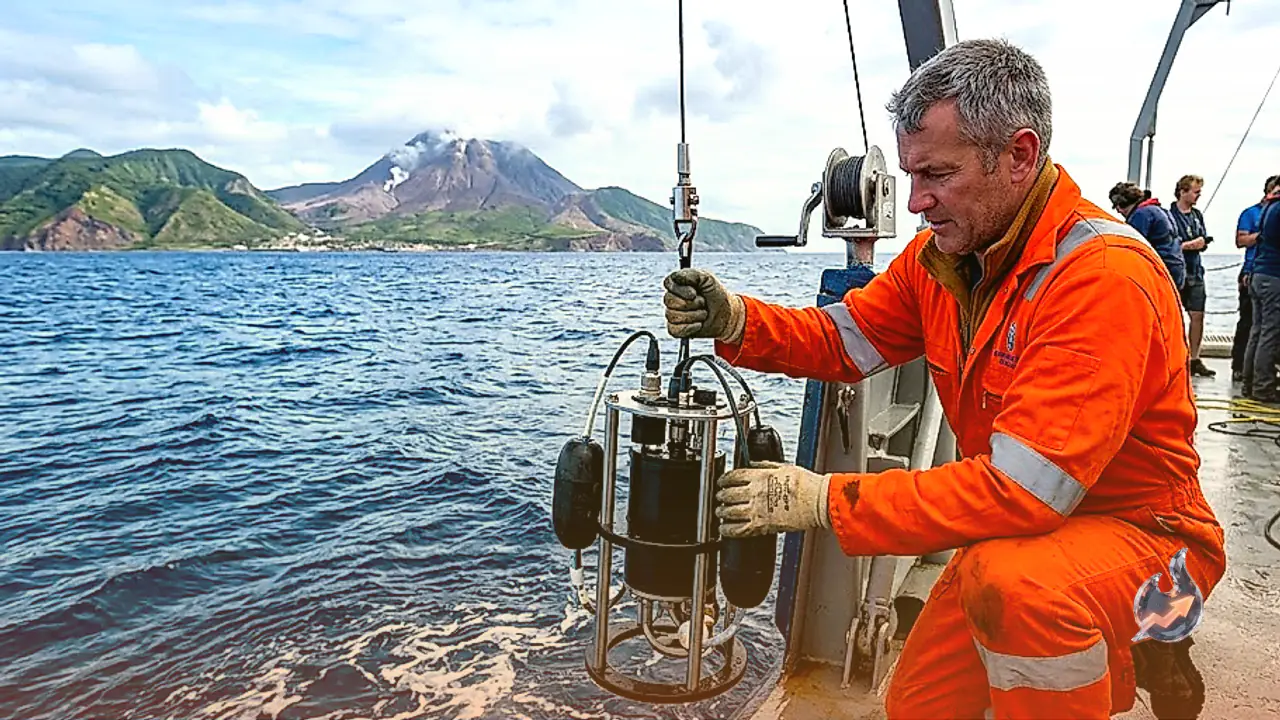
Monitoring volcanic activity beneath the ocean remains exceptionally difficult. Hundreds of volcanoes sit within the Pacific Ring of Fire, yet data regarding their behavior and eruption mechanics is quite limited. Satellites can track thermal changes, gas emissions, and ash plumes when weather permits, aiding aviation safety, but they cannot determine whether a deadly tsunami is imminent.
Limitations of Traditional Seismographs and T-Waves
Traditional seismometers also fall short in many instances. During the 2022 eruption, the closest seismometer to Hunga was located in Fiji, roughly 750 kilometers away, a distance too great for certain seismic waves to propagate properly through the Earth. Researchers therefore looked toward acoustic and hydroacoustic signals known as tertiary waves or T-waves that travel efficiently over vast ocean distances.
Underwater Volcanoes Functioning Like Bells
An isolated underwater volcano can act much like a bell, dispersing the sounds of violent marine activity across the surrounding ocean. By re-analyzing records from 14 seismic stations around the southwest Pacific, some located as far as 2,600 kilometers from Hunga, researchers managed to hear the sounds of rapid underwater landslides cascading down the volcano's slopes during the first hour of the blast.
Detecting Subsea Landslide Flows
These underwater debris flows were so powerful that they even damaged submarine telecommunication cables on the ocean floor. The acoustic signals generated by these massive movements were successfully detected hundreds of kilometers away, offering a promising pathway for future tsunami detection systems.